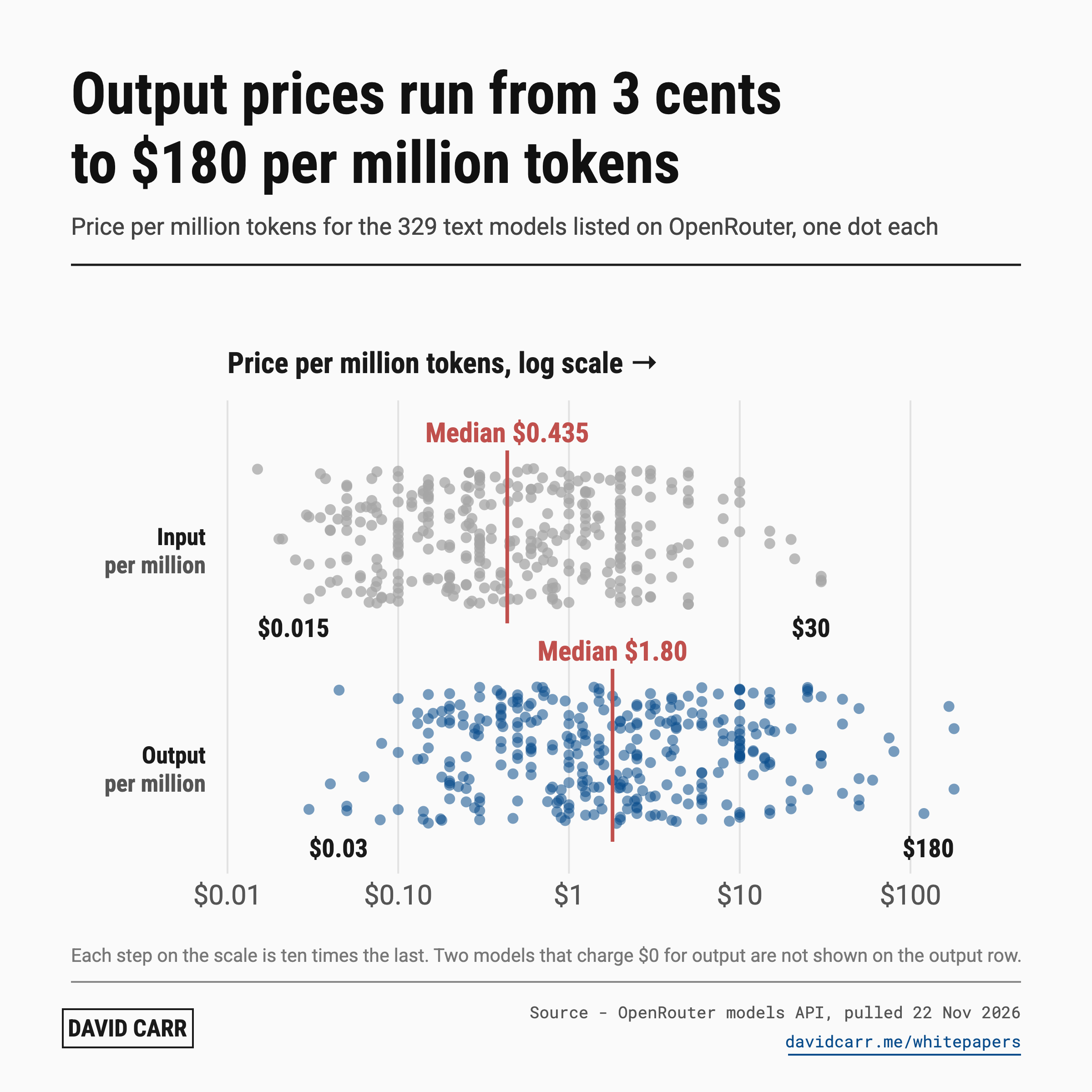
Output prices run from 3 cents to $180 per million tokens
- Cheapest output: $0.03 per million tokens (Mistral Nemo)
- Dearest output: $180 (OpenAI's GPT-5.4 Pro and GPT-5.5 Pro)
- Median output: $1.80
- Input runs from $0.015 to $30. Median input: $0.435
The dearest model costs 6,000 times as much per output token as the cheapest. Most models sit between 10 cents and $10.
Price per million tokens for the 329 text models in OpenRouter's public models API, pulled 22 November 2026. A token is a short piece of text, often part of a word. Two summarising tools charge $0 for output and are left off the output row.
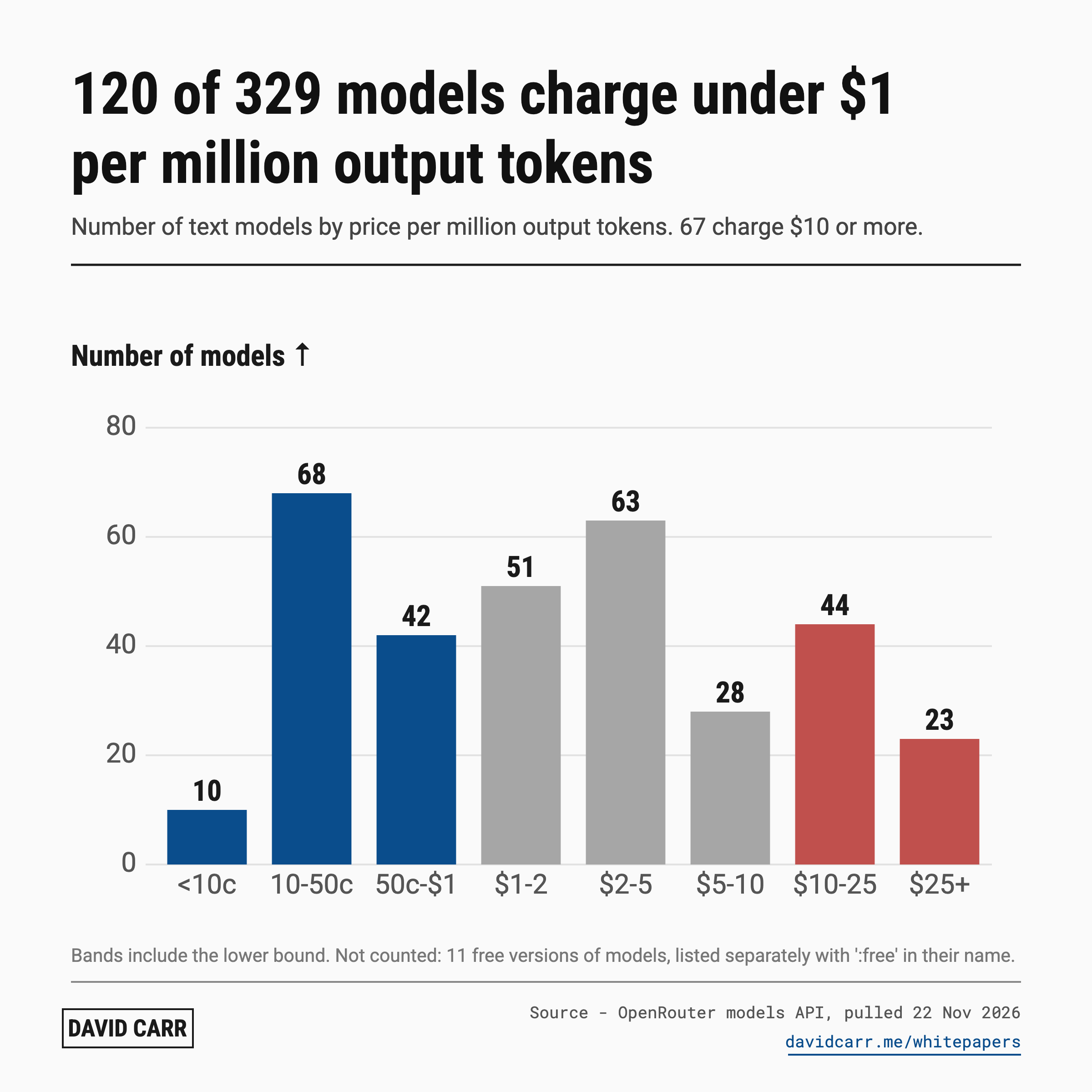
120 of 329 models charge under $1 per million output tokens
- Under 10 cents: 10 models
- 10 to 50 cents: 68
- 50 cents to $1: 42
- $1 to $10: 142
- $10 or more: 67
There is no single price for AI. About a third of the models charge under $1 for a million output tokens. About a fifth charge $10 or more.
OpenRouter also lists 11 free versions of models, with ':free' in their name. They are not counted here.
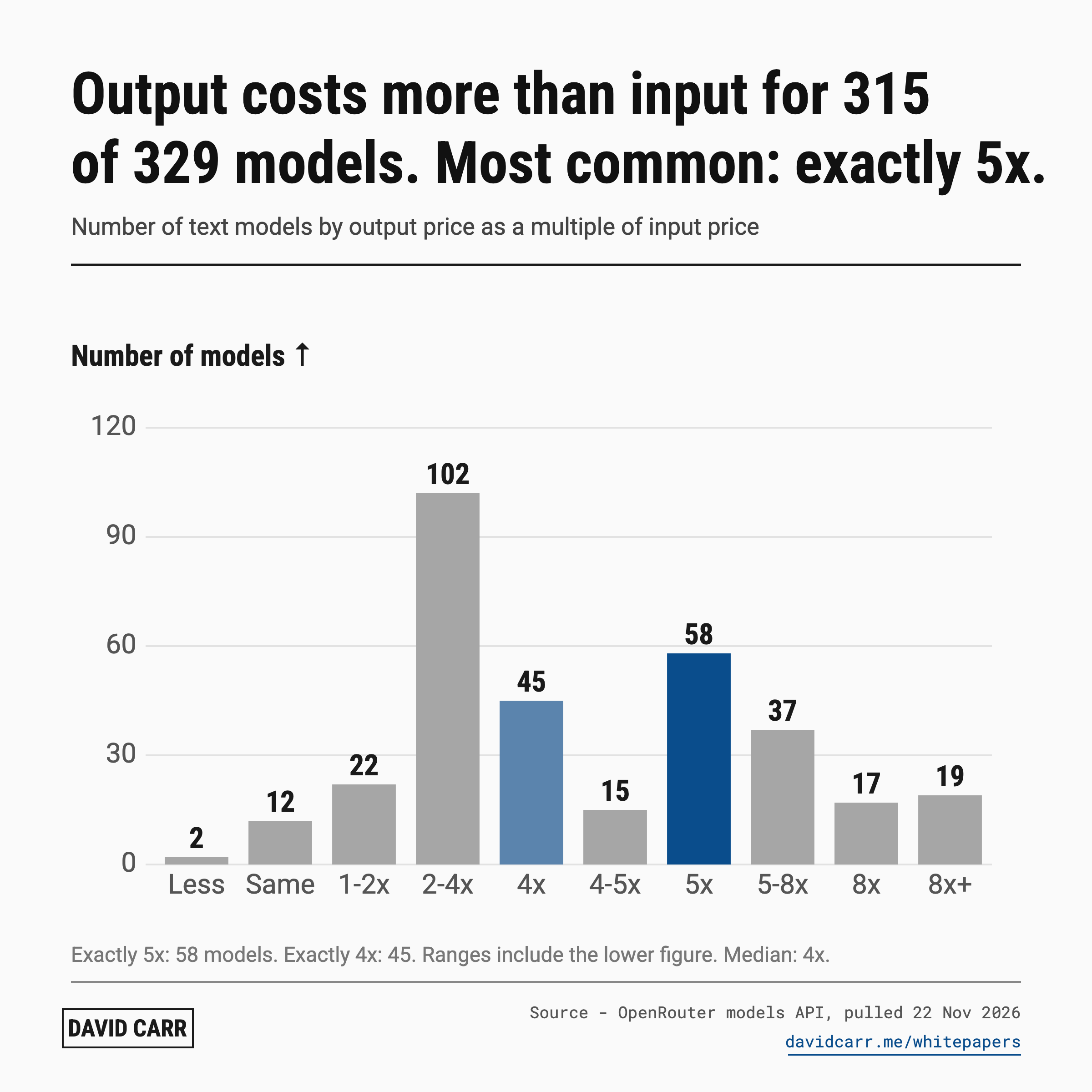
Output costs more than input for 315 of 329 models
- Exactly 5 times input: 58 models, the most common multiple
- Exactly 4 times: 45
- Same price both ways: 12
- Output cheaper than input: 2
- Median: 4 times
Text a model writes costs more than text it reads, almost everywhere. So the same job can cost very different amounts depending on how much the model has to write.
Ranges on the chart include the lower figure, not the upper.
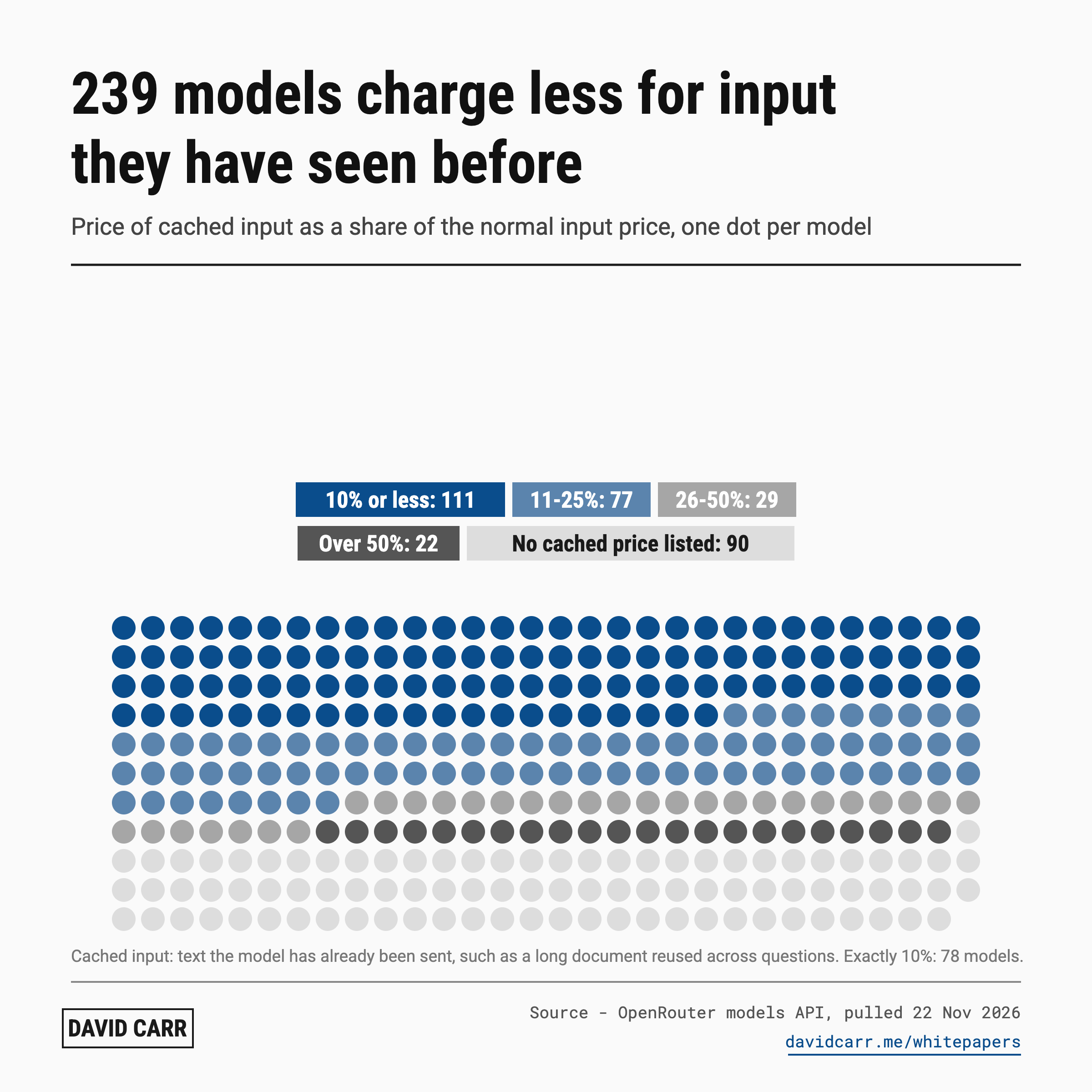
239 models charge less for input they have seen before
- Cached input at 10% of the normal price or less: 111 models
- Exactly 10%: 78
- 11% to 25%: 77
- 26% to 50%: 29
- Over 50%: 22
- No cached price listed: 90
Sending the same long document again is usually much cheaper than sending it the first time. The median cached price is 12% of the normal input price.
Cached input is text the model has already been sent recently, such as a long document reused across several questions. Some models also charge to write to the cache; that is not shown.
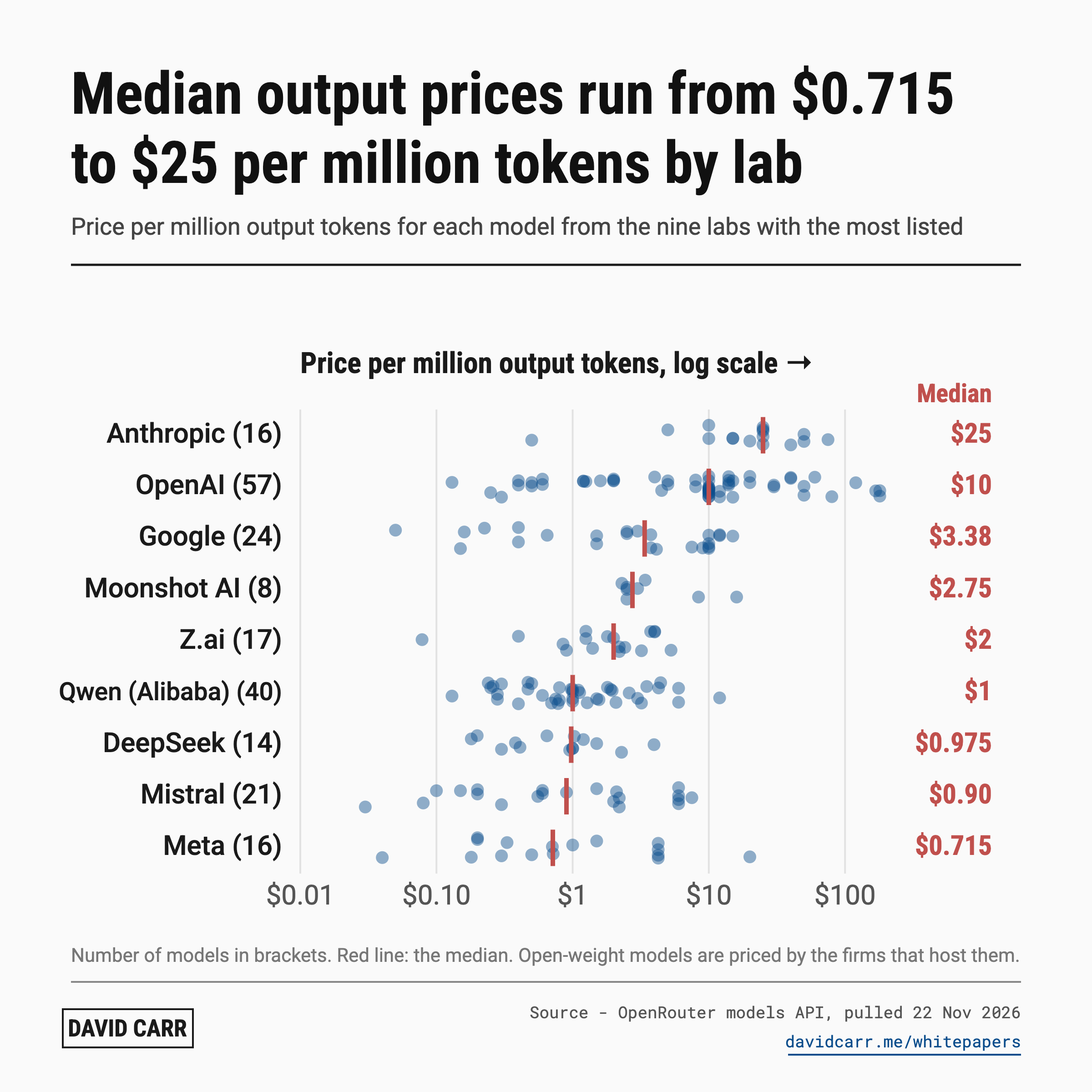
Median output prices run from $0.715 to $25 per million tokens by lab
- Anthropic: $25 (16 models)
- OpenAI: $10 (57)
- Google: $3.38 (24)
- Moonshot AI: $2.75 (8)
- Z.ai: $2 (17)
- Qwen (Alibaba): $1 (40)
- DeepSeek: $0.975 (14)
- Mistral: $0.90 (21)
- Meta: $0.715 (16)
Medians differ by about 35 times across these nine labs. Every lab with more than a handful of models has a wide range, so the lab alone says little about what a given model costs.
The nine labs with at least eight text models listed. Meta includes its Llama models. Many open-weight models are priced by the firms that host them on OpenRouter, not by the lab that made them.
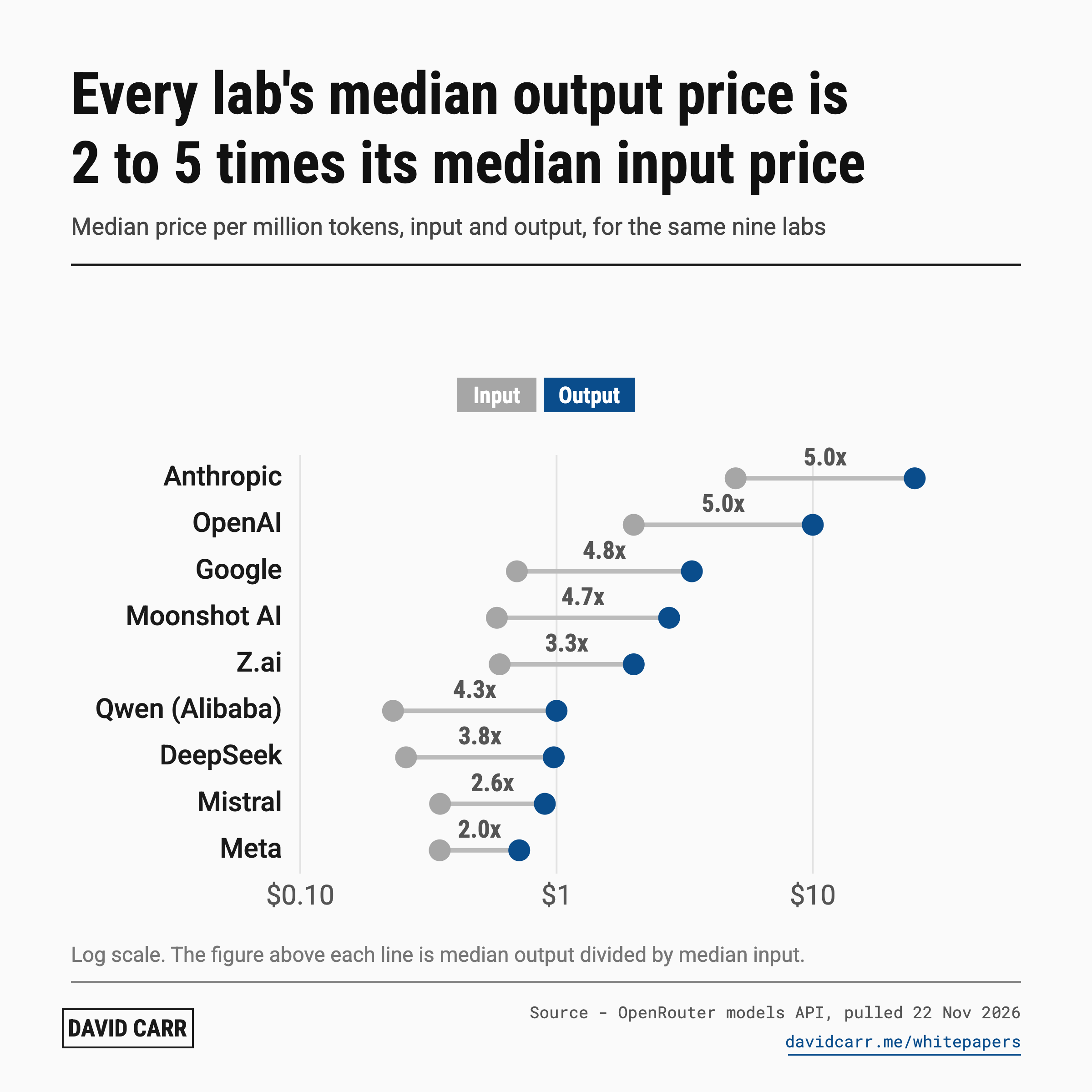
Every lab's median output price is 2 to 5 times its median input price
- Anthropic and OpenAI: 5 times
- Google: 4.8 times
- Moonshot AI: 4.7 times
- Qwen: 4.3 times
- DeepSeek: 3.8 times
- Z.ai: 3.3 times
- Mistral: 2.6 times
- Meta: 2 times
The gap between input and output shows up at every one of these labs.
Median output divided by median input, for each lab.
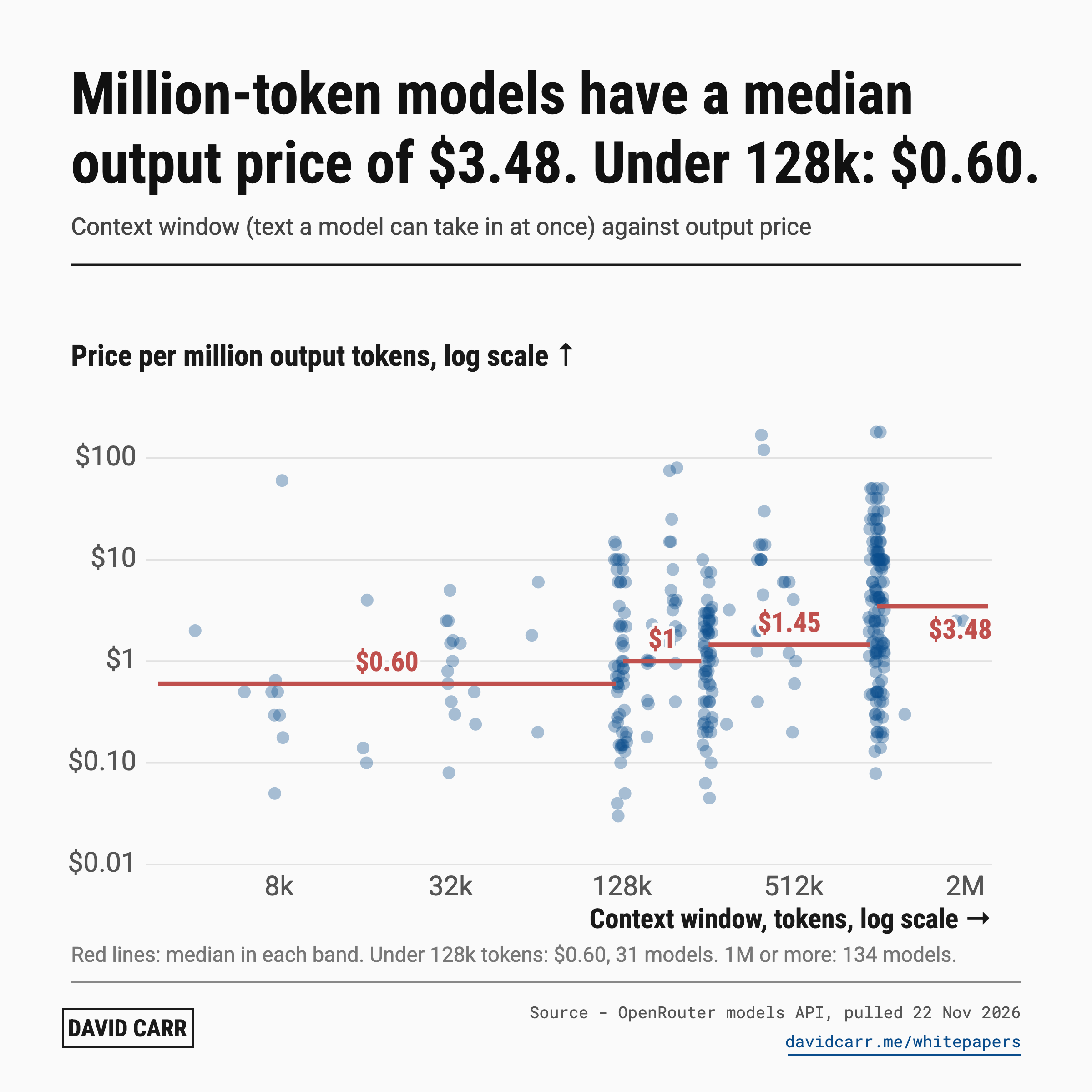
Million-token models have a median output price of $3.48
- Under 128k tokens: $0.60 (31 models)
- 128k to 256k: $1 (78)
- 256k to 1M: $1.45 (86)
- 1M or more: $3.475 (134)
- Largest window in the list: 2 million tokens
Models that can take in more text at once tend to cost more. But every band has models under $1 and models over $10.
Context window is the most text a model can take in at once, in tokens. 134 of the 329 models now take a million or more. k means thousand.
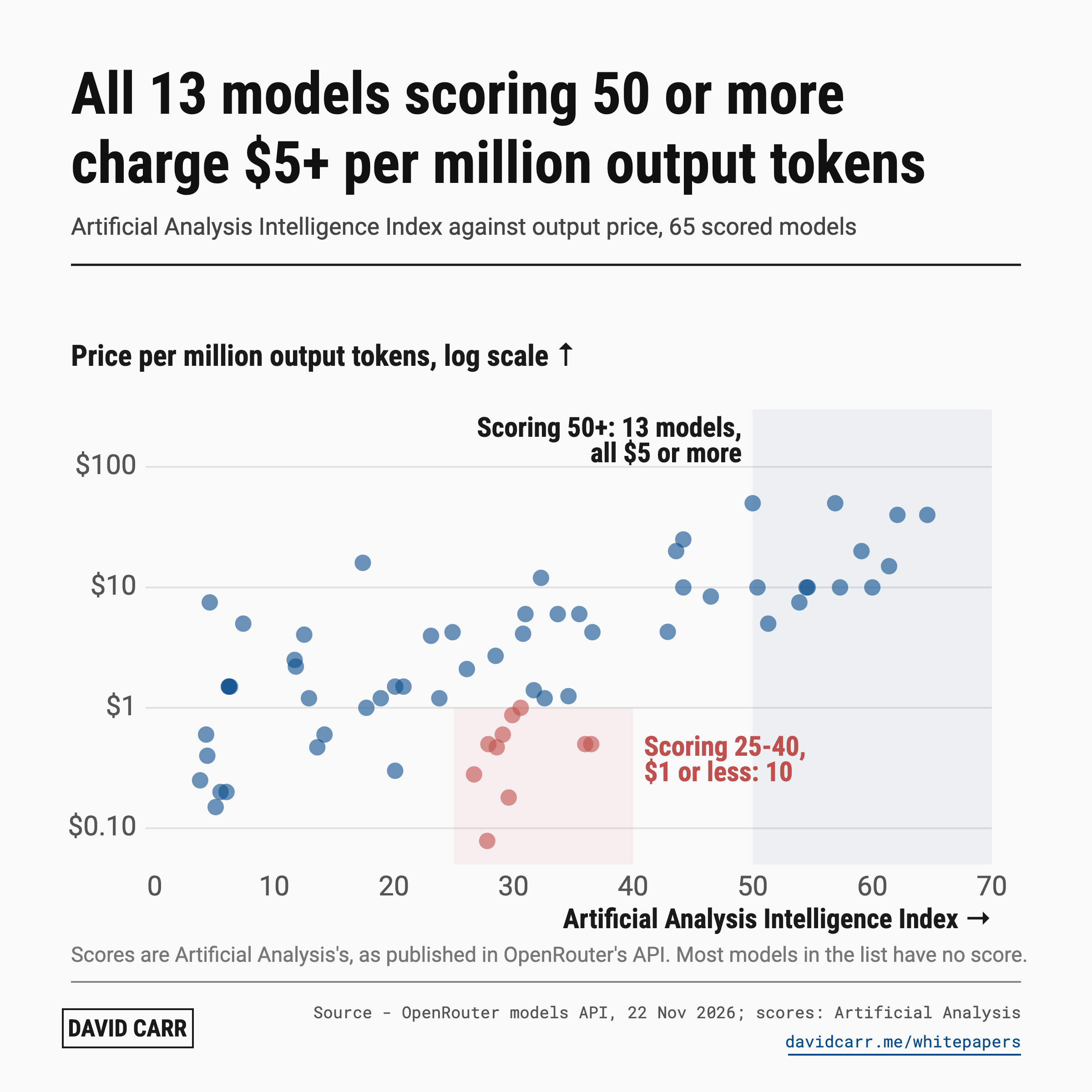
All 13 models scoring 50 or more charge at least $5 per million output tokens
- 65 models have an Artificial Analysis Intelligence Index score in the data
- Scoring 50 or more: 13 models, $5 to $50 for output
- Scoring 25 to 40: 21 models, 10 of them at $1 or less
- Scoring under 25: median $1.35
Higher scores go with higher prices, but loosely. Some models in the middle of the range cost less than many that score below them.
Scores from the Artificial Analysis Intelligence Index, as published in OpenRouter's API. One benchmark index is a narrow view of what a model is good at. Models are not named on the chart on purpose.
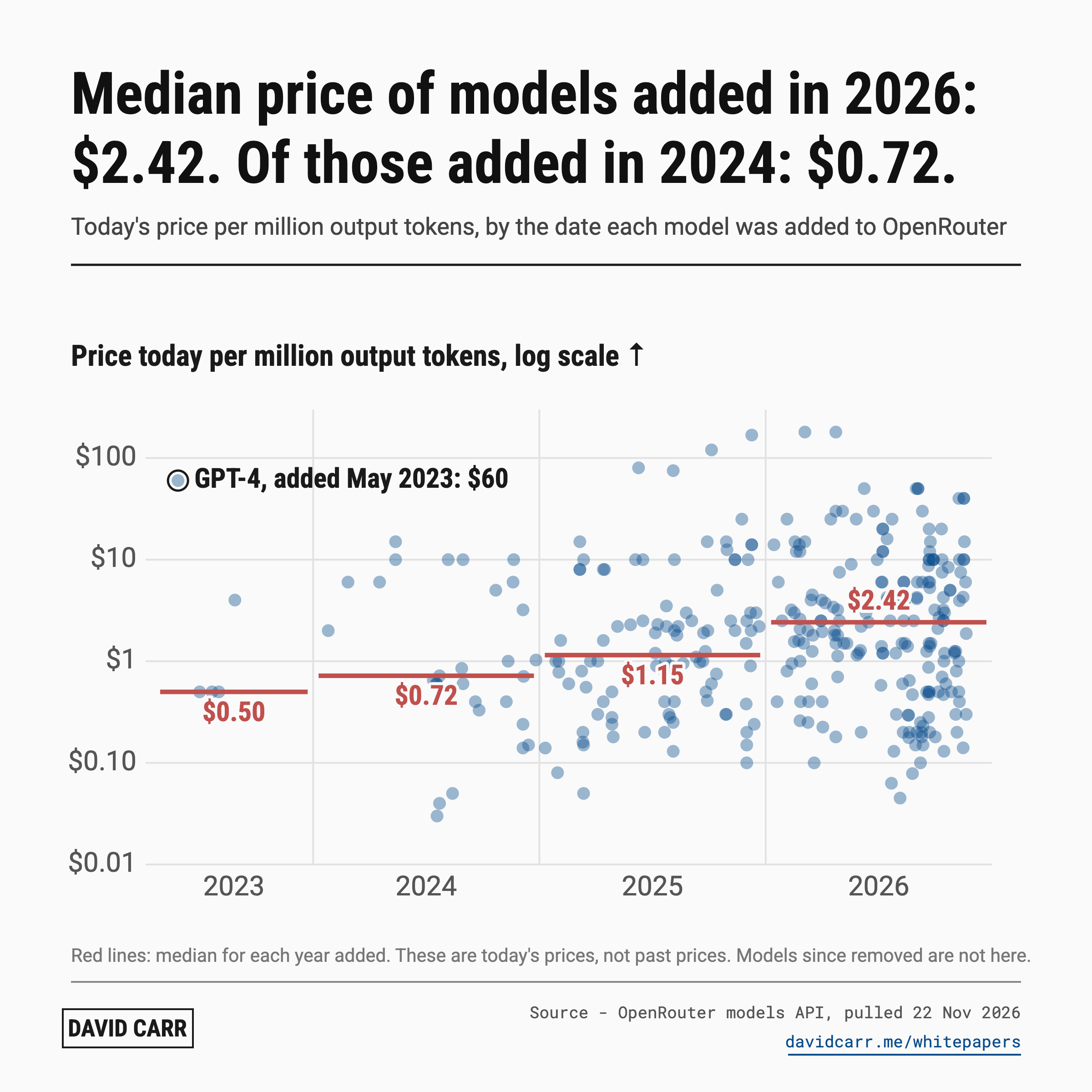
Models added in 2026 have a median price of $2.42. Those added in 2024: $0.72.
- Added in 2023, still listed: 5 models, median $0.50
- Added in 2024: 29 models, median $0.72
- Added in 2025: 98 models, median $1.15
- Added in 2026: 197 models, median $2.42
- GPT-4, the oldest model on the list (added May 2023): still $30 input, $60 output
This data cannot say how fast AI prices have fallen. It has today's prices only. What it shows is that newer listings are not cheaper on median. 322 of the 329 models charge less for output than GPT-4 does.
These are today's prices, by the date each model was added to OpenRouter. They are not the prices models were launched at. Models that have been removed are not in the data, so older years show only the models that stayed.
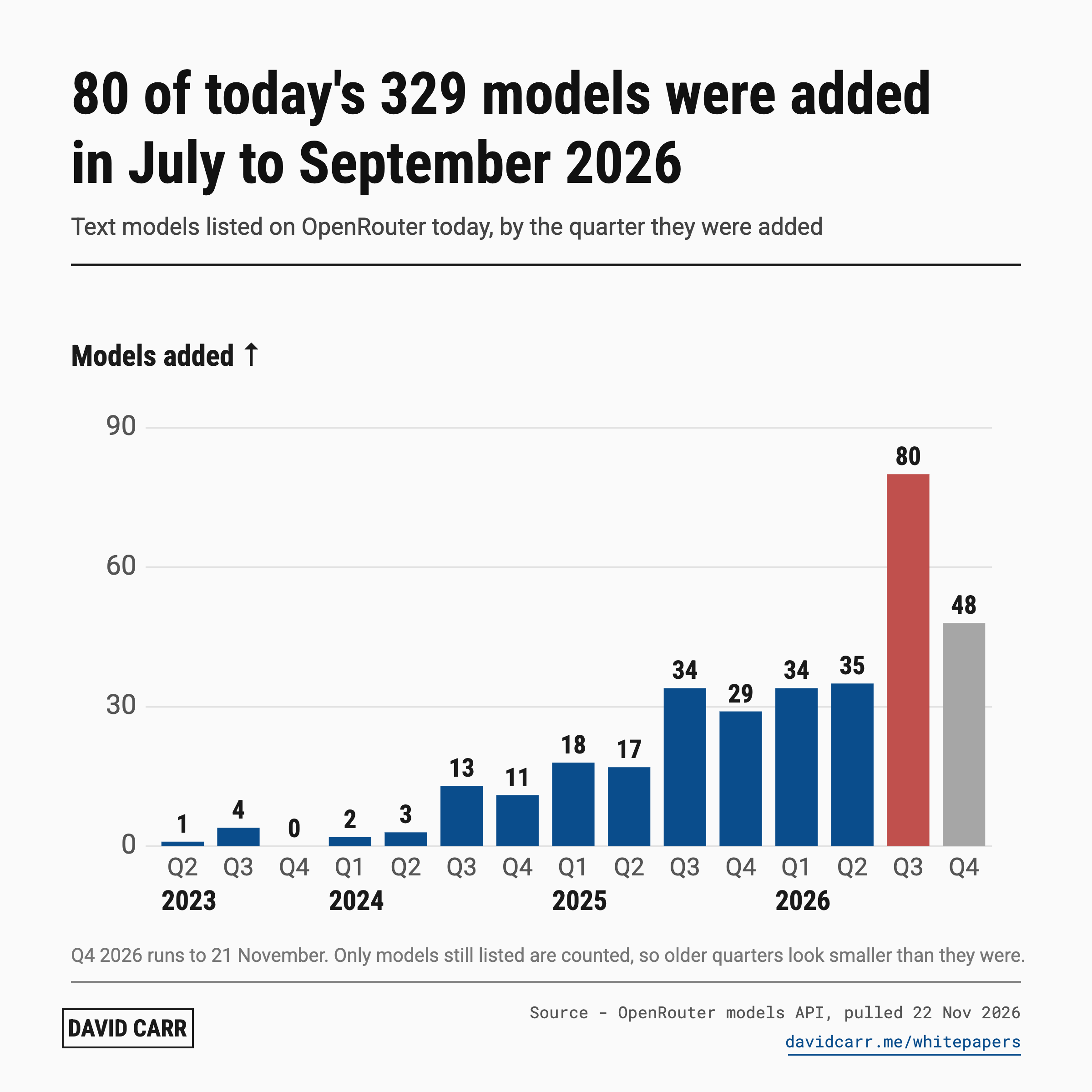
80 of today's 329 models were added in July to September 2026
- Added in 2023 and still listed: 5
- 2024: 29
- 2025: 98
- 2026 to 21 November: 197
- July to September 2026: 80, the most of any quarter
Most of the models on the list are less than a year old. 197 of 329 were added in 2026.
Only models still listed are counted, so older quarters look smaller than they were.
Method, caveats and sources
The short answer. On OpenRouter today, a million output tokens costs anywhere from 3 cents to $180, with a median of $1.80. Input is cheaper, with a median of 43.5 cents. Output costs more than input for 315 of 329 models, most often four or five times as much. Bigger context windows and higher benchmark scores go with higher prices. This data cannot say how fast prices have fallen, because it holds today's prices only. Models added in 2026 have a higher median price than those added in 2024.
Data. One pull of OpenRouter's public models API (no key) on 22 November 2026 (01:42 UTC on 23 November). It lists 476 entries, each with a price per token for input and output, a cached-input price for most, a context window and the date it was added. Prices here are per million tokens. The raw response is saved with the scripts, so every number can be checked.
Which models. 329 of the 476 entries. Left out: 9 routers that pick a model for you and have no fixed price, 19 "latest" aliases that point at another entry, 92 cheaper batch versions and 11 free versions of other entries, and 16 models that make images, audio or video as well as text. Older dated versions of a model that are still listed are counted as their own models. Some models charge more for very long inputs; the standard price is used.
Lab is the first part of each model's ID, with Meta and its Llama models counted together. For open-weight models, the price is set by the firms that host them on OpenRouter, not by the lab.
Scores. The Artificial Analysis Intelligence Index comes inside OpenRouter's API for 65 of the 329 models, all added since August 2025. It is one benchmark index. It is shown as published and not checked against Artificial Analysis directly.
Not historical prices. OpenRouter shows each model's price now. A model added in 2024 shows its 2024 price only if the price never changed. Models that were removed are gone. So the charts by date added show today's prices of the models that stayed, not how prices moved over time.
Left out. A line of how the price of the same capability has fallen over the years. That needs prices from past dates, from vendors' own pricing pages and launch posts, checked one by one. This page doesn't attempt it. Batch prices: 69 of the 89 batch versions with a matching standard model cost exactly half.
OpenRouter is one marketplace. Prices can differ when you buy straight from a lab or a cloud provider, and some models are not on OpenRouter at all.
Also: Where the AI tokens go, Which open AI models people download and Stripe.