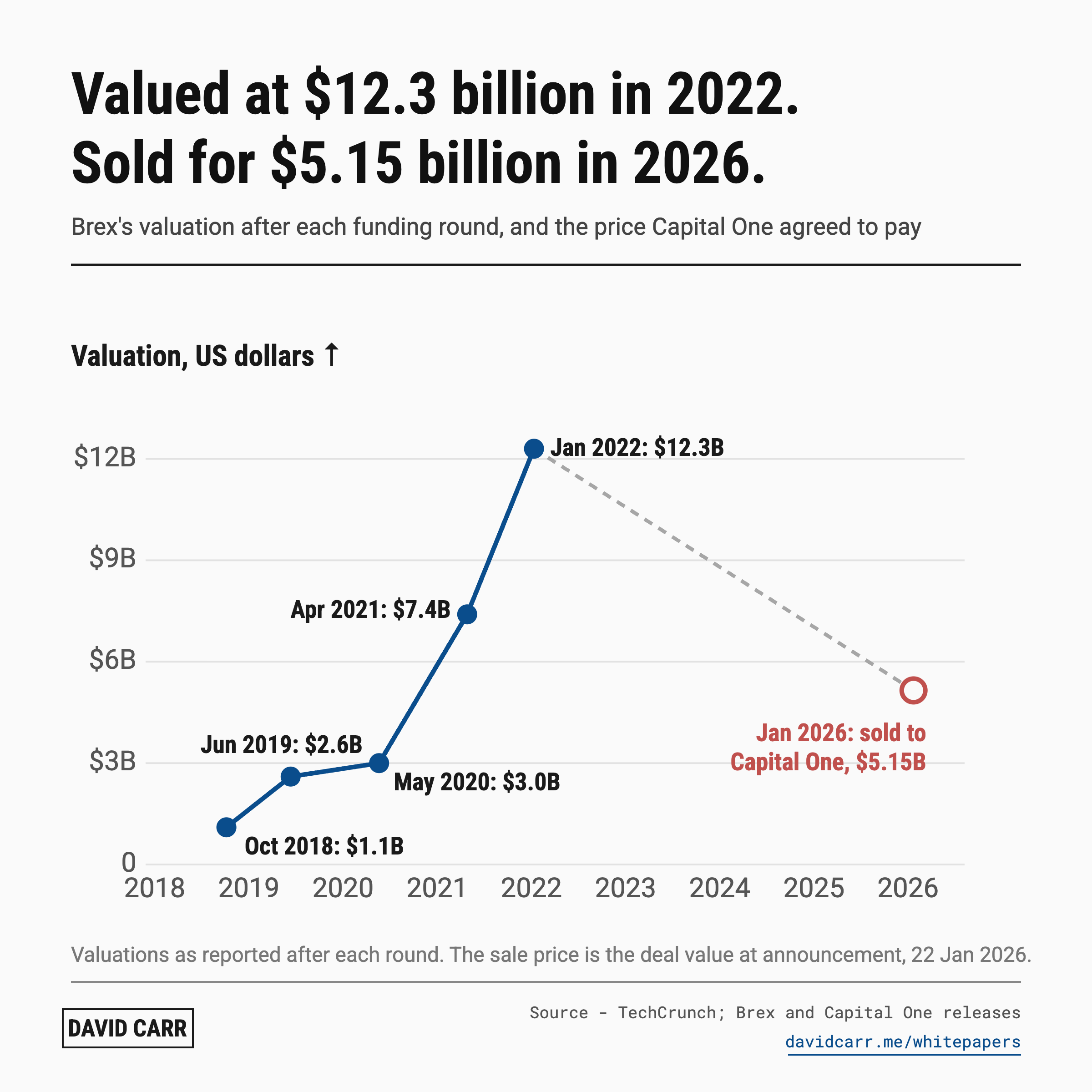
Valued at $12.3 billion in 2022. Sold for $5.15 billion in 2026.
Brex's value rose more than tenfold in just over three years. The sale price was about 42% of the 2022 peak.
Round valuations as reported by TechCrunch and Brex. The May 2020 figure (just over $3.0B) is Crunchbase's, quoted by TechCrunch. Banking Dive reports the deal as $2.75B in cash plus 10.6 million Capital One shares.
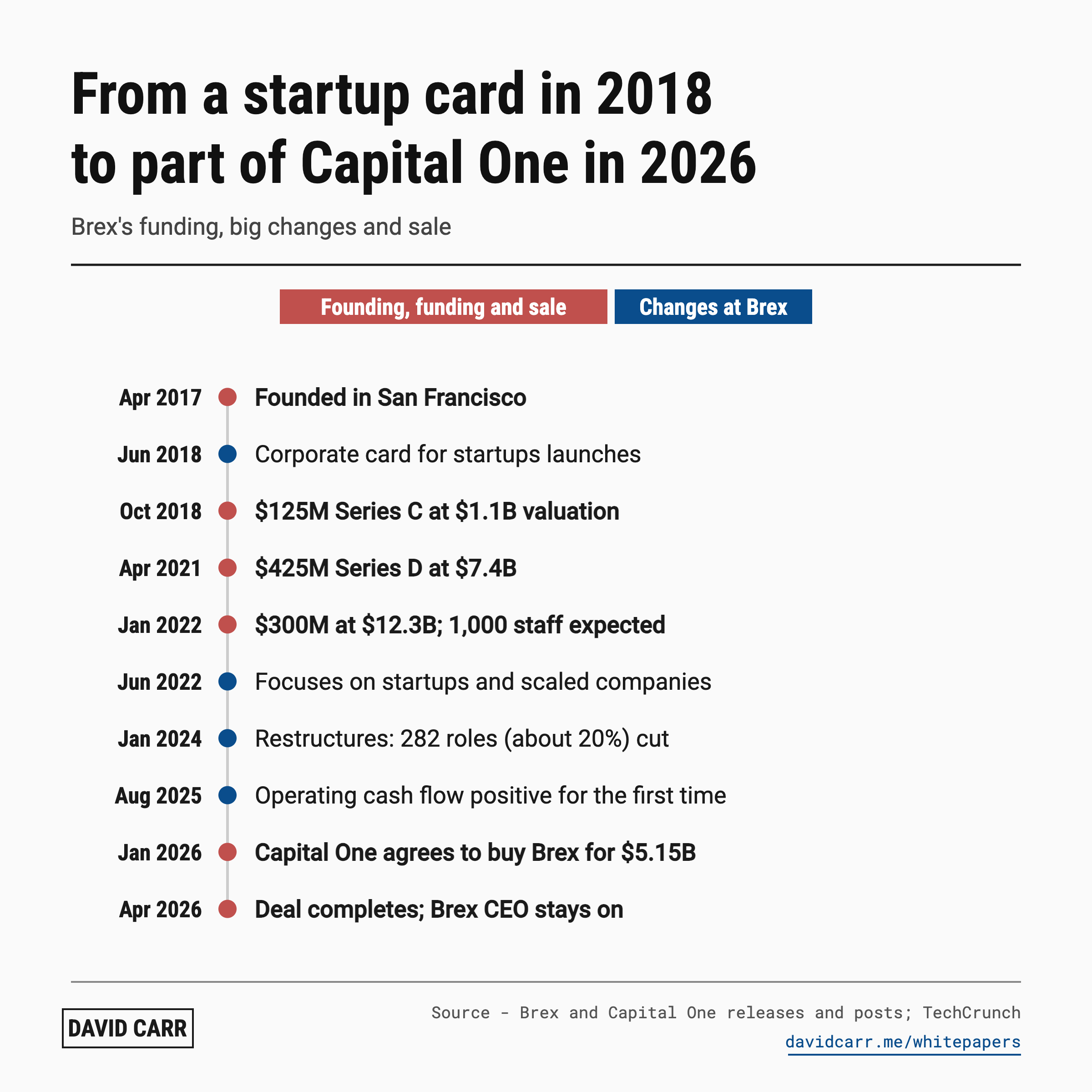
From a startup card in 2018 to part of Capital One in 2026
- 2018: the corporate card for startups launches
- June 2022: Brex narrows its focus to startups and scaled companies
- August 2025: operating cash flow positive for the first time, Brex says
- 7 April 2026: the Capital One deal completes
Brex grew fast, reset in 2024, and was sold two years later. Its co-founder stayed on as CEO.
Dates from Brex and Capital One releases and posts. The 2024 figure is from TechCrunch.
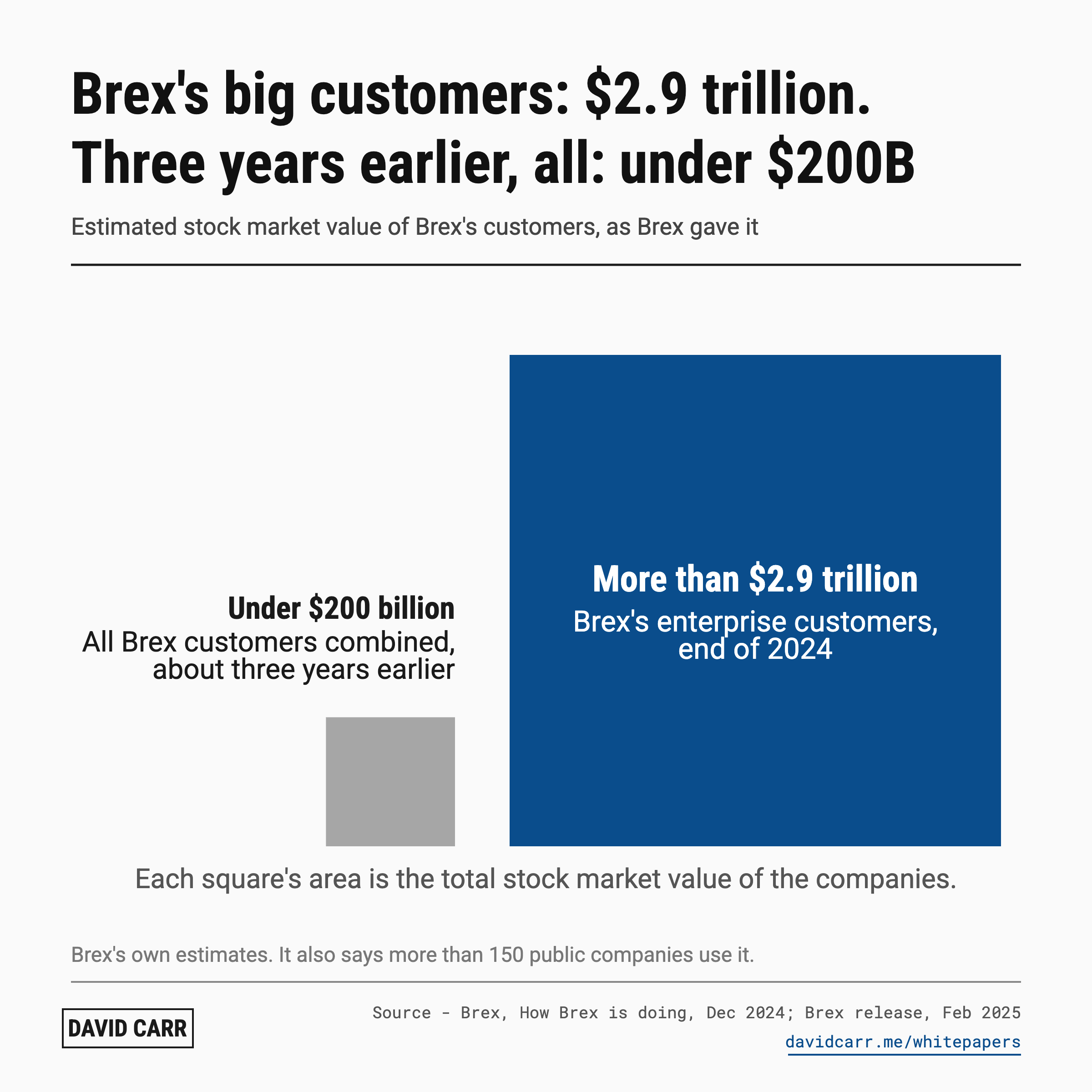
Brex's big customers: $2.9 trillion. Three years earlier, all of them: under $200 billion.
- Enterprise customers, end of 2024: more than $2.9 trillion in market value
- All customers, about three years earlier: under $200 billion
- More than 150 public companies use Brex
- Named customers include Anthropic, Arm, Robinhood and Wiz
Brex moved from startups towards big companies. By this measure the customer base is more than 14 times bigger.
Both figures are Brex's own estimates, from its December 2024 post and its February 2025 release.
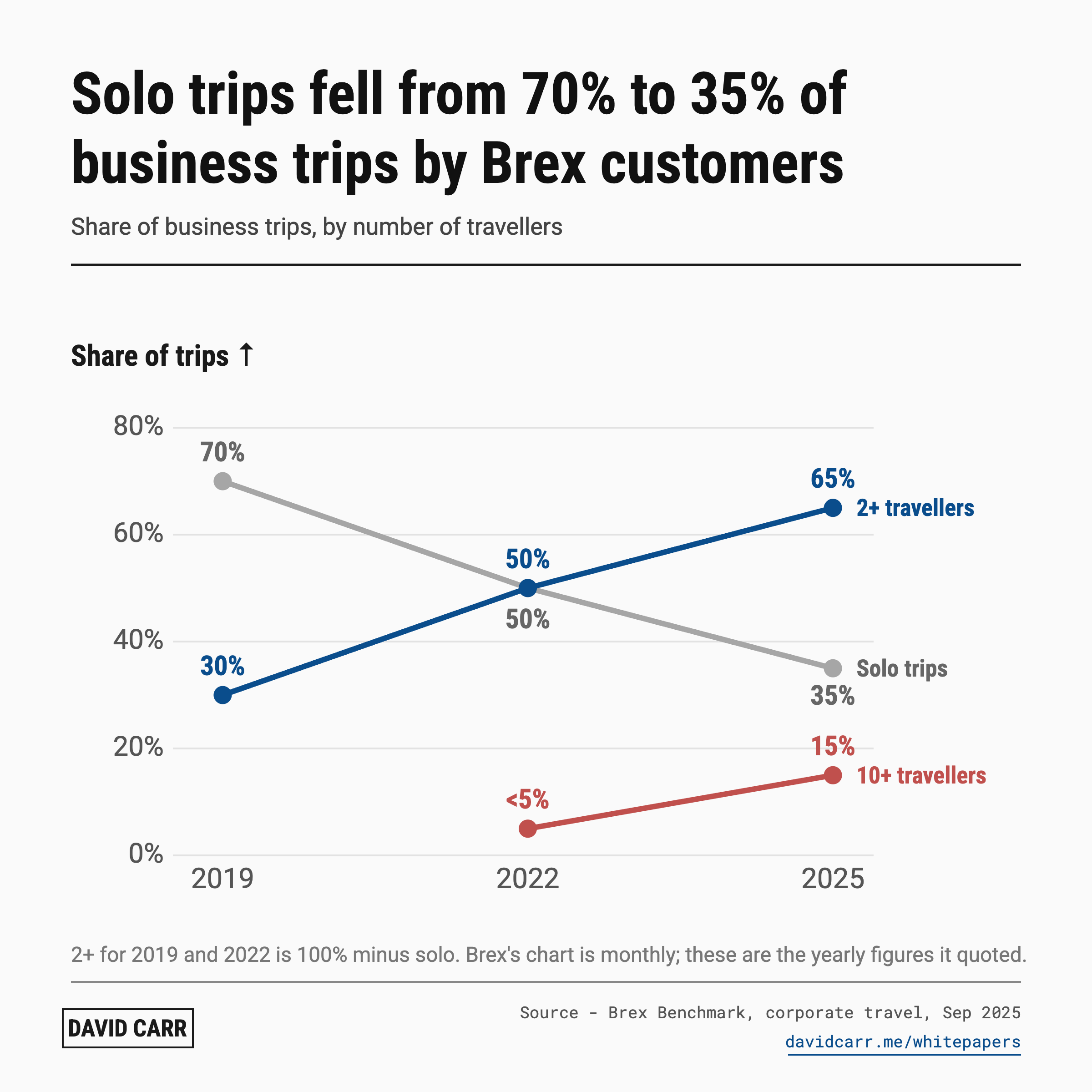
Solo trips fell from 70% to 35% of business trips by Brex customers
- 2019: 70% of trips were solo
- 2022: 50%
- 2025: 35%
- Trips with 10+ people: under 5% in 2022, 15% in 2025
Teams now travel together. About a quarter of travelling customers run a 10-person offsite every quarter, against 5% before the pandemic.
From the Brex Benchmark on corporate travel, September 2025.
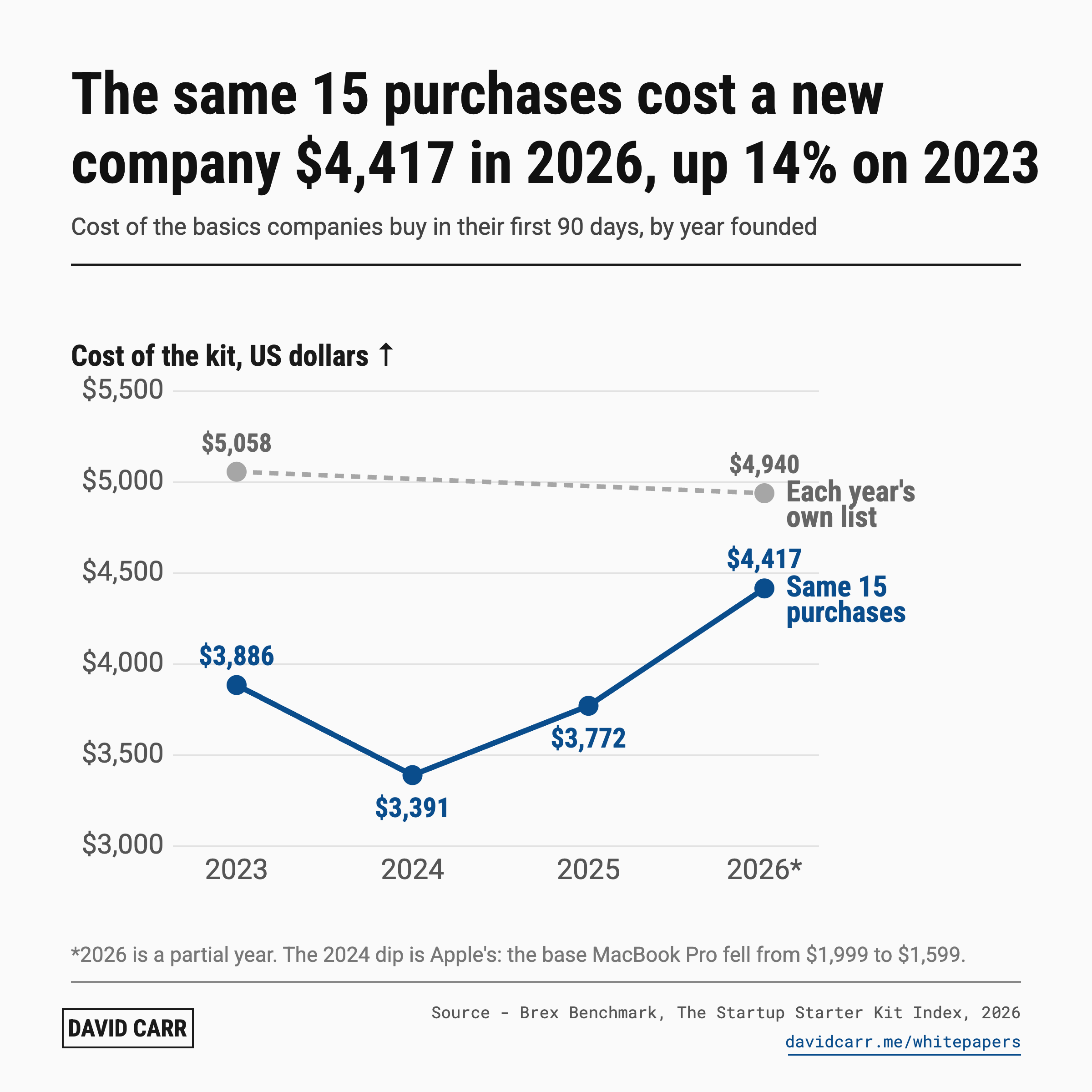
The same 15 purchases cost a new company $4,417 in 2026, up 14% on 2023
- Founded in 2023: $3,886
- 2024: $3,391
- 2025: $3,772
- 2026 so far: $4,417
The basics include Google Workspace, Slack, AWS, Notion and a laptop. Each year's own list cost about the same: $5,058 in 2023 and $4,940 in 2026.
From Brex's Startup Starter Kit Index. The kit is anything 10% or more of new companies bought in their first 90 days, travel and meals left out.
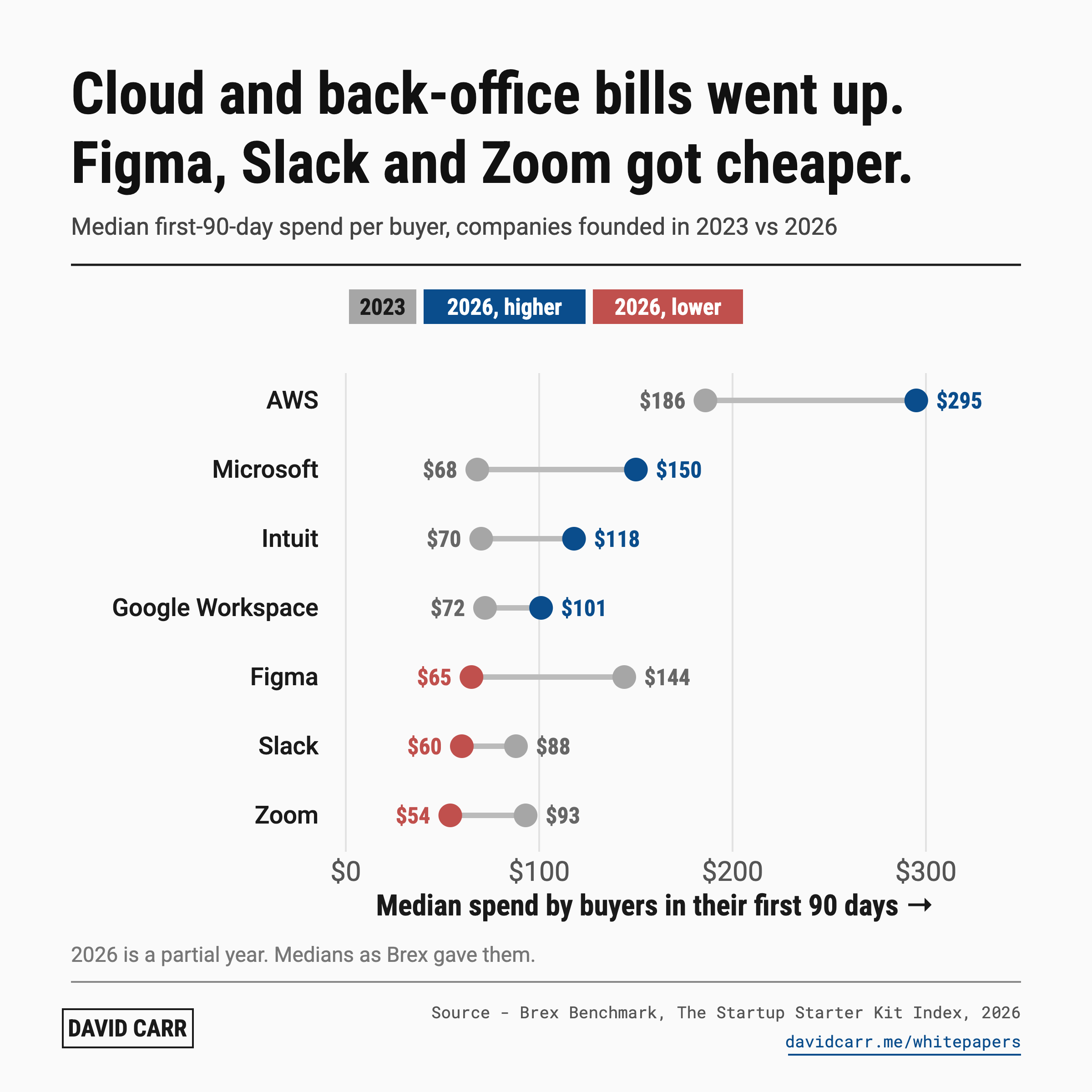
Cloud and back-office bills went up. Figma, Slack and Zoom got cheaper.
- AWS: $186 to $295
- Microsoft: $68 to $150
- Google Workspace: $72 to $101
- Figma: $144 to $65
- Zoom: $93 to $54
Infrastructure costs more. The old collaboration tools cost less, but not enough to make up for it.
Median spend by buyers in their first 90 days, from the Starter Kit Index. 2026 is a partial year.
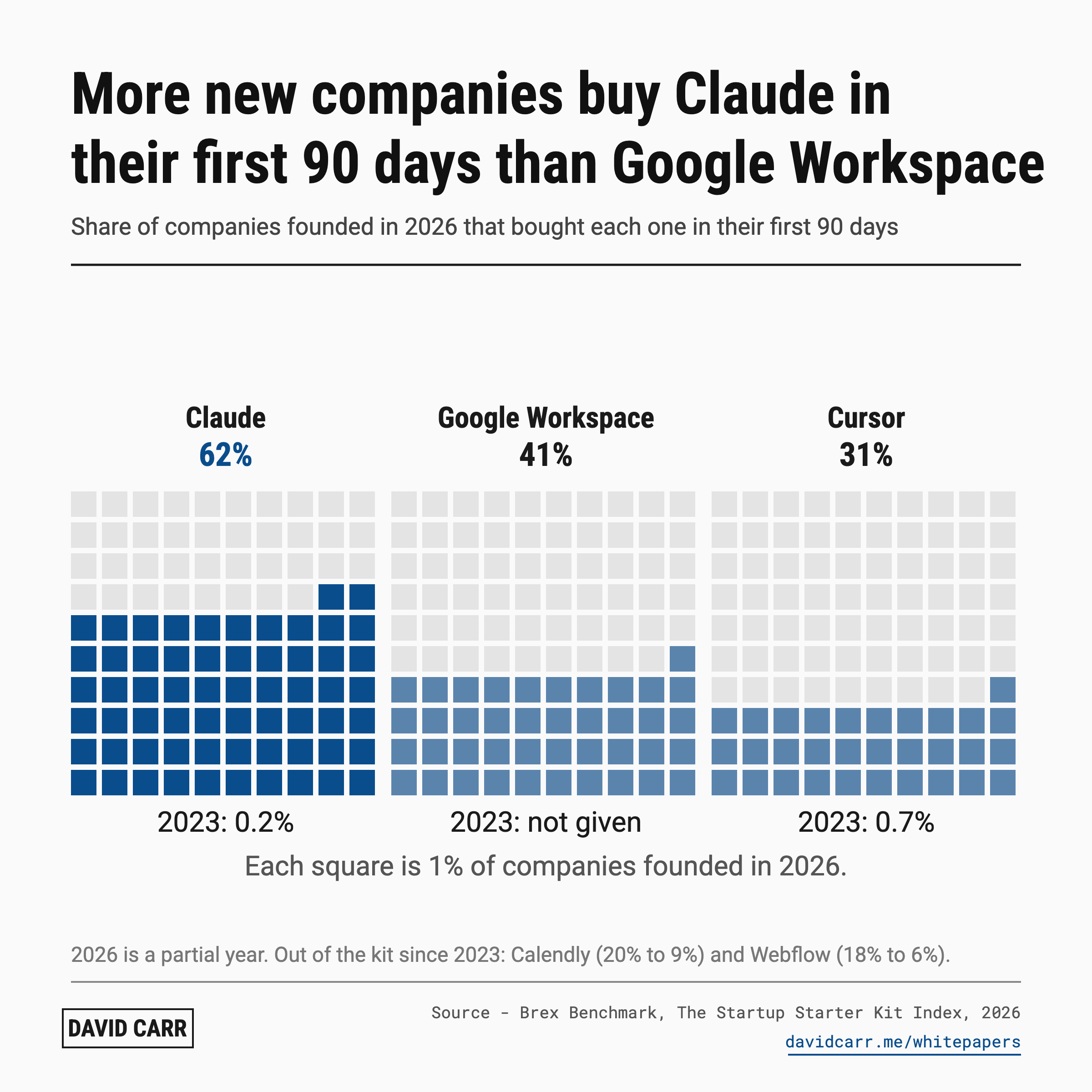
More new companies buy Claude in their first 90 days than Google Workspace
- Claude: 0.2% of 2023 founders, 62% of 2026 founders
- Google Workspace: 41% in 2026
- Cursor: 0.7% to 31%
- Calendly: 20% to 9%. Webflow: 18% to 6%
AI tools moved into the kit as website builders and scheduling tools moved out. The typical Claude buyer spends $507 in the first 90 days.
From Brex's Startup Starter Kit Index, 2026.
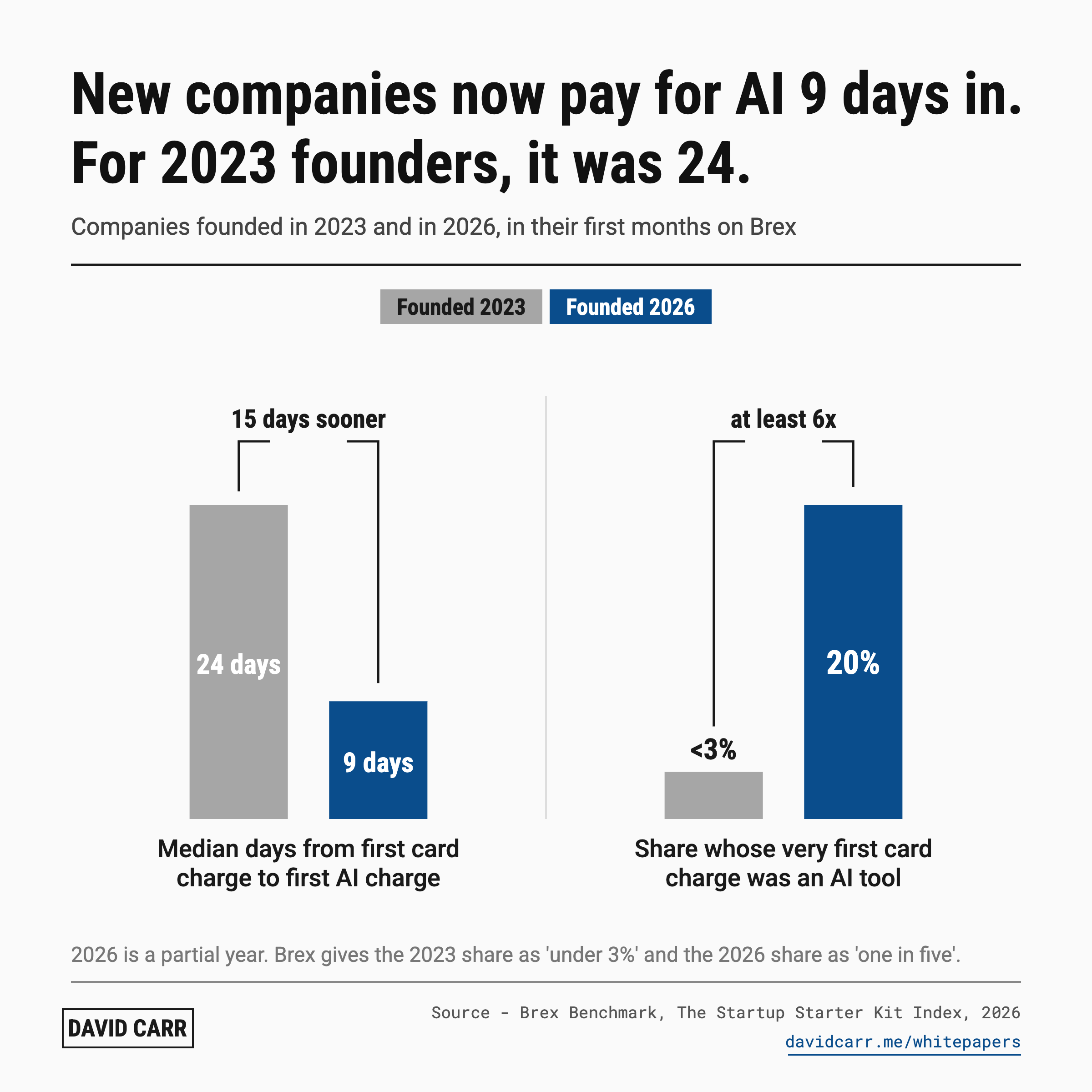
New companies now pay for AI 9 days in. For 2023 founders, it was 24.
- Median days from first card charge to first AI charge: 24 for 2023 founders, 9 for 2026
- First-ever card charge is an AI tool: under 3% in 2023, one in five in 2026
AI has become one of the first things a company buys, not something it adds later.
From the Starter Kit Index. 2026 is a partial year.
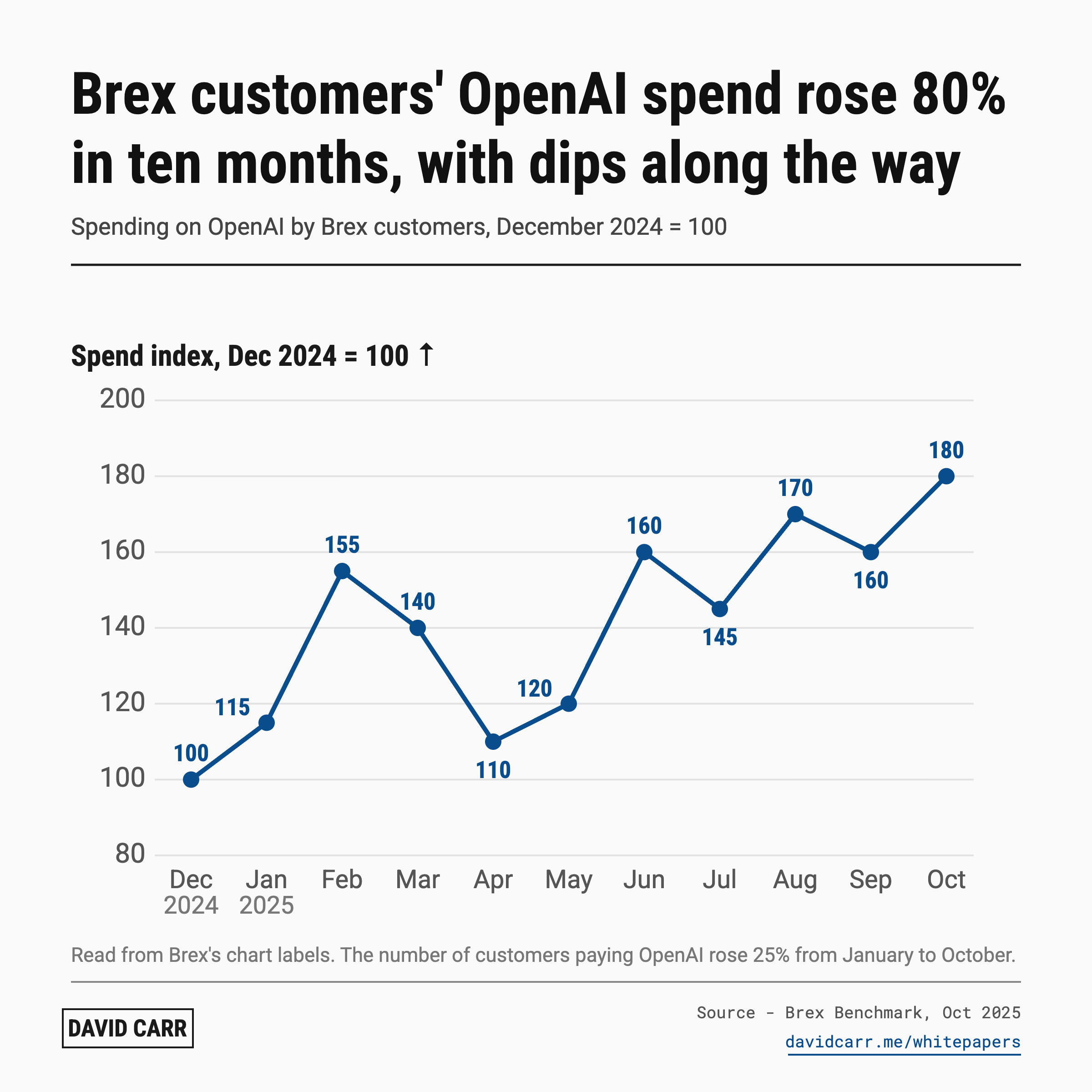
Brex customers' OpenAI spend rose 80% in ten months, with dips along the way
- December 2024 = 100
- February 2025: 155
- April: 110
- October: 180
- Customers paying OpenAI: up 25% from January to October
Spend grew much faster than the number of customers. Existing customers spent more, Brex says.
Index values read from the labelled chart in the October 2025 Brex Benchmark.
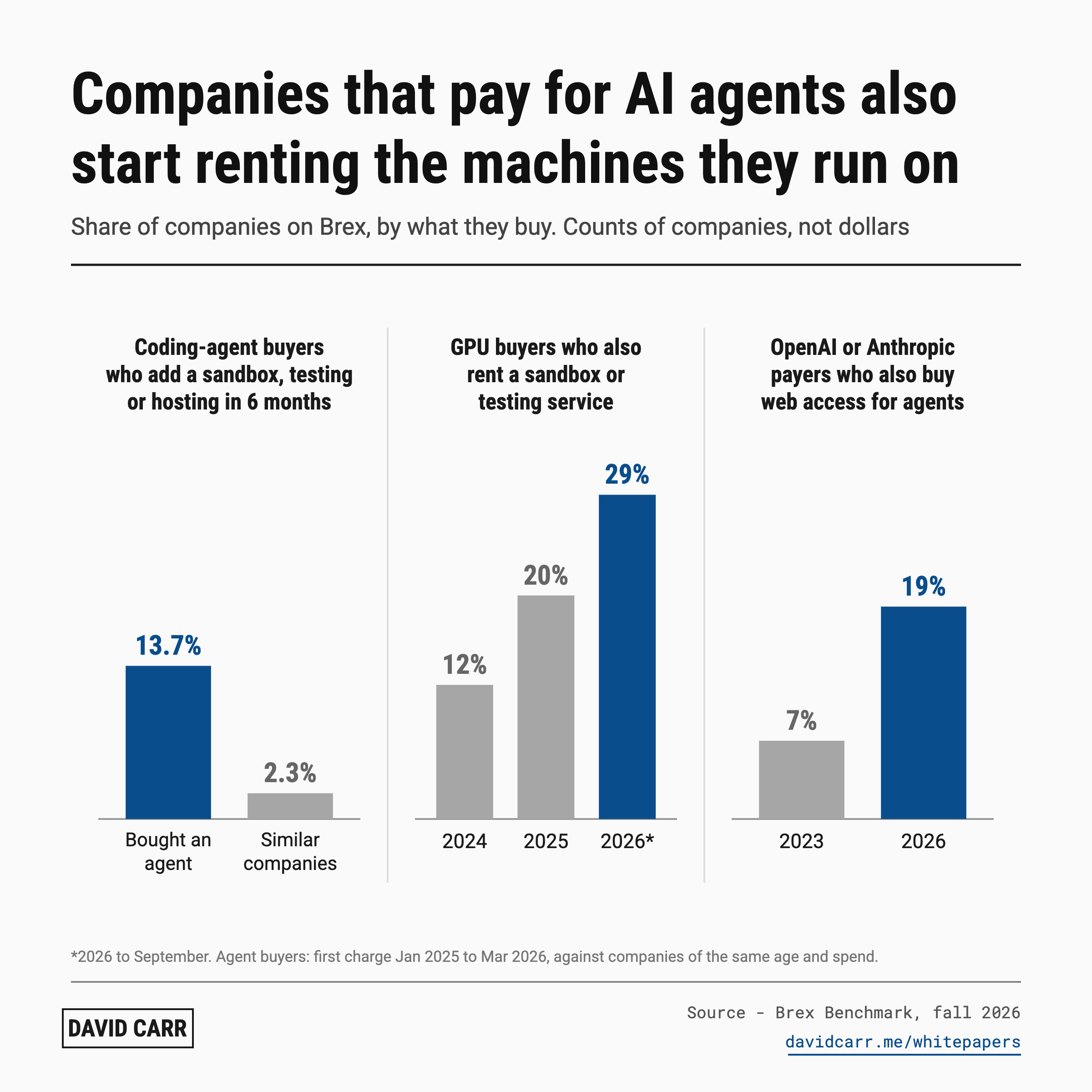
Companies that pay for AI agents also start renting the machines they run on
- Coding-agent buyers adding a sandbox, testing or hosting within six months: 13.7%, against 2.3% for similar companies
- GPU buyers also renting a sandbox or testing service: 12% in 2024, 29% in 2026
- OpenAI or Anthropic payers also buying web access for agents: 7% in 2023, 19% in 2026
An AI agent needs somewhere to run code and a way to read the web. Companies are paying for both.
From the fall 2026 Brex Benchmark. These count companies, not dollars.
Method, caveats and sources
The short answer. Brex was valued at $12.3 billion in 2022 and sold to Capital One for $5.15 billion in 2026. Along the way its customers got much bigger. Its own data shows new companies buying AI tools within days, and paying for the machines their AI agents run on.
Brex was private. It never published its revenue. In February 2025 TechCrunch reported, from a source quoted by Bloomberg and The Information, that Brex expected about $500 million in net revenue for 2025. That is an estimate and is not charted. Valuations come from TechCrunch and Brex; the sale price is from Capital One's release.
Brex's own data. Charts four to ten use figures Brex published from its customers' card and bill pay spending, anonymised and grouped. Brex customers lean towards startups and tech companies, so they are not a sample of all businesses. Brex has described its customer base as 30,000+ (October 2025), 35,000+ (December 2025 onwards) and, in Capital One's release, over 25,000. 2026 figures are partial years.
Left out. Headcount, because there is no consistent series: TechCrunch put it at around 1,300 before October 2022, and Brex expected 1,000 staff in January 2022. Brex's seasonal top-25 vendor rankings are covered on the Ramp vs Brex page, so they are not repeated here.
Data dates. All sources read on 24 November 2026.
Also: Stripe, Ramp vs Brex and Ramp.