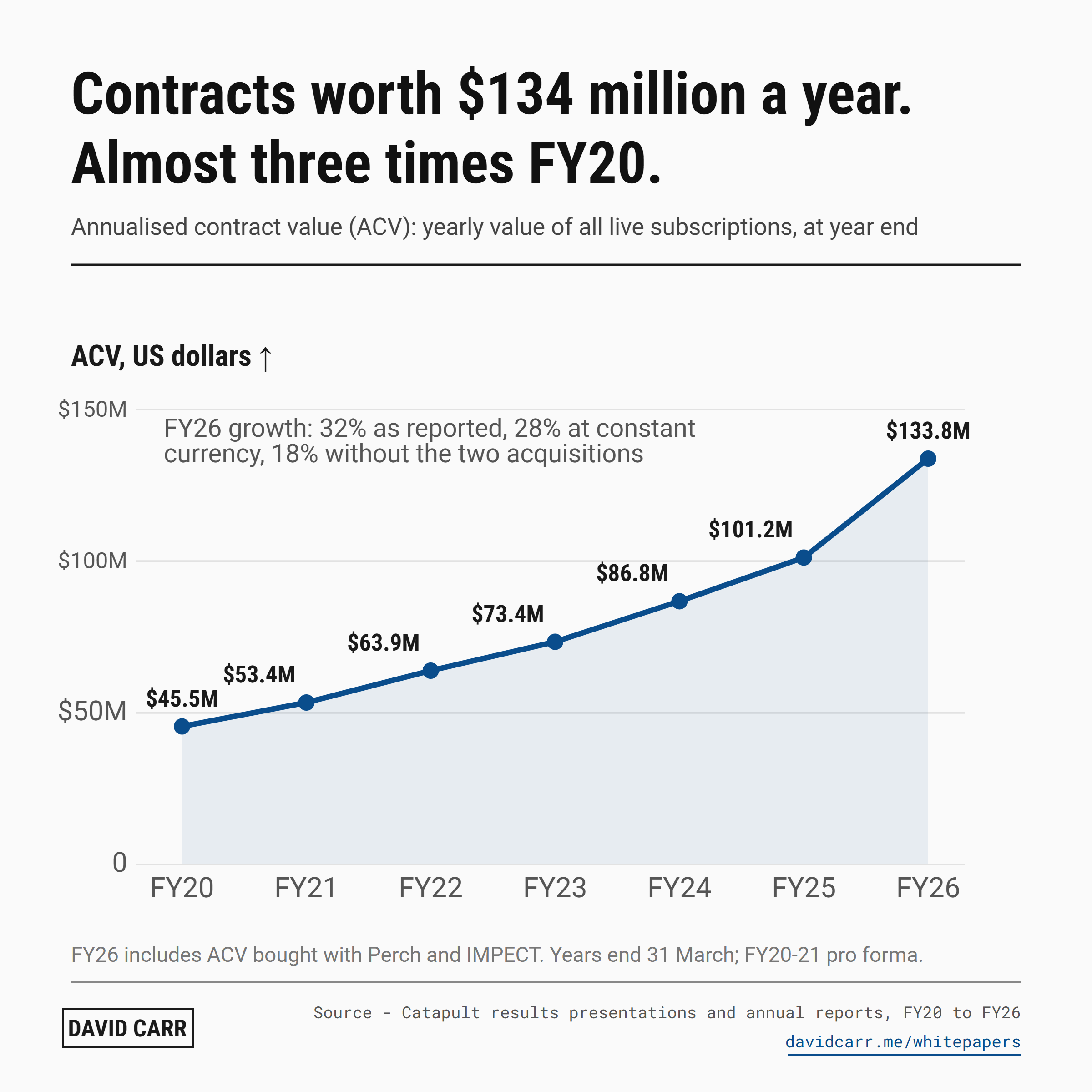
Contracts worth $134 million a year. Almost three times FY20.
- FY20: $45.5M
- FY22: $63.9M
- FY24: $86.8M
- FY25: $101.2M
- FY26: $133.8M
ACV is the yearly value of every live subscription. It has grown every year in the filings, and Catapult calls it its leading indicator of future revenue.
FY20 to FY24 from the track-record table in the FY24 results presentation; FY25 and FY26 from the FY26 annual report. FY26 includes ACV bought with Perch and IMPECT: 18% growth without them, at constant currency.
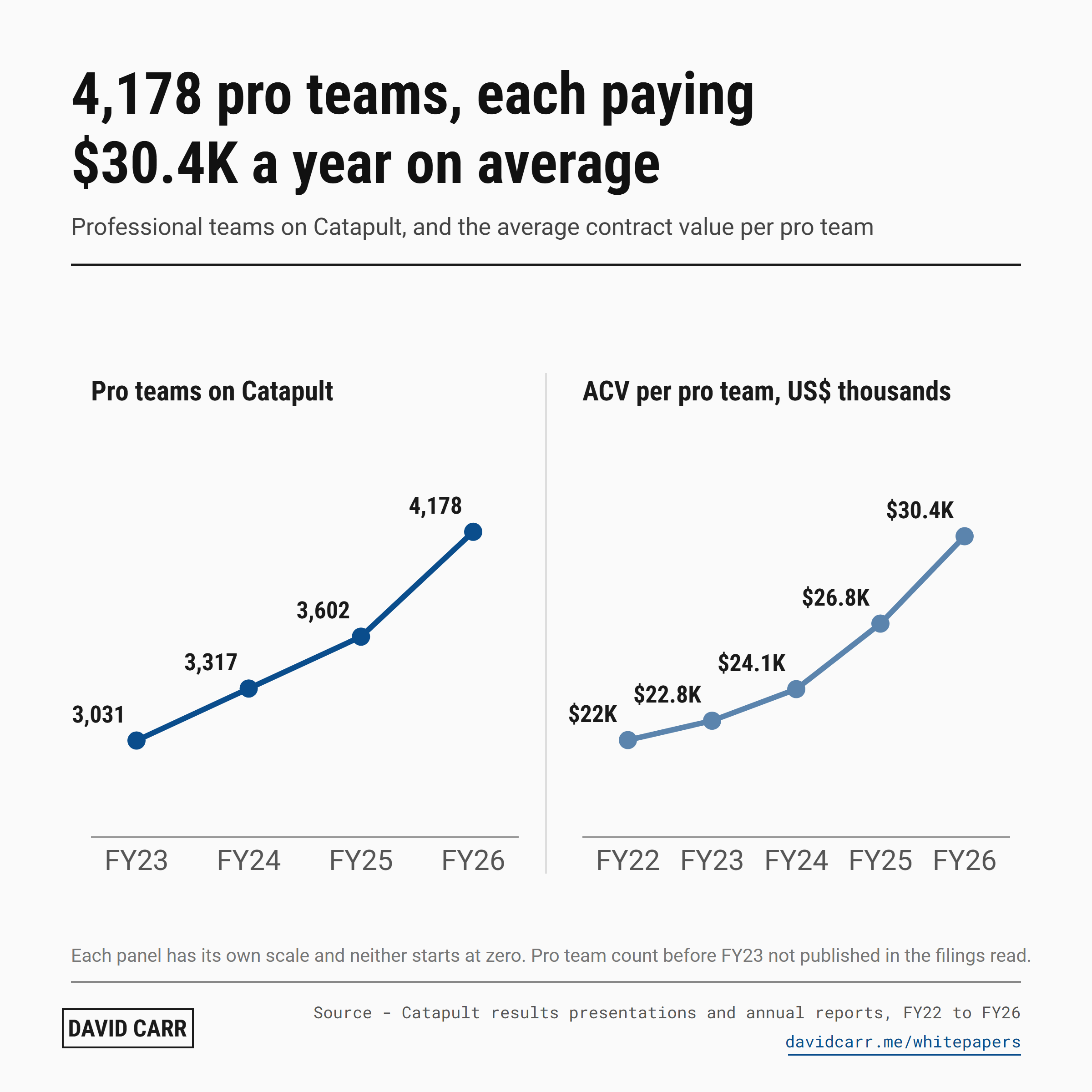
4,178 pro teams, each paying $30,400 a year on average
- FY23: 3,031 teams at $22.8K
- FY24: 3,317 at $24.1K
- FY25: 3,602 at $26.8K
- FY26: 4,178 at $30.4K
More teams, and each one paying more. The number of pro teams using more than one Catapult product rose from 563 to 1,328 in two years.
From the FY24 presentation, the FY25 results and the FY26 annual report. Counting all teams, not only pro, Catapult says it works with more than 5,500.
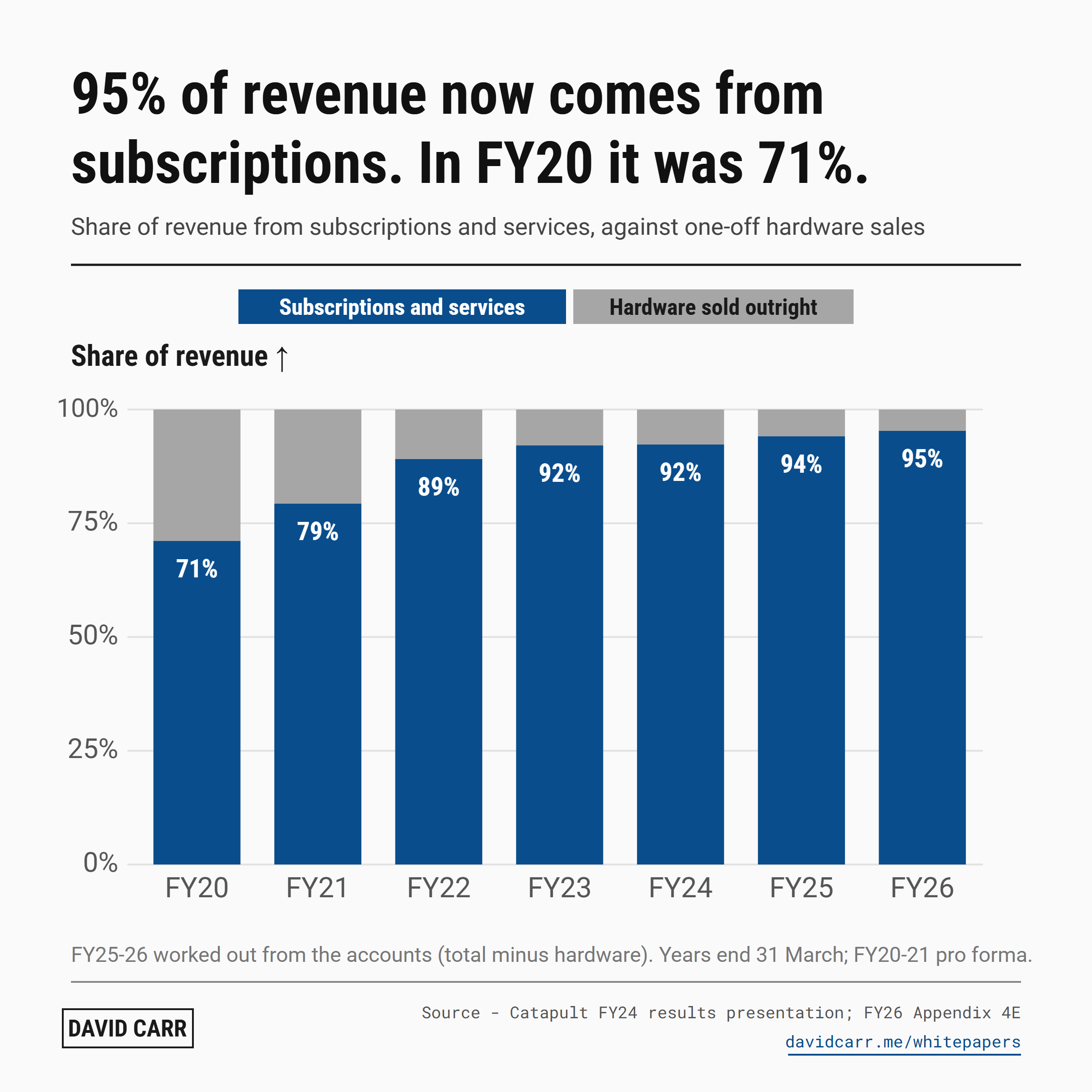
95% of revenue now comes from subscriptions. In FY20 it was 71%.
- FY20: 71%
- FY22: 89%
- FY24: 92%
- FY26: 95%
Catapult used to sell a lot of its hardware outright. Now teams mostly rent the vests and software by the year. Hardware sold outright brought in $6.6M in FY26.
FY20 to FY24 as Catapult stated them in the FY24 presentation. FY25 and FY26 are my division of the figures in note 7 of the FY26 accounts: total revenue less "capital" sales.
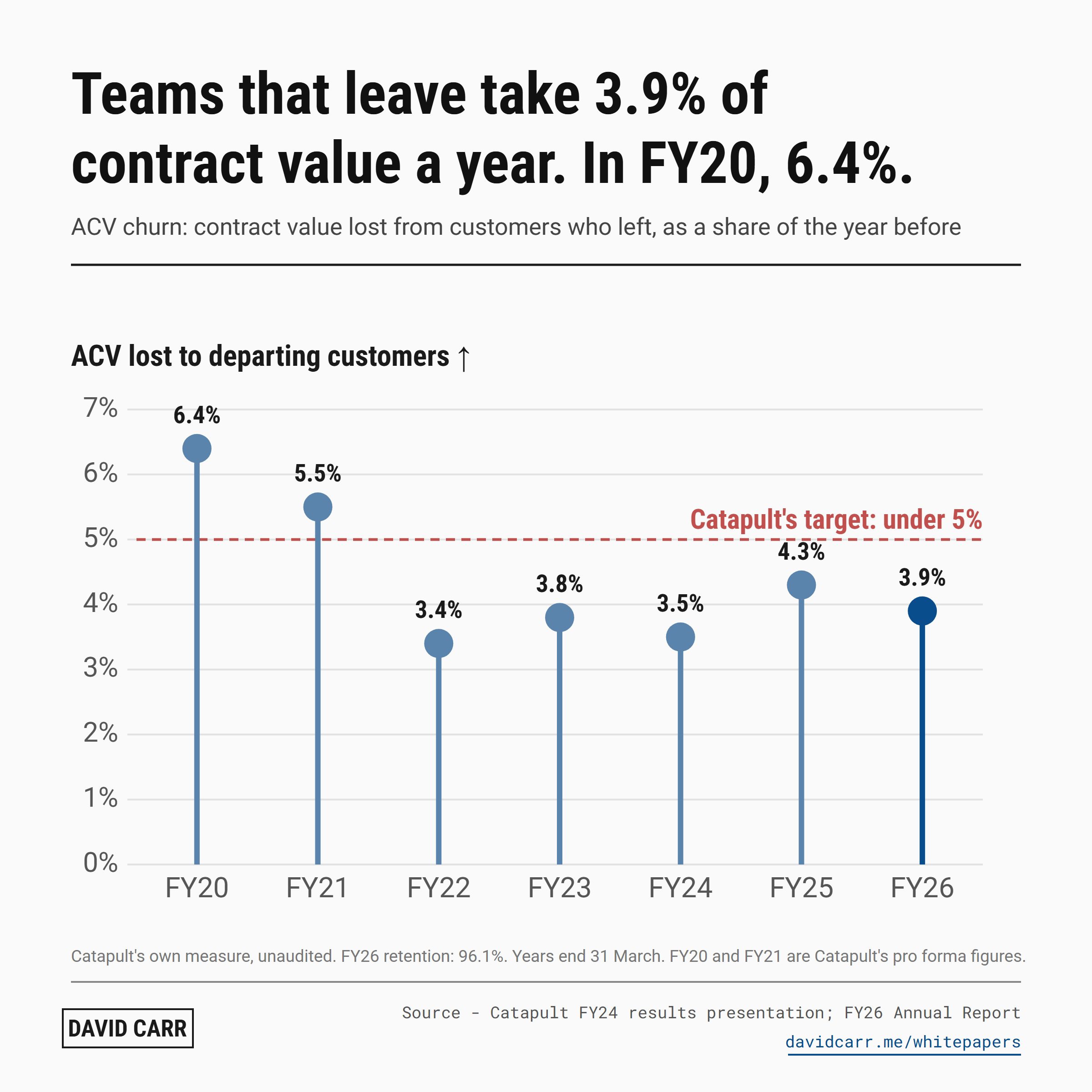
Teams that leave take 3.9% of contract value a year. In FY20, 6.4%.
- FY20: 6.4%
- FY21: 5.5%
- FY22: 3.4%
- FY24: 3.5%
- FY25: 4.3%
- FY26: 3.9%
Catapult's target is to keep this under 5%. It has done so every year since FY22. Put the other way, it kept 96.1% of its contract value in FY26.
Catapult's own measure, unaudited, from the FY24 presentation and FY26 annual report.
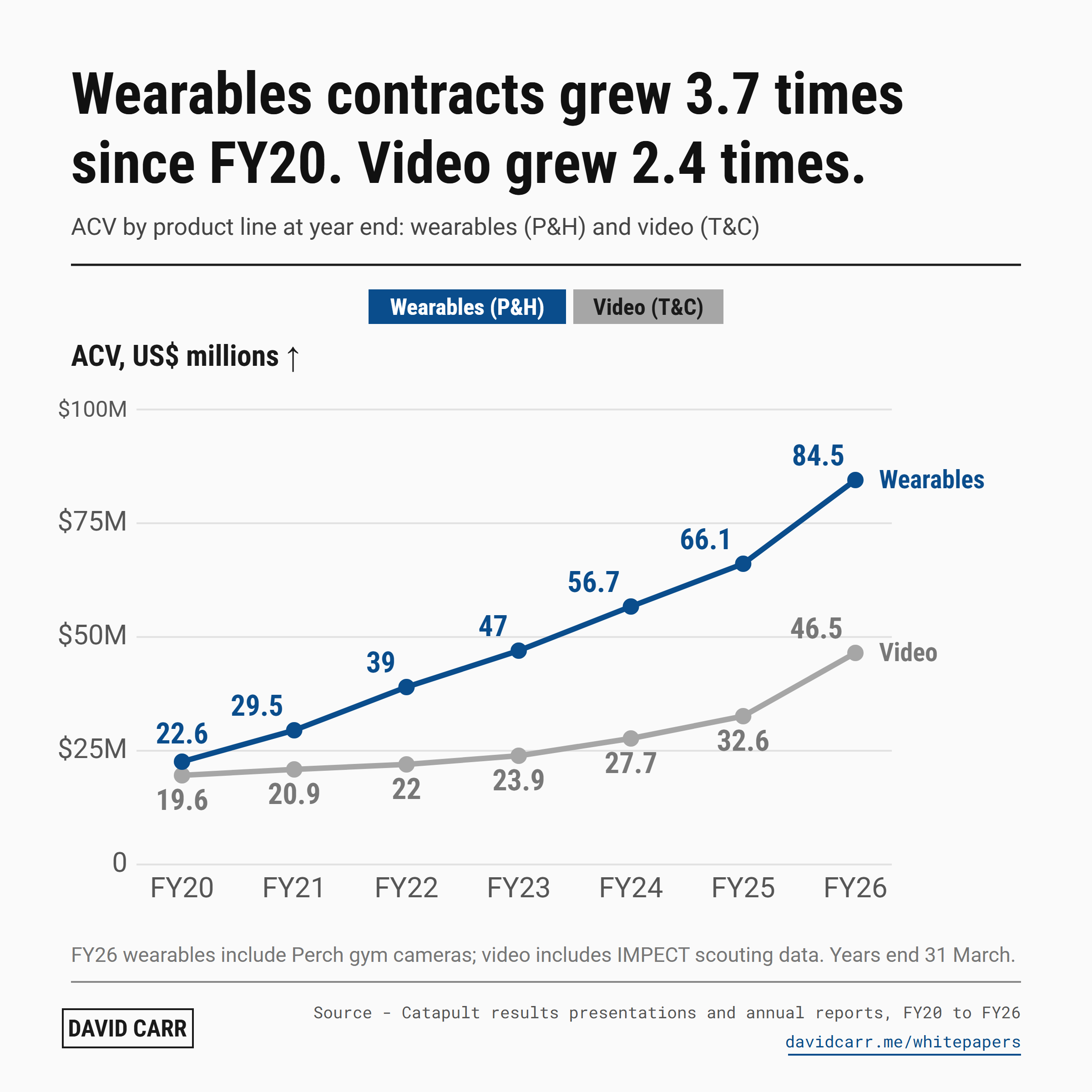
Wearables contracts grew 3.7 times since FY20. Video grew 2.4 times.
- Wearables (Performance & Health): $22.6M to $84.5M
- Video (Tactics & Coaching): $19.6M to $46.5M
The GPS vests are still the bigger business. Video sped up in FY26, up 40% at constant currency, mainly because of the IMPECT deal.
ACV by vertical, from the FY24 presentation and FY26 annual report. Wearables now include Perch gym cameras; video includes IMPECT scouting data.
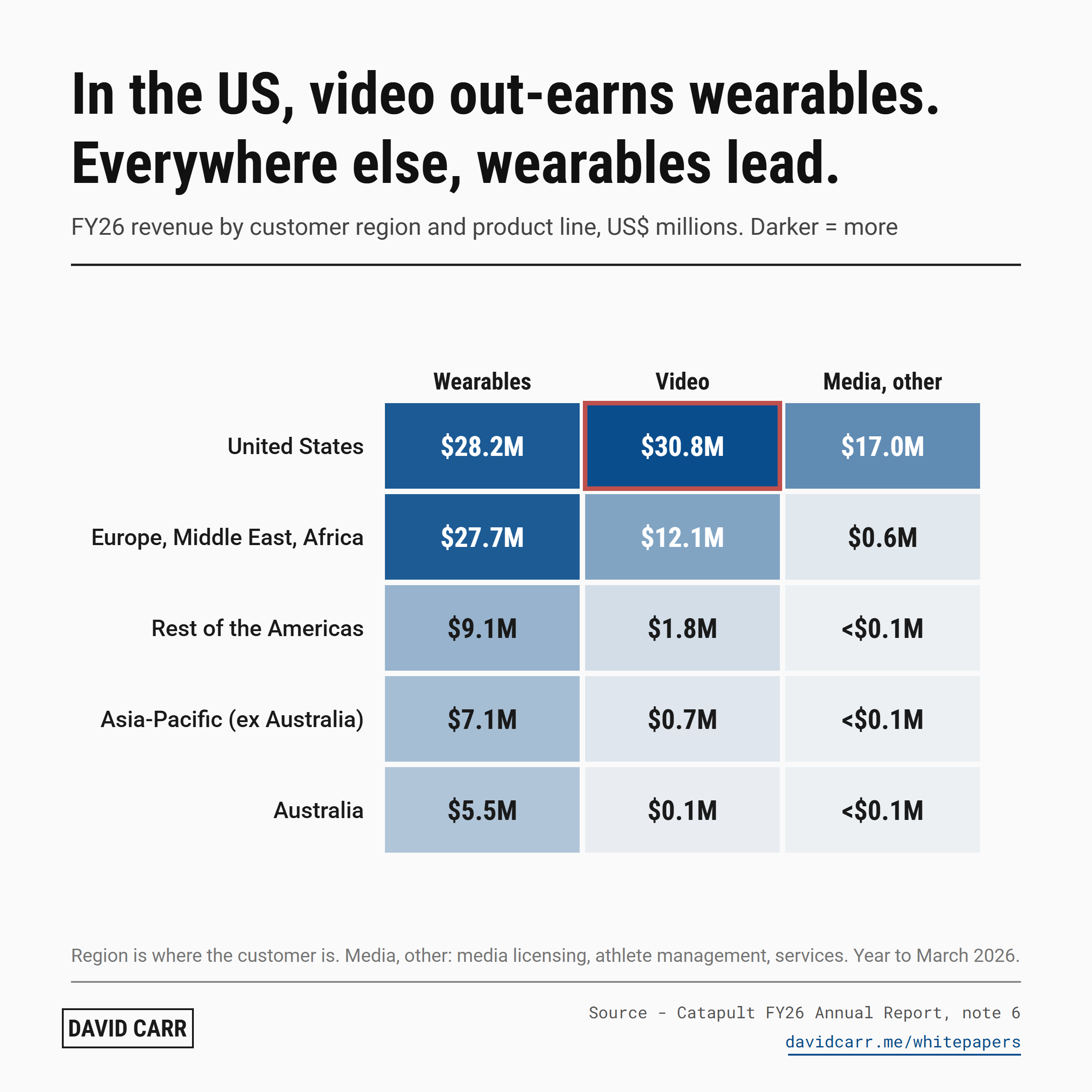
In the US, video out-earns wearables. Everywhere else, wearables lead.
- United States: video $30.8M, wearables $28.2M
- Europe, Middle East, Africa: wearables $27.7M, video $12.1M
- Rest of the Americas: wearables $9.1M, video $1.8M
Catapult's US video business grew out of XOS Digital, bought in 2016, whose clients then included 24 NFL teams and over 100 college football teams (IoT Australia). Almost all its media revenue is American too.
Revenue by customer location and product line, note 6 of the FY26 annual report. Year to 31 March 2026.
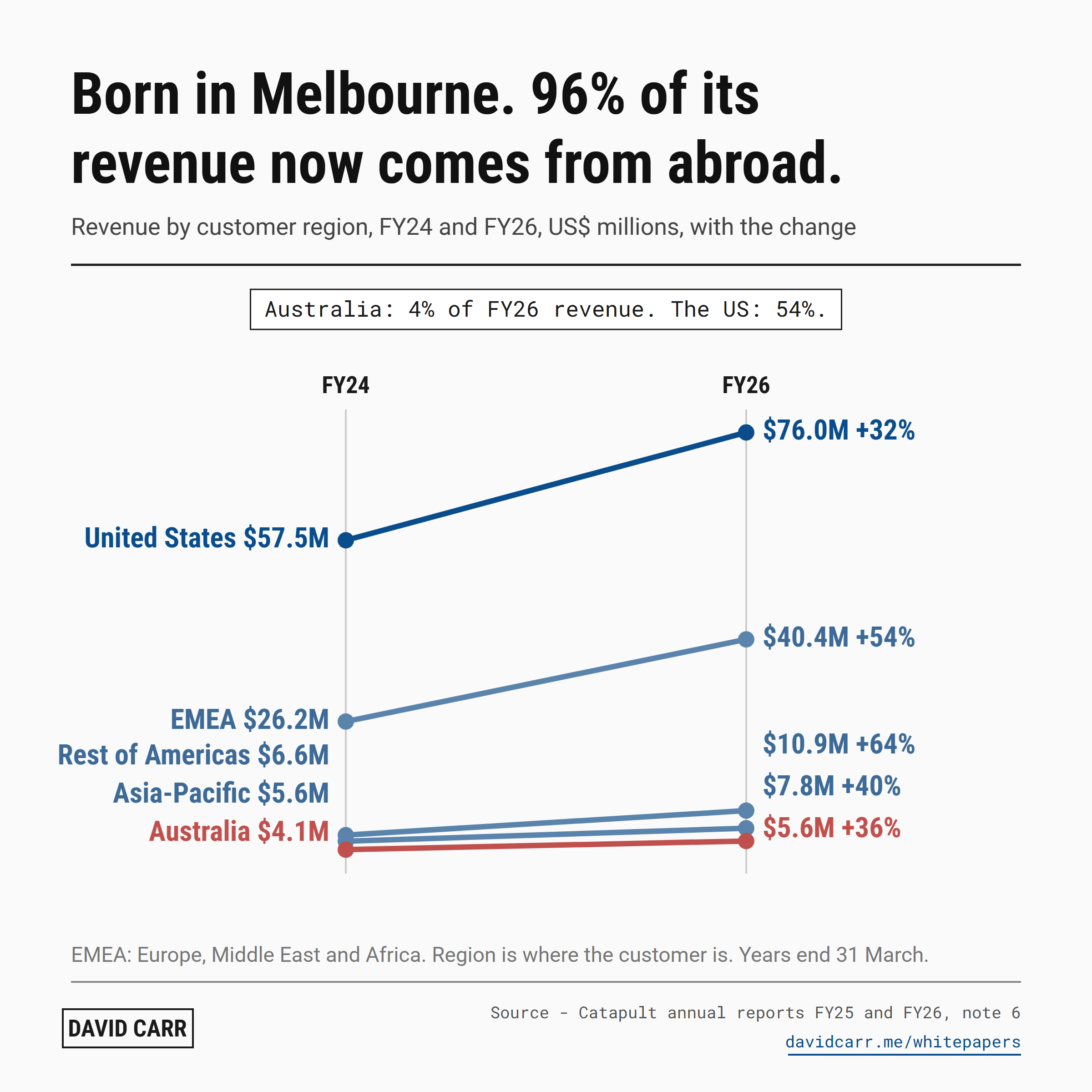
Born in Melbourne. 96% of its revenue now comes from abroad.
- United States: $57.5M to $76.0M
- Europe, Middle East, Africa: $26.2M to $40.4M
- Rest of the Americas: $6.6M to $10.9M
- Australia: $4.1M to $5.6M
Australia is about 4% of revenue; the US is 54%. Every region grew by more than 30% in two years.
Note 6 of the FY25 and FY26 annual reports. FY24 is the year to March 2024.
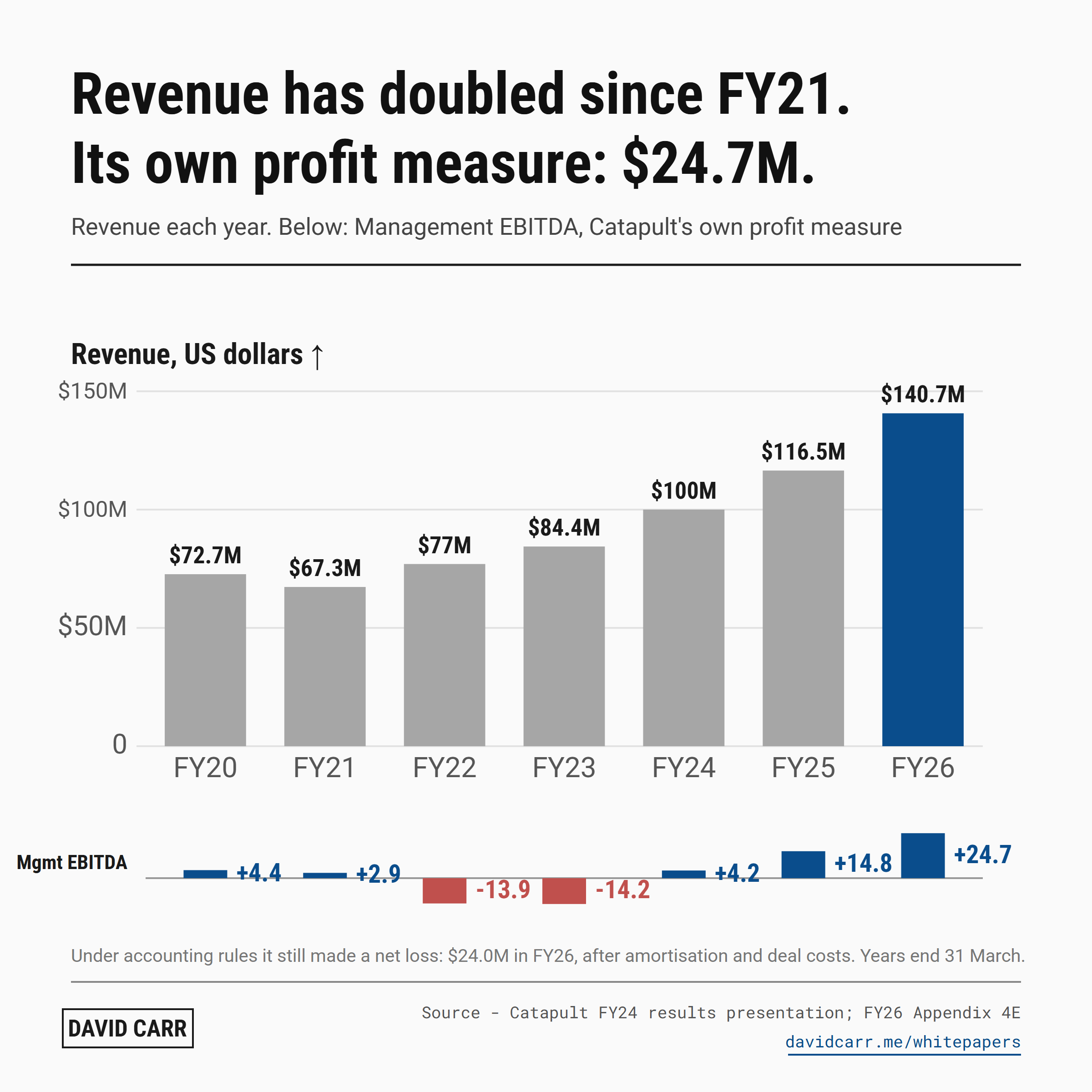
Revenue has doubled since FY21. Its own profit measure: $24.7M.
- Revenue FY21: $67.3M
- Revenue FY26: $140.7M
- Management EBITDA: -$14.2M in FY23, +$24.7M in FY26
- Net loss FY26: $24.0M
Catapult calls FY22 and FY23 its growth investment phase. It then turned its own profit measure positive. Under accounting rules it still lost money, after amortisation and the costs of its deals.
Revenue and net loss from the five-year table in the FY26 accounts; FY20 and FY21 are pro forma, from the FY24 presentation. Management EBITDA leaves out share-based pay and deal payments and counts capitalised development, so treat it as Catapult's view.
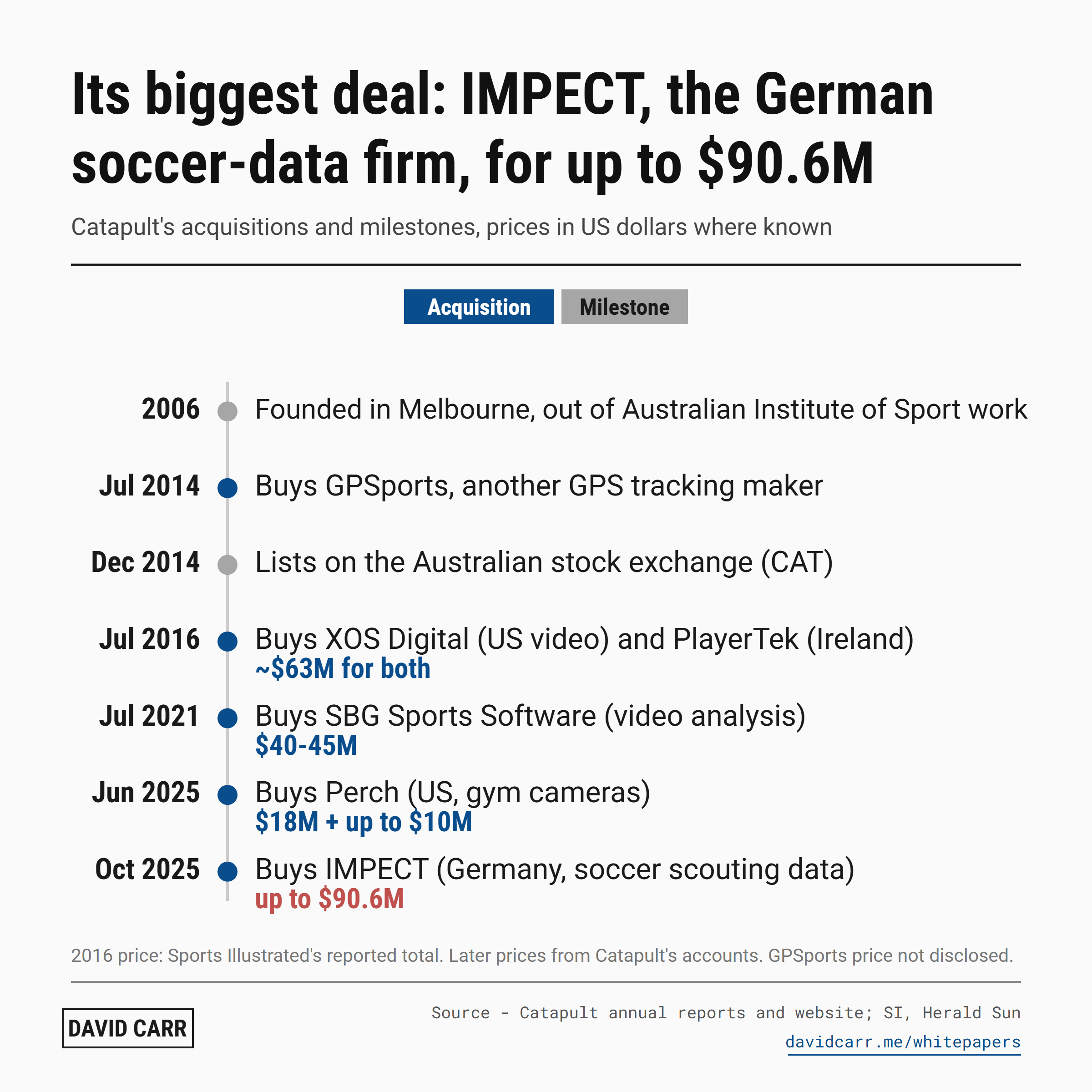
Its biggest deal: IMPECT, the German soccer-data firm, for up to $90.6M
- 2006: founded in Melbourne, out of work with the Australian Institute of Sport
- 19 December 2014: listed on the ASX
- 2016: XOS Digital (US) and PlayerTek (Ireland), nearly $63M for both
- 2021: SBG Sports Software, $40-45M
- 2025: Perch, $18M plus up to $10M
- 2025: IMPECT, up to $90.6M
PlayerTek is the Irish one: a GPS tracker for amateur and pro athletes. Catapult has named Clare's senior footballers as PlayerTek users. IMPECT, founded in 2014, rates players in almost 150 soccer leagues.
Prices in US dollars. 2016 total as reported by Sports Illustrated; later prices from Catapult's acquisition notes. A A$130M share placement funded the IMPECT deal.
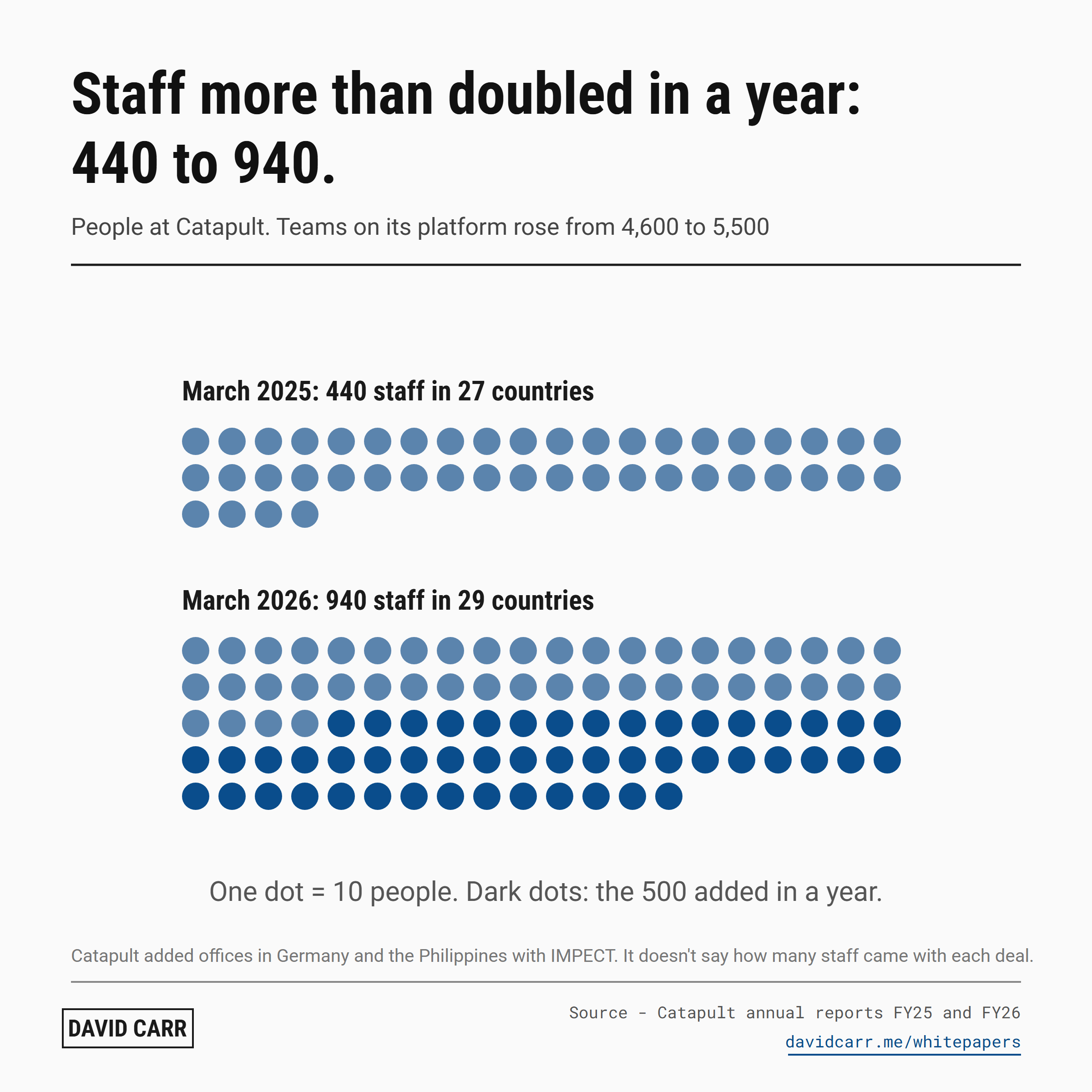
Staff more than doubled in a year: 440 to 940
- March 2025: 440 staff in 27 countries
- March 2026: 940 staff in 29 countries
- Teams on the platform: 4,600 to 5,500
IMPECT brought offices in Germany and the Philippines. Catapult says it now works with more than 5,500 teams in over 40 sports and more than 100 countries.
From the operating review in the FY25 and FY26 annual reports. Catapult does not say how many staff came with each deal.
Method, caveats and sources
The short answer. Catapult has contracts worth $134 million a year, almost three times FY20, and 95% of its revenue now comes from subscriptions. The GPS vests are still the bigger business, but video leads in the US. It turned its own profit measure positive in FY24 and has spent heavily on deals since, the biggest being IMPECT.
Catapult's filings. Catapult is listed on the ASX and reports in US dollars. Its financial year ends on 31 March, so FY26 is April 2025 to March 2026. Every number here comes from its results presentations, annual reports and ASX releases, read on 23 November 2026. FY20 and FY21 are Catapult's pro forma figures: it changed its year end in 2021.
Catapult's own measures. ACV, churn, ACV per pro team and Management EBITDA are not audited, and Catapult says so on every page. Statutory revenue and net loss are audited. The FY26 rise in ACV includes contracts bought with Perch and IMPECT.
My calculations. The FY25 and FY26 subscription share, the regional shares and the growth multiples are simple divisions of reported figures.
The wider market. In 2024 Catapult quoted a MarketsandMarkets estimate that pro sports technology would grow from $17.9 billion in 2021 to $40.2 billion in 2026, and put its own market at about 20,000 elite teams. Both are estimates, cited by Catapult, and not checked here.
Prices. The 2016 deals are Sports Illustrated's reported total; other reports differ, so no split is shown. GPSports' price was not disclosed.
Also: Stripe and Sports analytics.