From 90 Wordle players to about 2 million in under three months
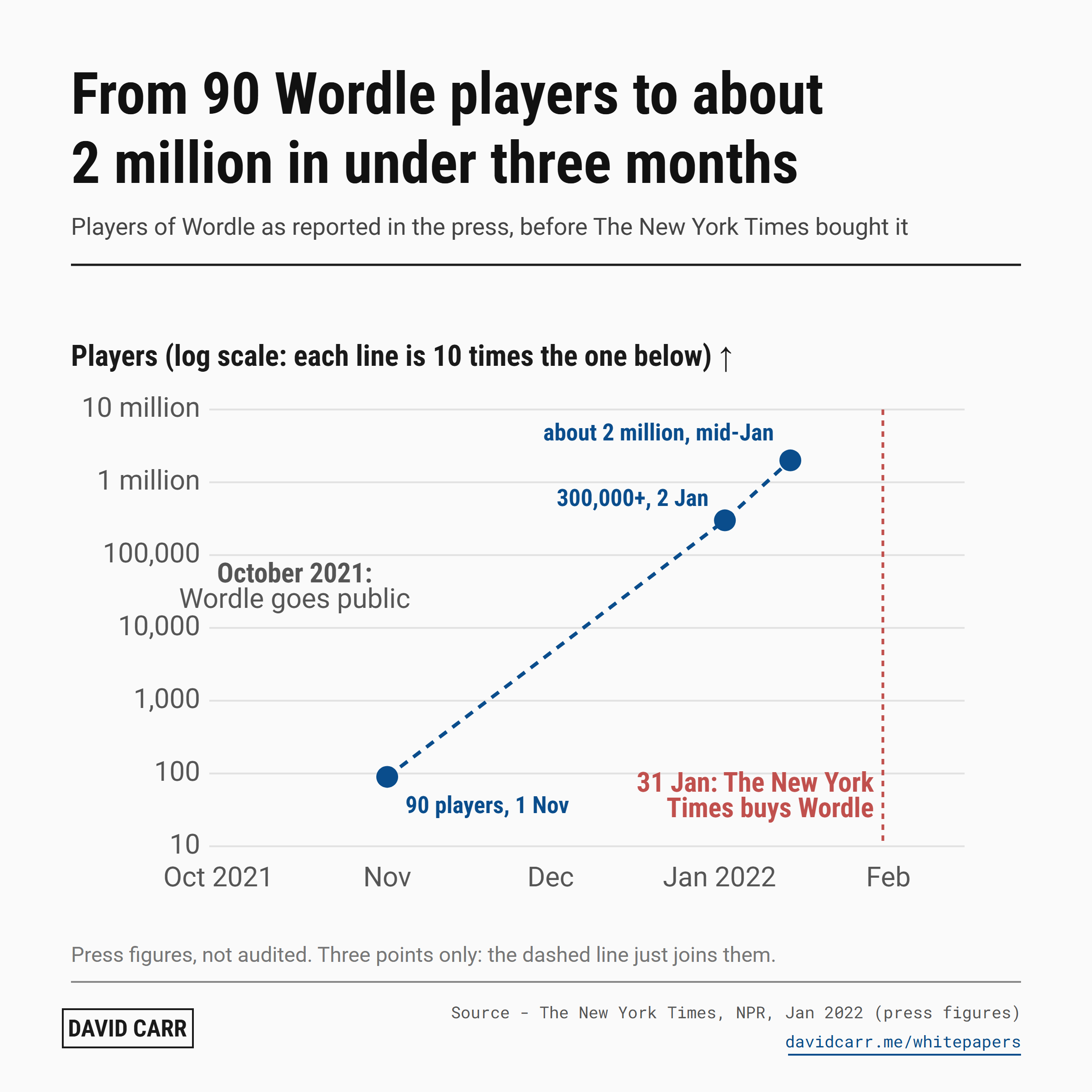
- 1 November 2021: 90 players
- 2 January 2022: over 300,000
- Mid-January 2022: about 2 million a day
- 31 January 2022: The New York Times buys it, for a price in the low seven figures
Josh Wardle made Wordle for his partner and put it online in October 2021. The shareable grid of coloured squares did the rest.
Press figures, not audited: The New York Times via Wikipedia, and NPR on 14 January 2022. At its late-January peak there were 500,000 tweets about Wordle a day (TechCrunch).
Wordle searches peaked in February 2022. Its copycats never got past 4% of that
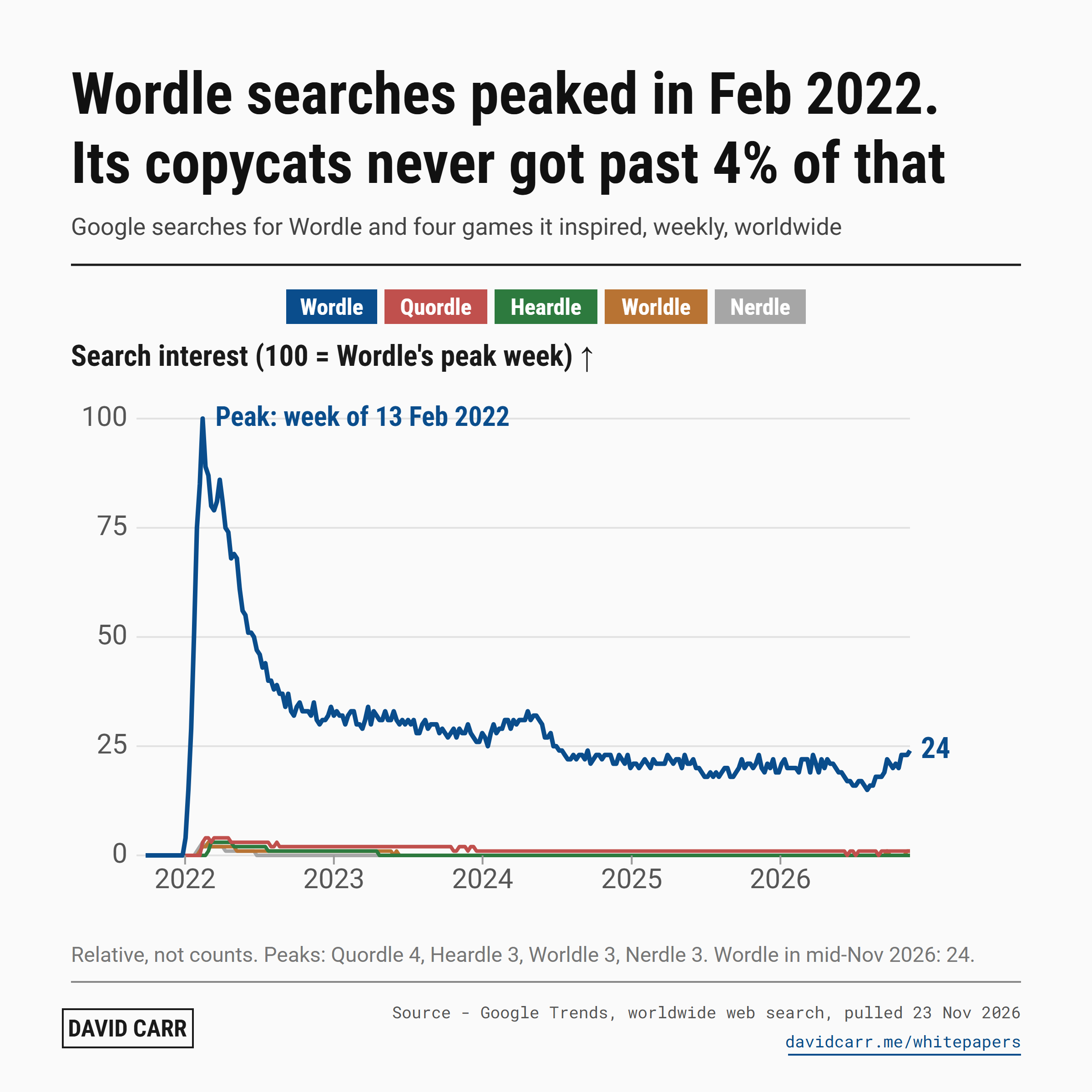
- Peak: week of 13 February 2022 (100)
- Mid-November 2026: 24
- Best week for Quordle: 4
- Heardle, Worldle and Nerdle: 3 each at best
The spin-offs were real hits on their own terms. Next to Wordle in search they barely register, and almost five years on Wordle still gets about a quarter of its peak.
Google Trends, worldwide web search, weekly, pulled 23 November 2026. Trends is relative: 100 is the busiest week for any term in the comparison. It counts searches, not players.
Duolingo reports 65 million a day. Few daily puzzles publish a count
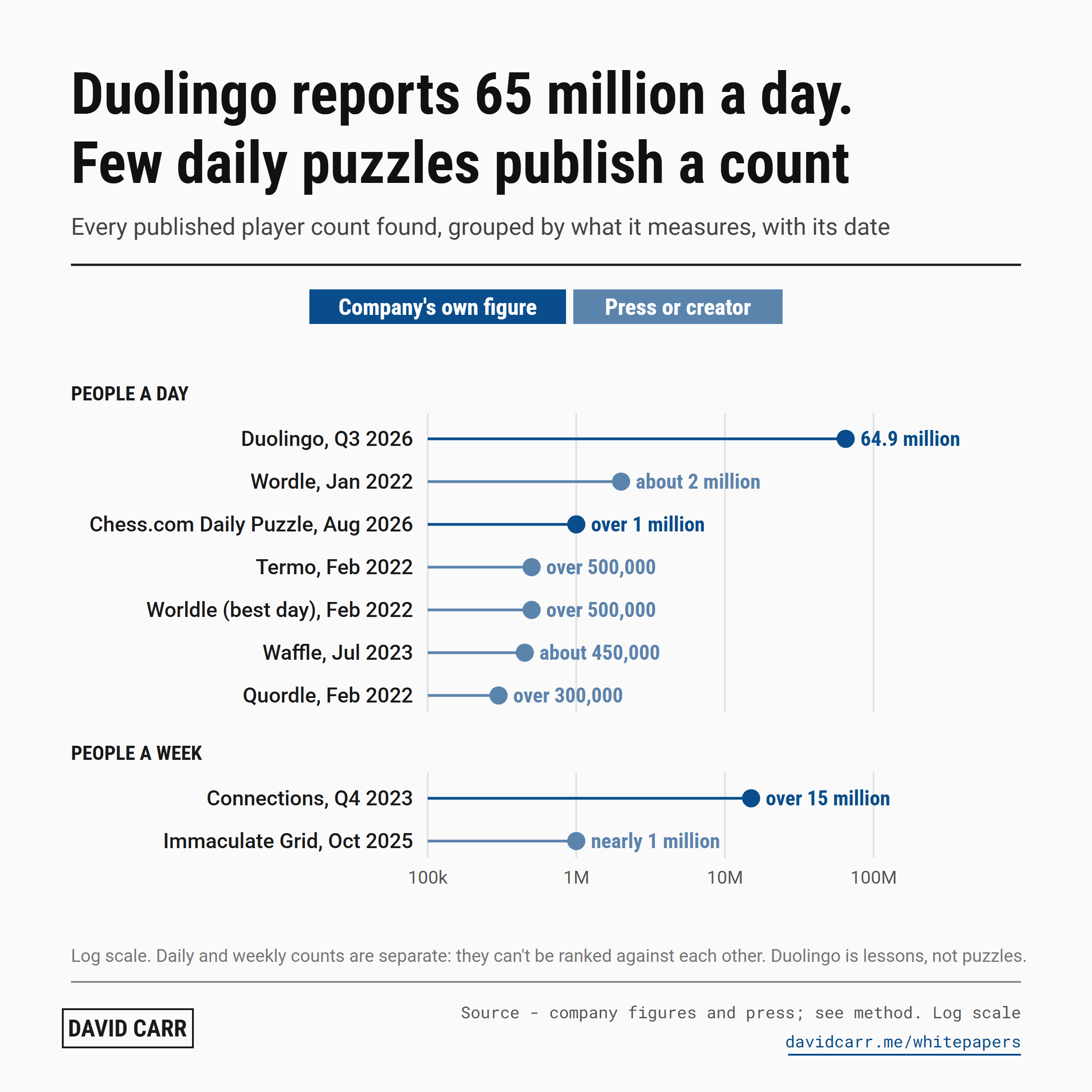
There is no honest total for the whole space. The figures measure different things on different dates, so they sit in separate groups and are not added up.
Duolingo is a language app, not a puzzle, but it runs on the same daily streak. Worldle's figure is its best single day. Smaller ones: the Irish-language Wordle, Foclach, was being played by 10,000 people in February 2022.
No player count published by LinkedIn, Apple or the Irish papers
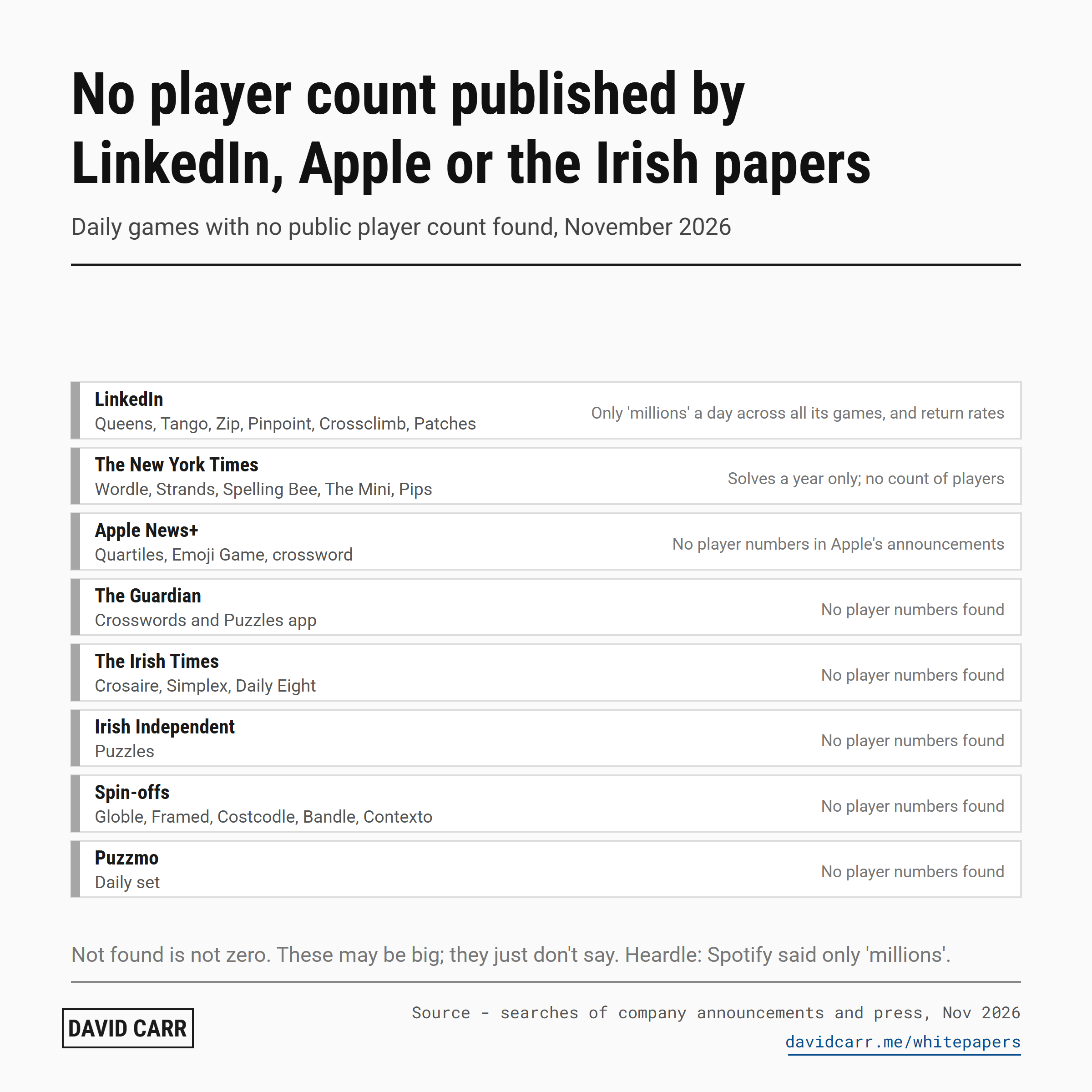
- LinkedIn: 'millions' a day across all its games
- Apple News+: Quartiles, Emoji Game, crossword
- The Guardian, The Irish Times, the Irish Independent
- Globle, Framed, Costcodle, Bandle, Contexto, Puzzmo
- Heardle: Spotify said "millions" when it bought it in 2022
Most daily games don't say how many people play. That is the honest gap in this story: not a small number, an unknown one.
Searched in company announcements and the press in November 2026. Not found is not zero.
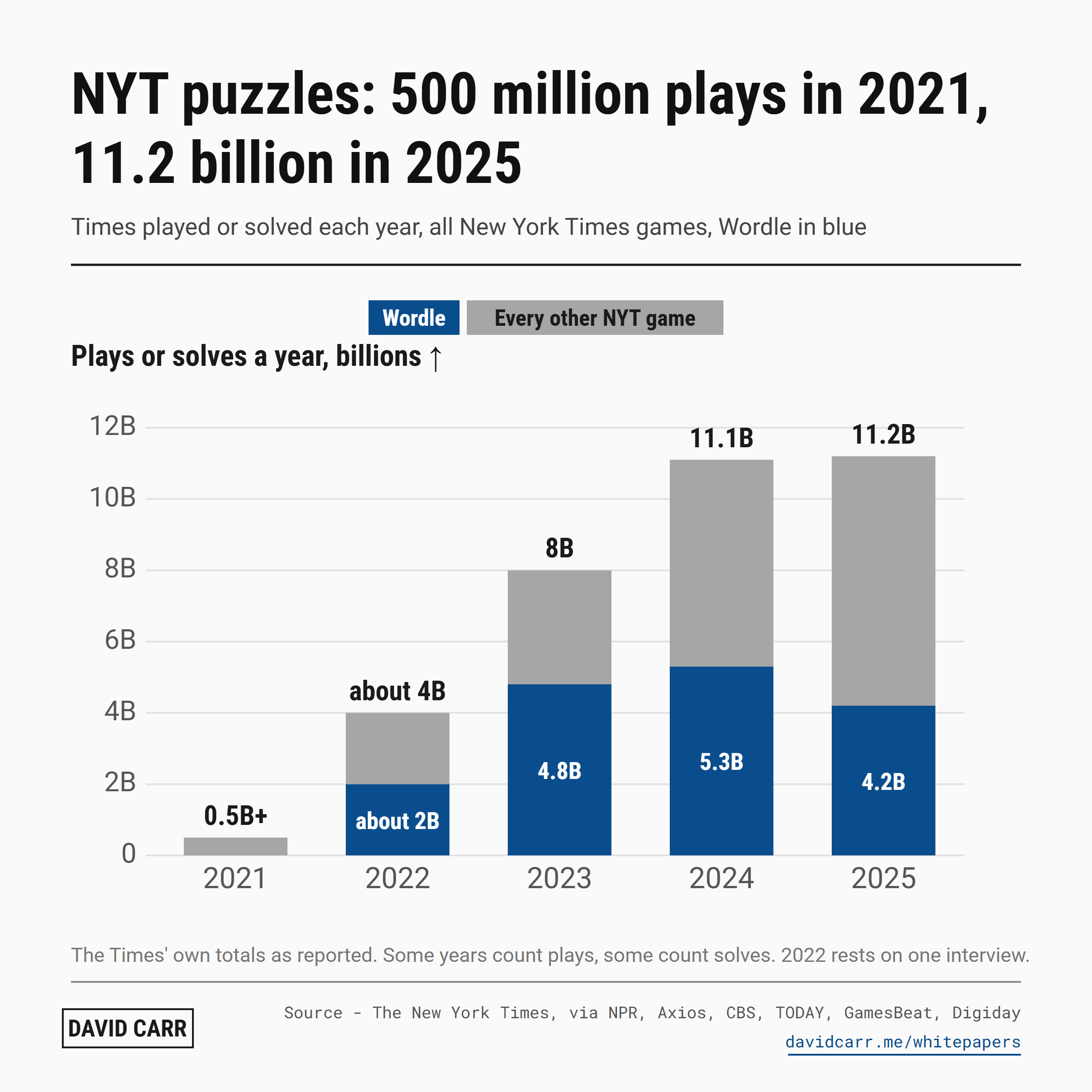
NYT puzzles: 500 million plays in 2021, 11.2 billion in 2025
- 2021: over 500 million (NYT)
- 2022: about 4 billion (GamesBeat)
- 2023: 8 billion (NPR)
- 2024: 11.1 billion (TODAY)
- 2025: 11.2 billion (TODAY)
Wordle was 60% of the total in 2023 and 38% in 2025. The other games caught up.
The Times' own yearly totals, as reported. Wordle: about 2 billion in 2022 (Digiday), 4.8 billion in 2023 (CBS), 5.3 billion in 2024, 4.2 billion in 2025. Some years count plays and some count solves, so the year-to-year change is rough.
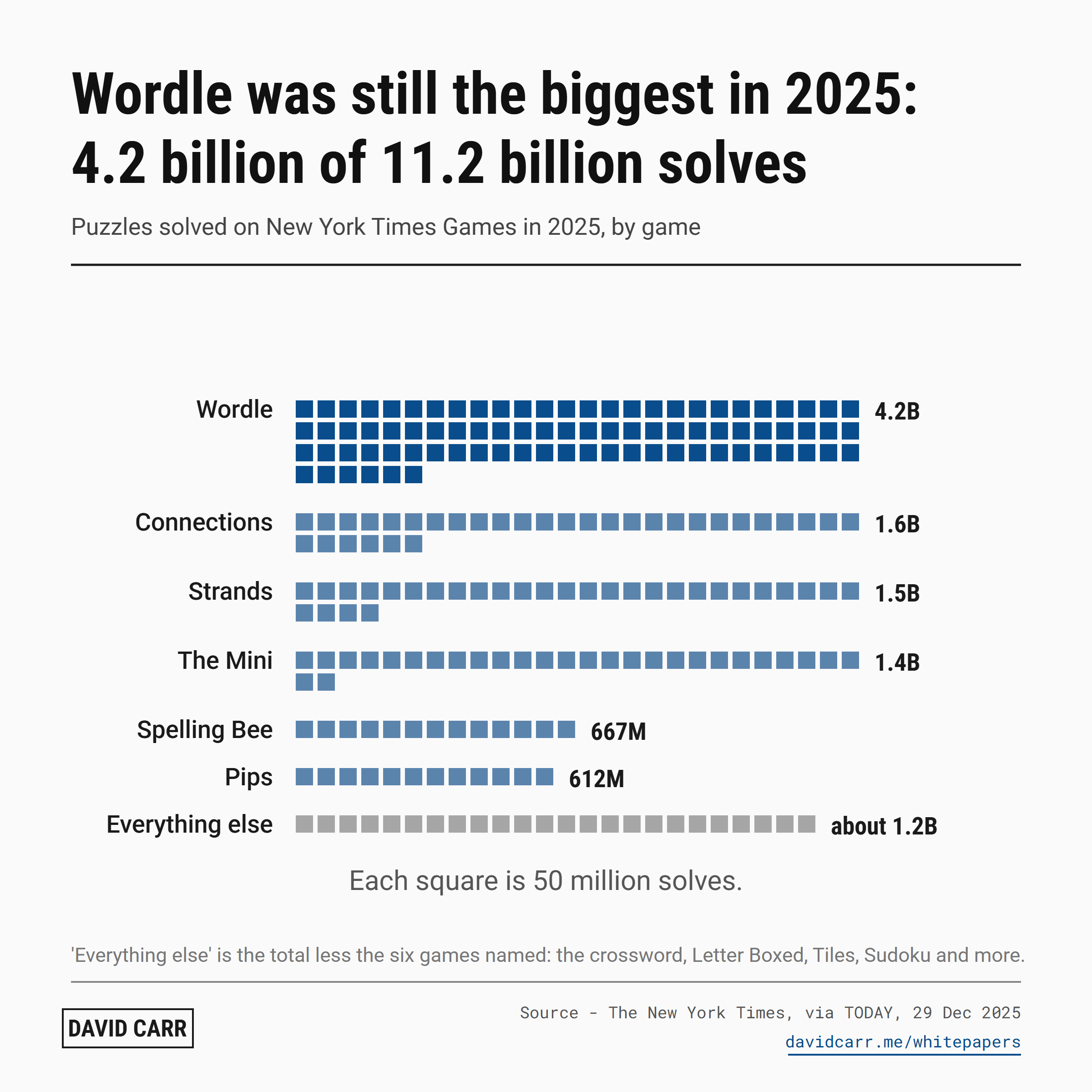
Wordle was still the biggest in 2025: 4.2 billion of 11.2 billion solves
- Wordle: 4.2 billion
- Connections: 1.6 billion
- Strands: 1.5 billion
- The Mini: 1.4 billion
- Spelling Bee: 667 million
- Pips: 612 million
That is about 11.5 million Wordle solves a day on average. Pips only left beta in August 2025.
Figures the Times gave TODAY on 29 December 2025. Creative Review reports the same totals, and that over half of weekly users play more than one puzzle a day.
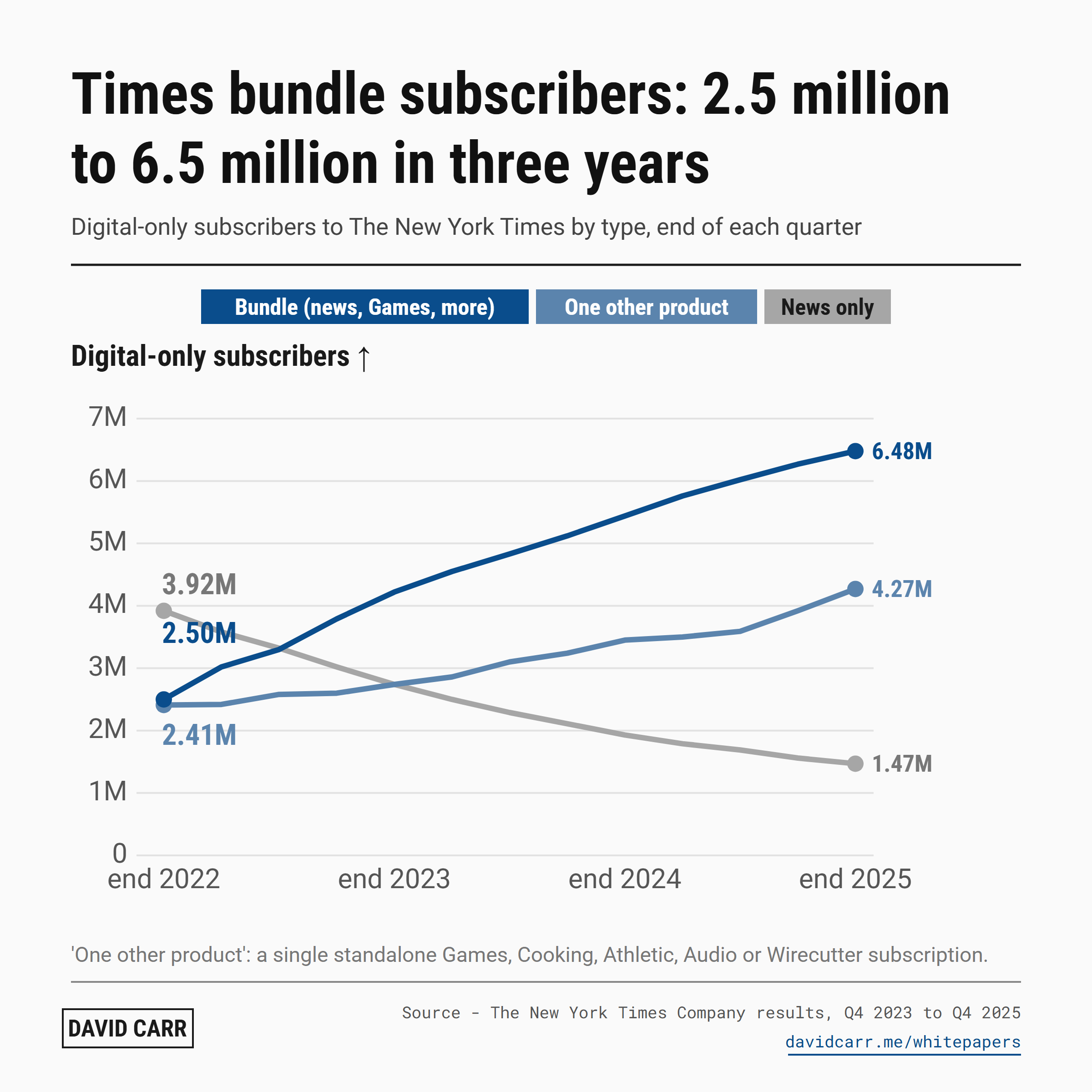
Times bundle subscribers: 2.5 million to 6.5 million in three years
- Bundle and multiproduct: 2.50 million to 6.48 million
- One other product: 2.41 million to 4.27 million
- News only: 3.92 million to 1.47 million
- Total digital-only: 8.83 million to 12.21 million
The Times keeps Wordle and Connections free to build an audience it can later sell to. Games is one of the products in the bundle.
End of 2022 to end of 2025, from the Times' Q4 2023 results, 2024 annual report and Q4 2025 results. The Times does not say how many subscribe to Games alone; the last figure was one million in December 2021.
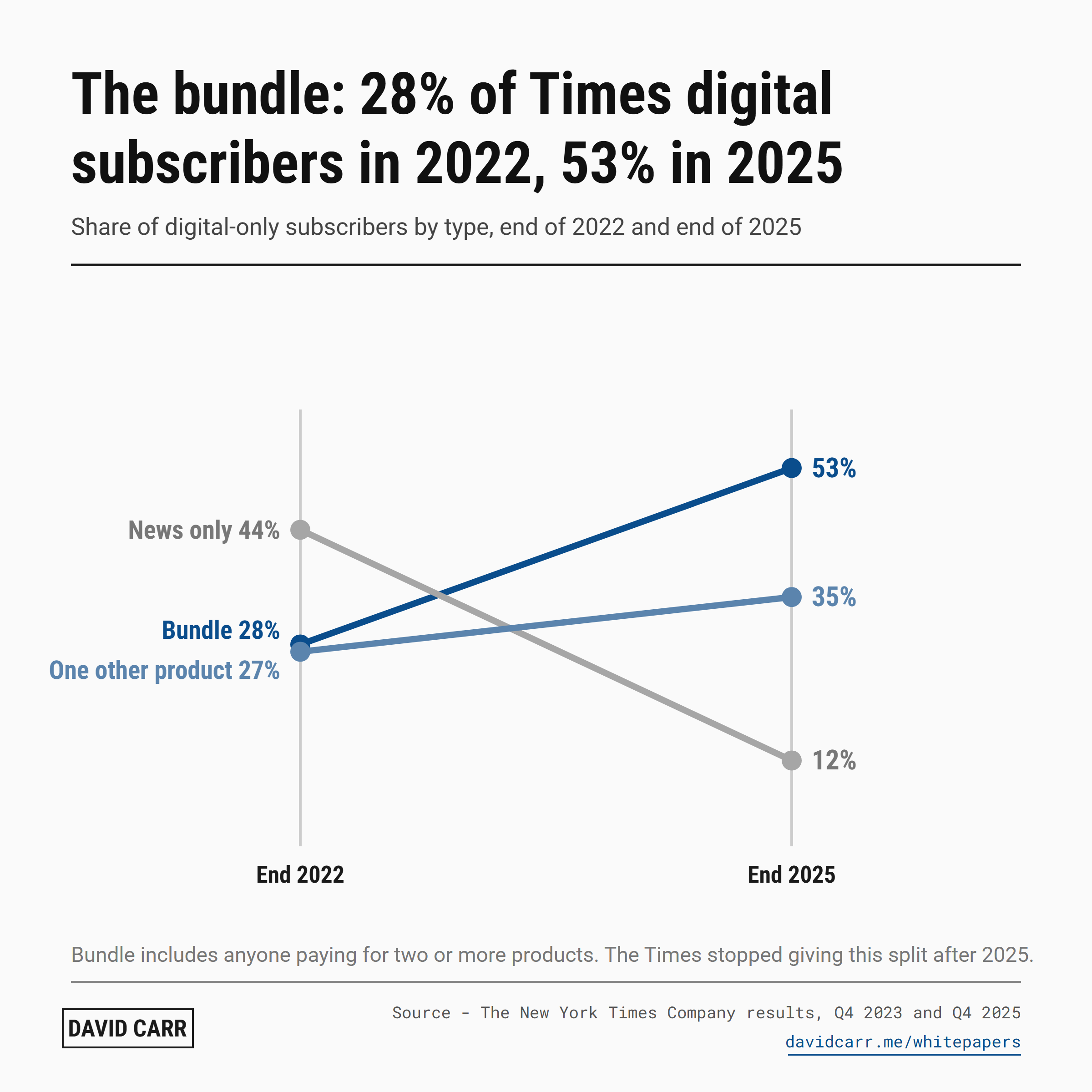
The bundle: 28% of Times digital subscribers in 2022, 53% in 2025
- Bundle: 28% to 53%
- One other product: 27% to 35%
- News only: 44% to 12%
News only went from the biggest group to the smallest. The Times says it will stop splitting the numbers this way after 2025.
Worked out from the counts in the Q4 2025 results and Q4 2023 results.
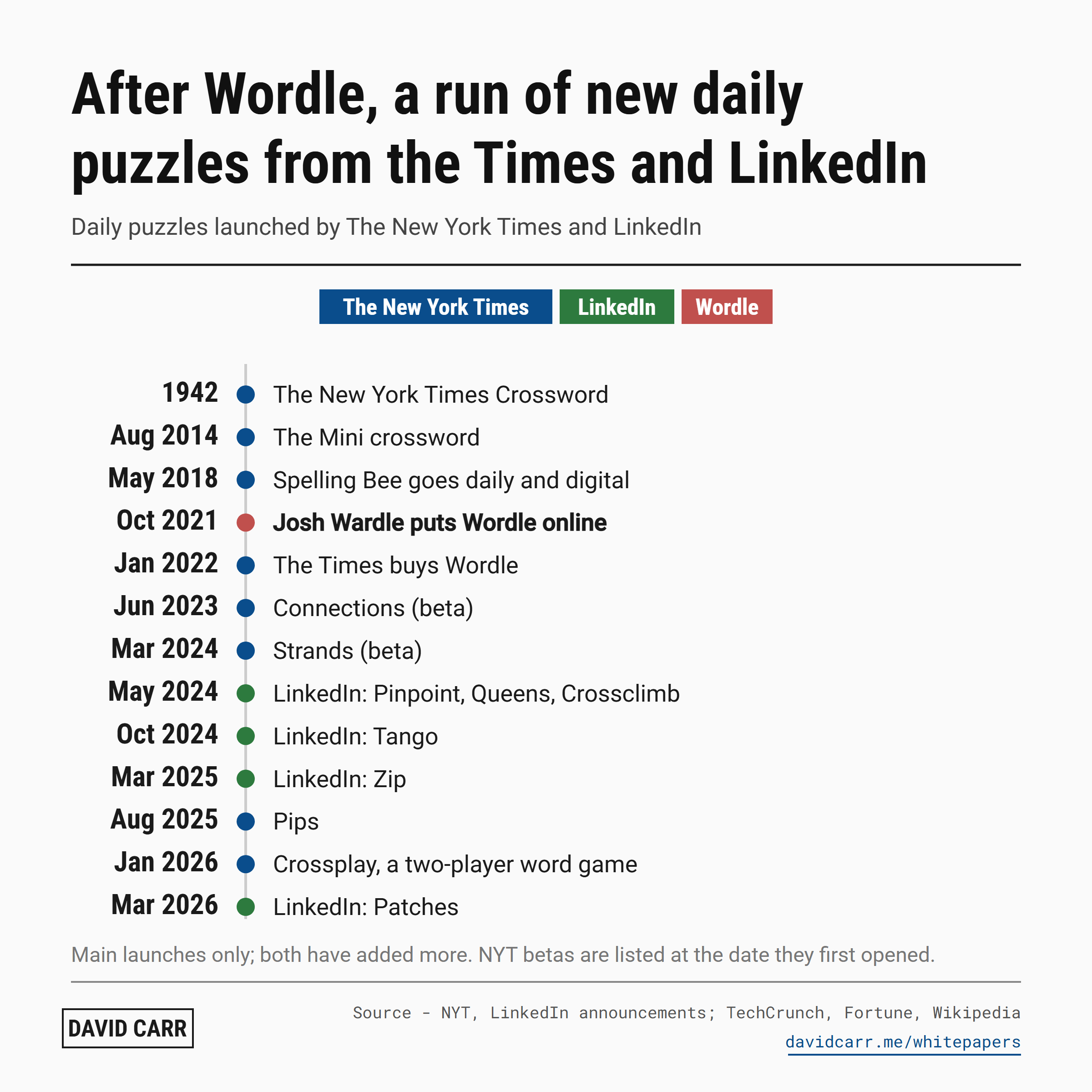
After Wordle, a run of new daily puzzles from the Times and LinkedIn
The Times had puzzles long before Wordle: the crossword since 1942, the Mini since 2014. What changed was the pace.
Dates from the Times, LinkedIn, TechCrunch, Fortune and Wikipedia. Main launches only.
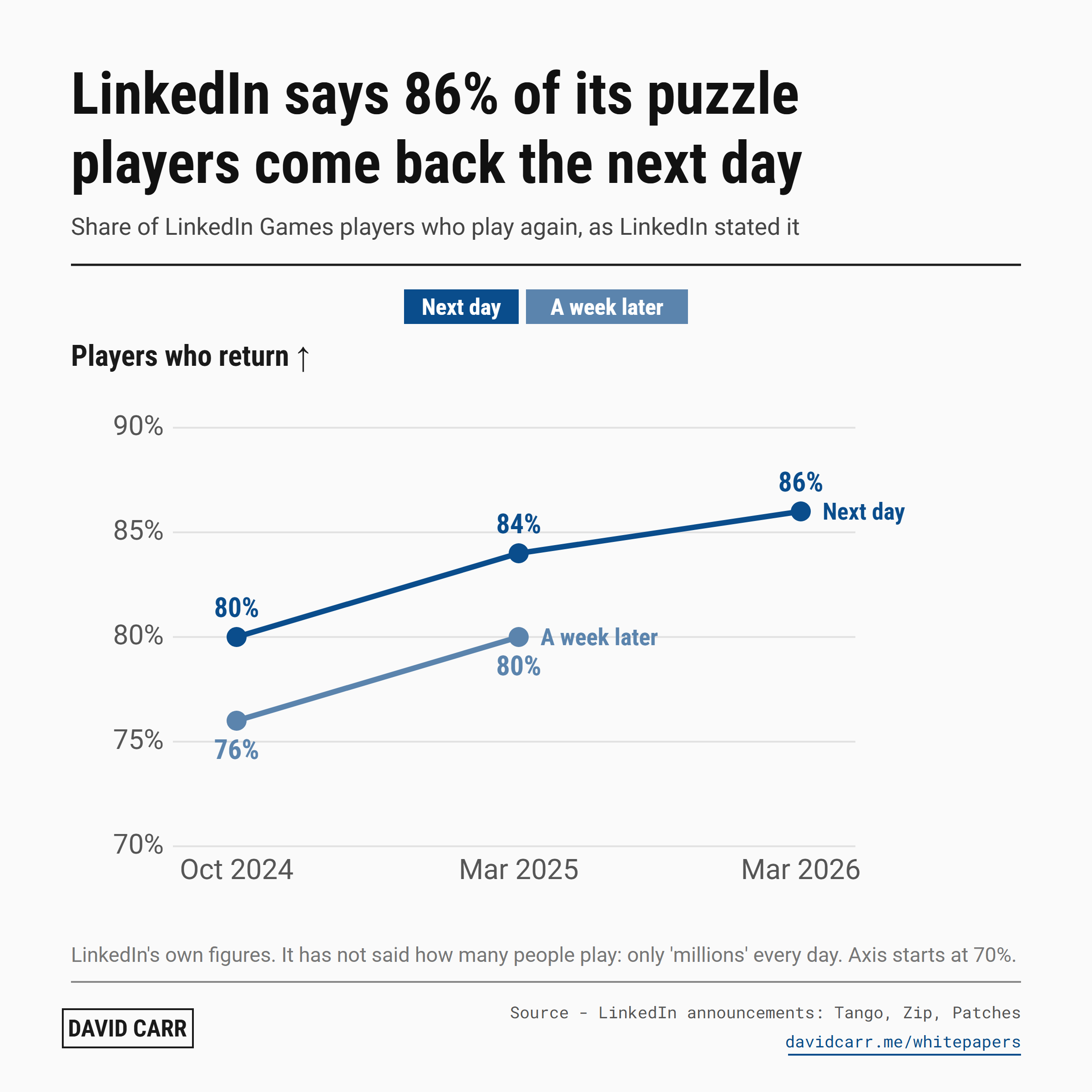
LinkedIn says 86% of its puzzle players come back the next day
A once-a-day puzzle is built to bring people back. LinkedIn's own numbers say it works on its own site too.
LinkedIn's own figures from its game announcements. It says 'millions' play every day but has not given a number. The axis starts at 70%.
Method, caveats and sources
The short answer. Wordle went from 90 players to about 2 million a day in under three months, and the Times bought it. Times puzzles went from 500 million plays in 2021 to 11.2 billion solves in 2025, and the Times bundle that includes Games grew to more than half its digital subscribers. Beyond the Times, most daily games publish no player count at all, so nobody can honestly add up the whole space.
Player counts. Only figures a company published itself, or that reputable press reported from the company or the game's creator. Each is shown with its date and what it measures: people a day, people a week, or plays or solves a year. Those are not comparable, so they are never ranked against each other or added together. Games with no figure are listed, not estimated.
The Times. Subscriber counts come from the New York Times Company's results releases and 2024 annual report. Yearly play totals are the Times' own figures as given to NPR, Axios, CBS, TODAY, GamesBeat and Digiday. The Times switched between counting plays and solves, so the changes between years are rough. 2022 rests on one interview for each number.
Google Trends. Worldwide web search, weekly, 3 October 2021 to 21 November 2026, pulled 23 November 2026. Values are relative, 0 to 100, within the comparison. The current partial week is left out.
Wordle's first weeks. Press figures from The New York Times and NPR in January 2022. Sources disagree on exactly when it passed 2 million, so the chart says mid-January.
Also: play the daily games on this site and Duolingo.