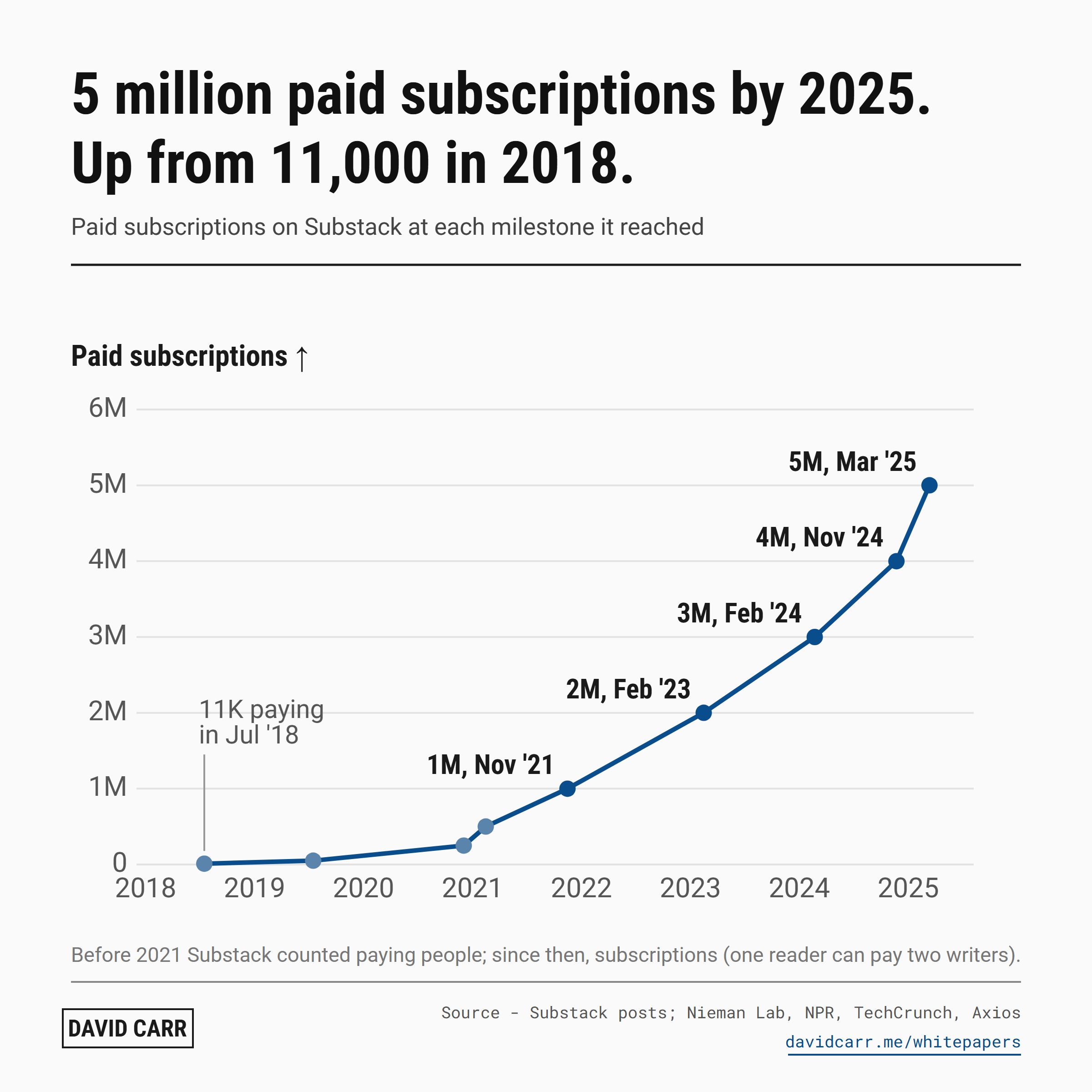
5 million paid subscriptions by 2025. Up from 11,000 in 2018.
Readers pay writers directly, from $5 a month. Substack keeps 10%.
Before 2021 Substack counted paying people. Since then it counts subscriptions, so one reader paying two writers counts twice.
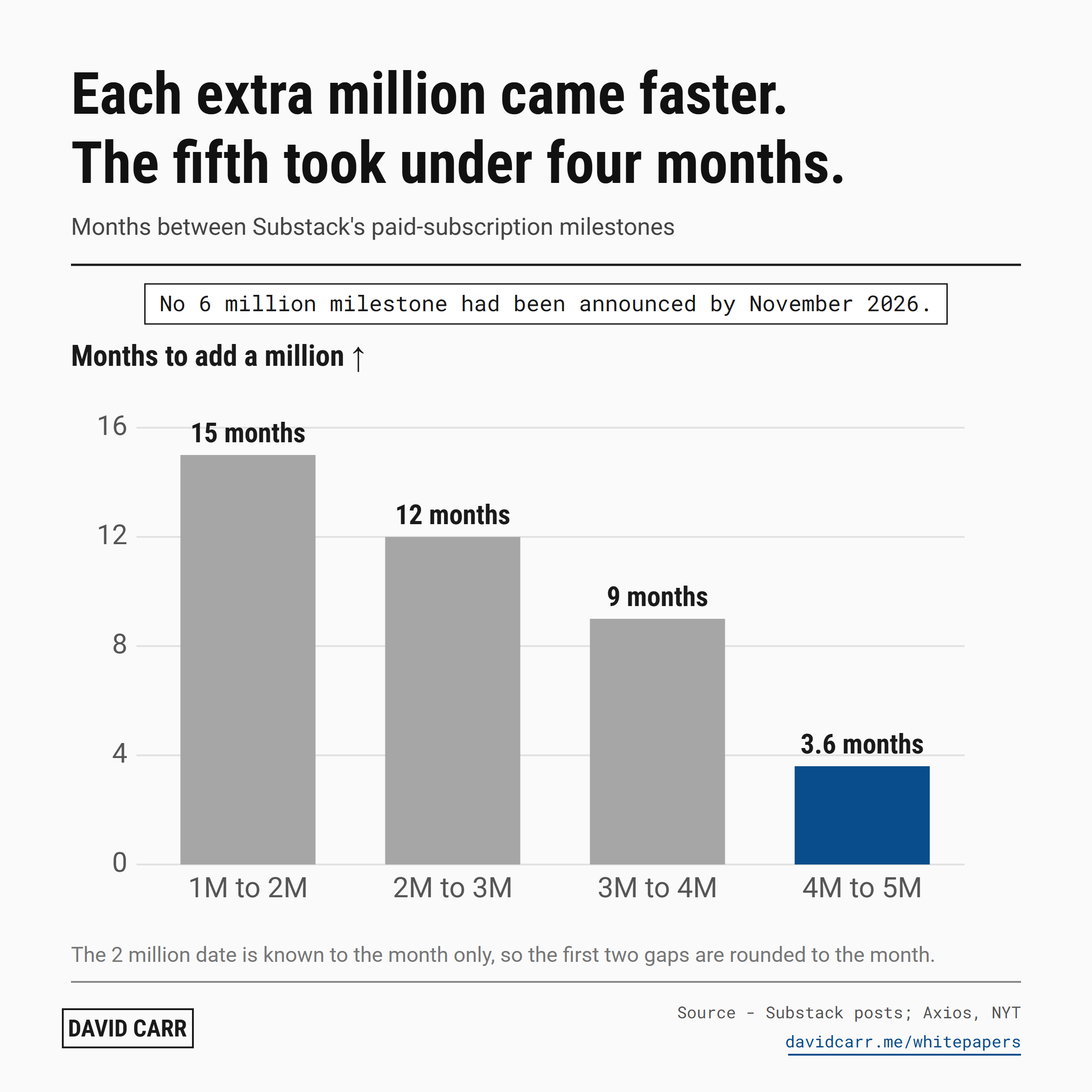
Each extra million came faster. The fifth took under four months.
- 1M to 2M: 15 months
- 2M to 3M: 12 months
- 3M to 4M: 9 months
- 4M to 5M: 3.6 months
The latest figure is still "more than five million" (May 2026). No 6 million milestone had been announced by 23 November 2026.
Months counted between the dates Substack or the press gave for each milestone. The 2 million date is known to the month only.
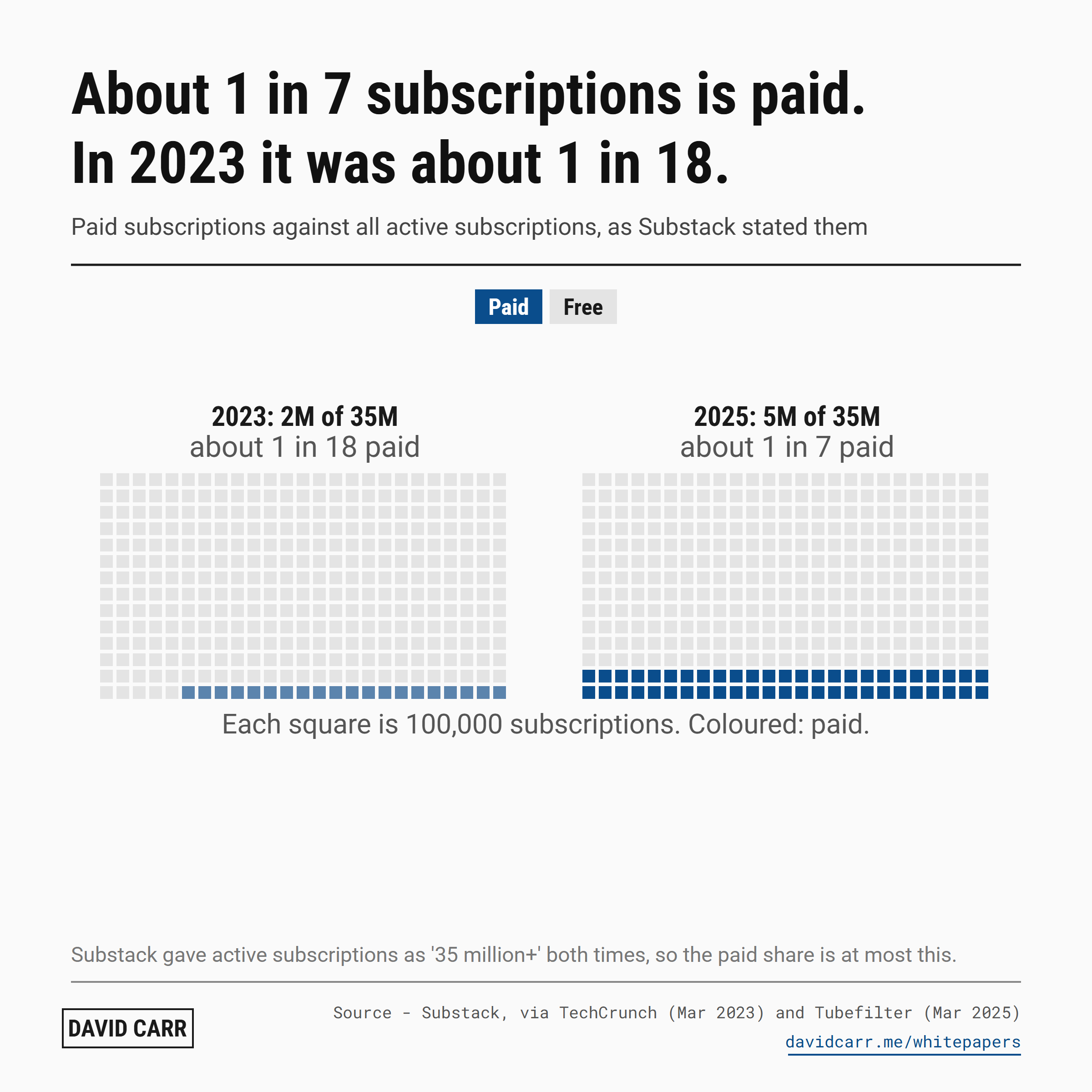
About 1 in 7 subscriptions is paid. In 2023 it was about 1 in 18.
Most people read Substack for free. The paid share has more than doubled in two years.
Substack gave active subscriptions as '35 million+' both times, so the true paid share may be a little lower.
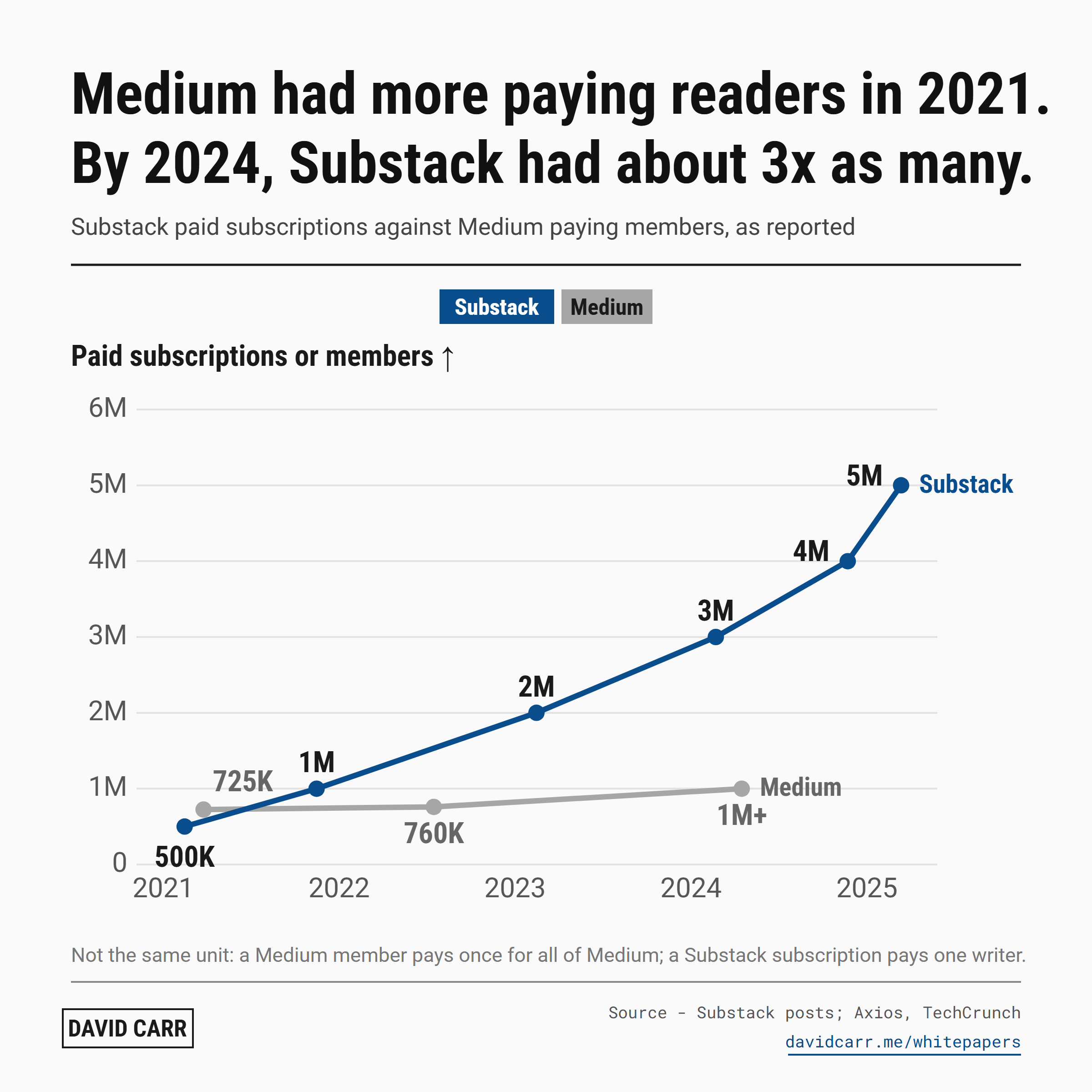
Medium had more paying readers in 2021. By 2024, Substack had about 3x as many.
Two ways to pay for writing. Medium sells one membership for the whole site and pays writers from the pot. Substack readers pay each writer they choose.
Not the same unit, so this compares paid relationships, not people. Medium's figures are as reported by Axios and TechCrunch.
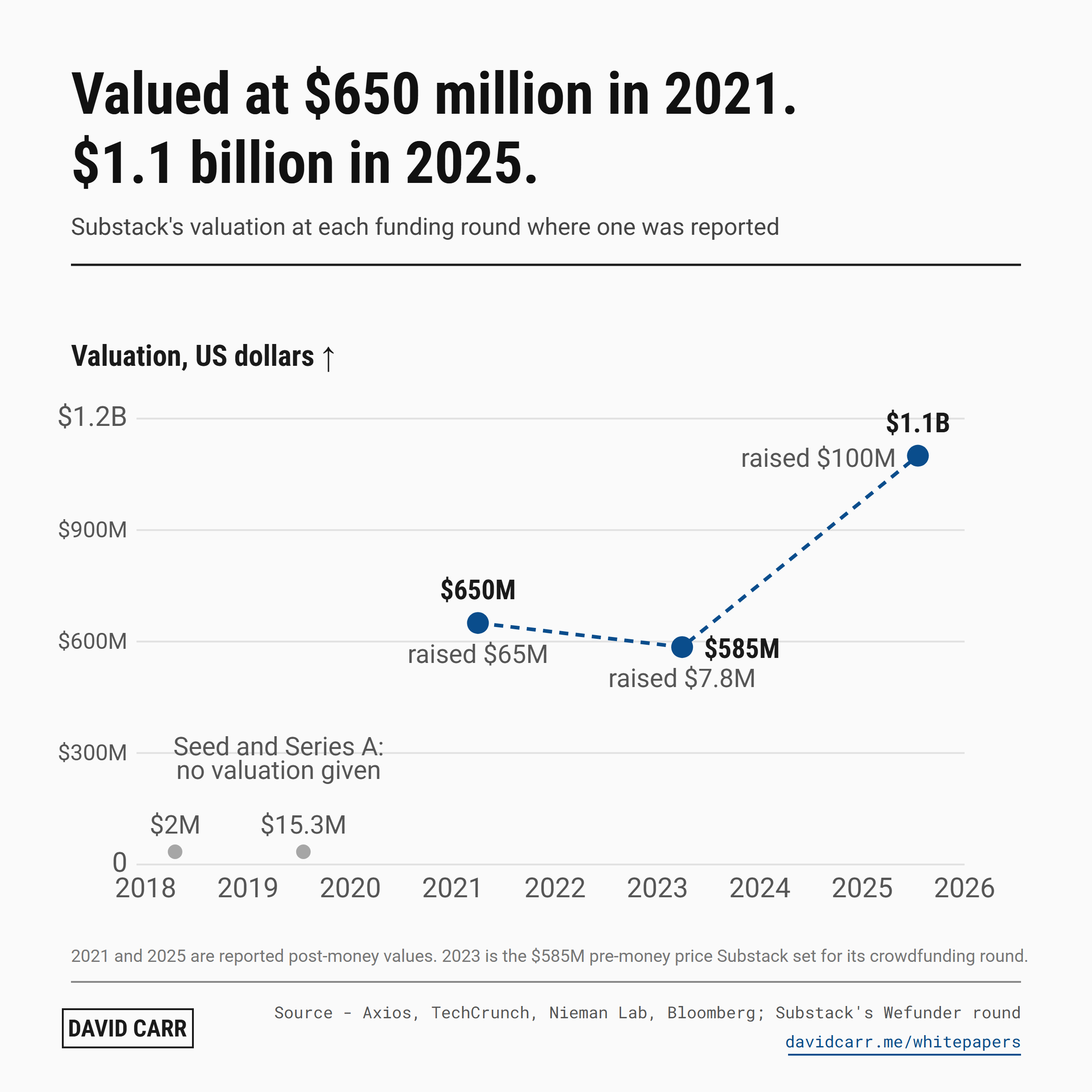
Valued at $650 million in 2021. $1.1 billion in 2025.
In 2023 Substack let readers and writers buy shares at the 2021 price ($585M before the new money). In 2025 it crossed $1 billion.
The 2021 and 2025 values are as reported by Axios and the New York Times; Substack set the 2023 price itself. No round has been reported since July 2025.
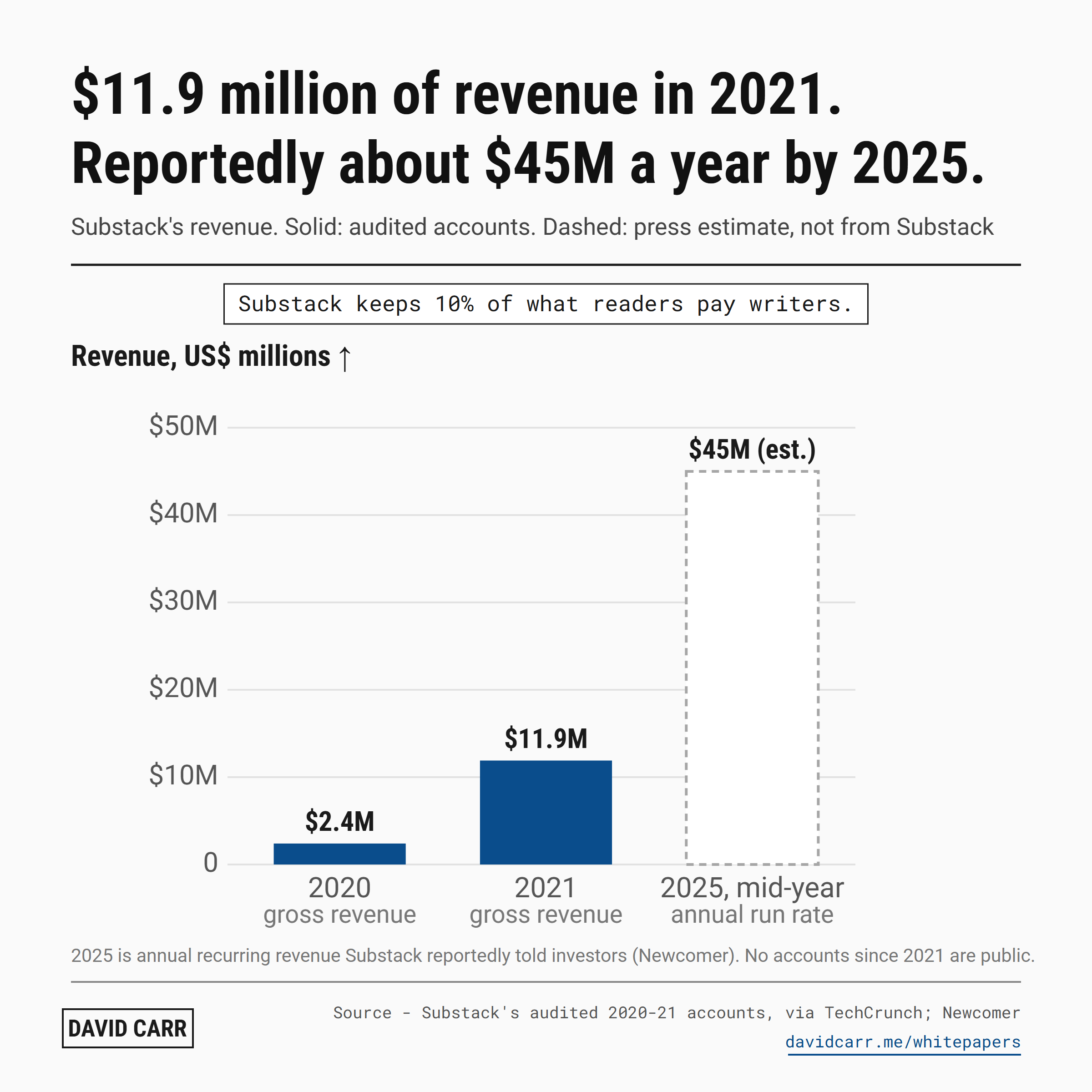
$11.9 million of revenue in 2021. Reportedly about $45M a year by 2025.
- 2020: $2.4 million gross revenue
- 2021: $11.9 million gross revenue
- Mid-2025: about $45 million a year (estimate)
Substack's money is its 10% cut. Writers keep the other 90%, less card fees.
2020 and 2021 are from audited accounts Substack posted for its crowdfunding round. The 2025 figure is the run rate it reportedly told investors, per Newcomer.
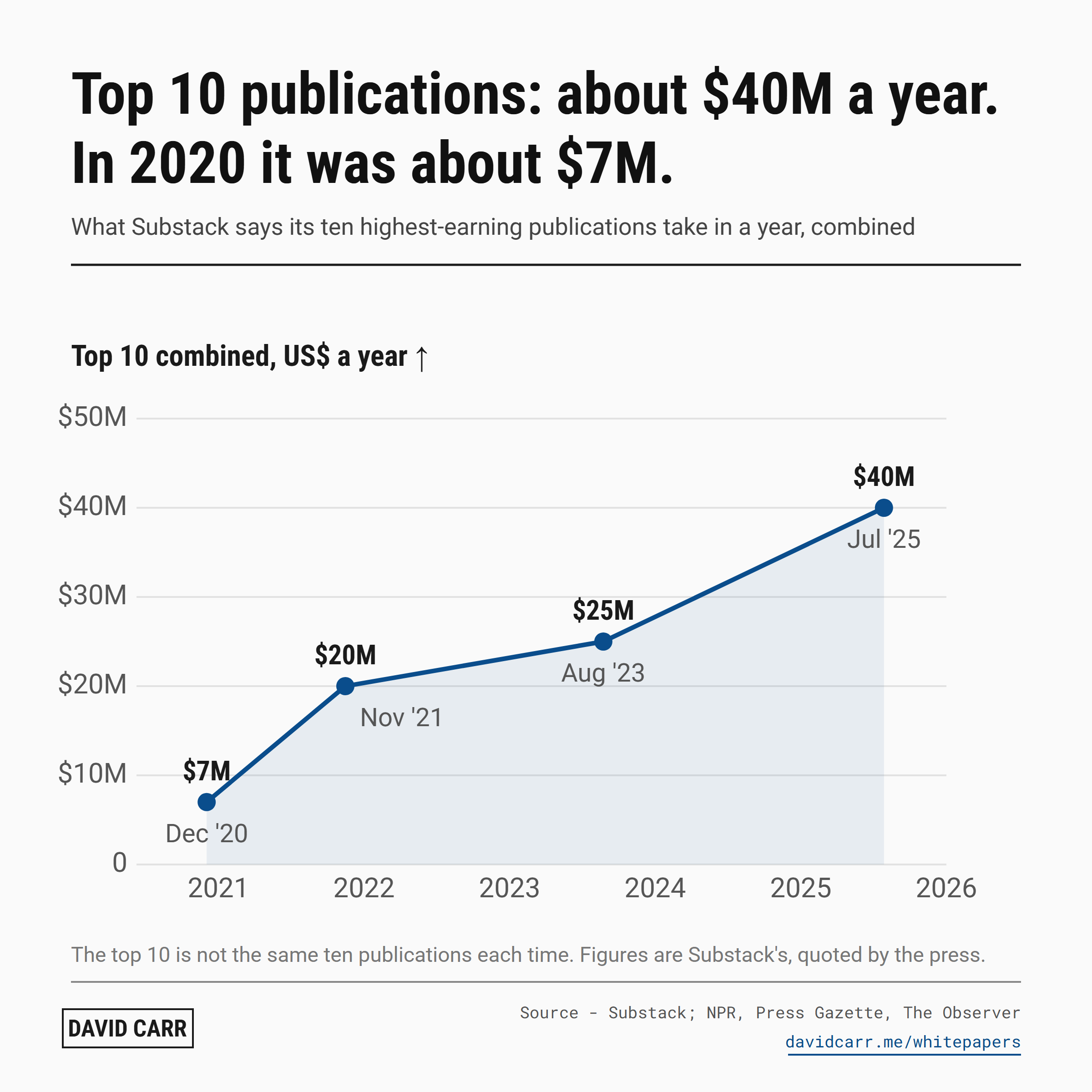
Top 10 publications: about $40M a year. In 2020 it was about $7M.
The best-paid writers on Substack now earn like small media companies.
Combined yearly revenue, as Substack stated it. The ten publications change from year to year. The 2025 figure was reported by The Observer.
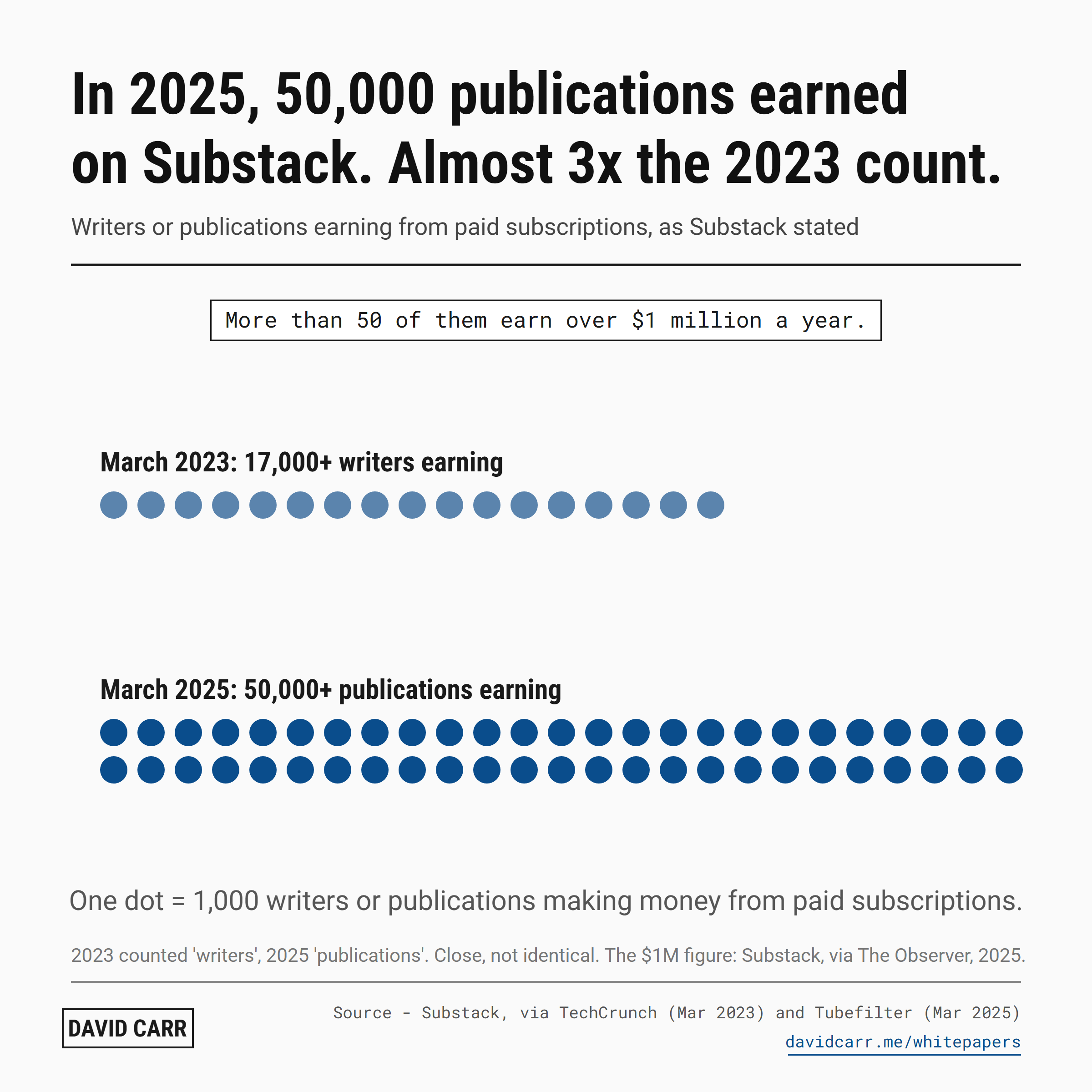
In 2025, 50,000 publications earned on Substack. Almost 3x the 2023 count.
Far more writers now earn something, not only the best known. Paid subscriptions to UK-based creators passed half a million in May 2026.
2023 counted 'writers' and 2025 'publications'. Close, not identical.
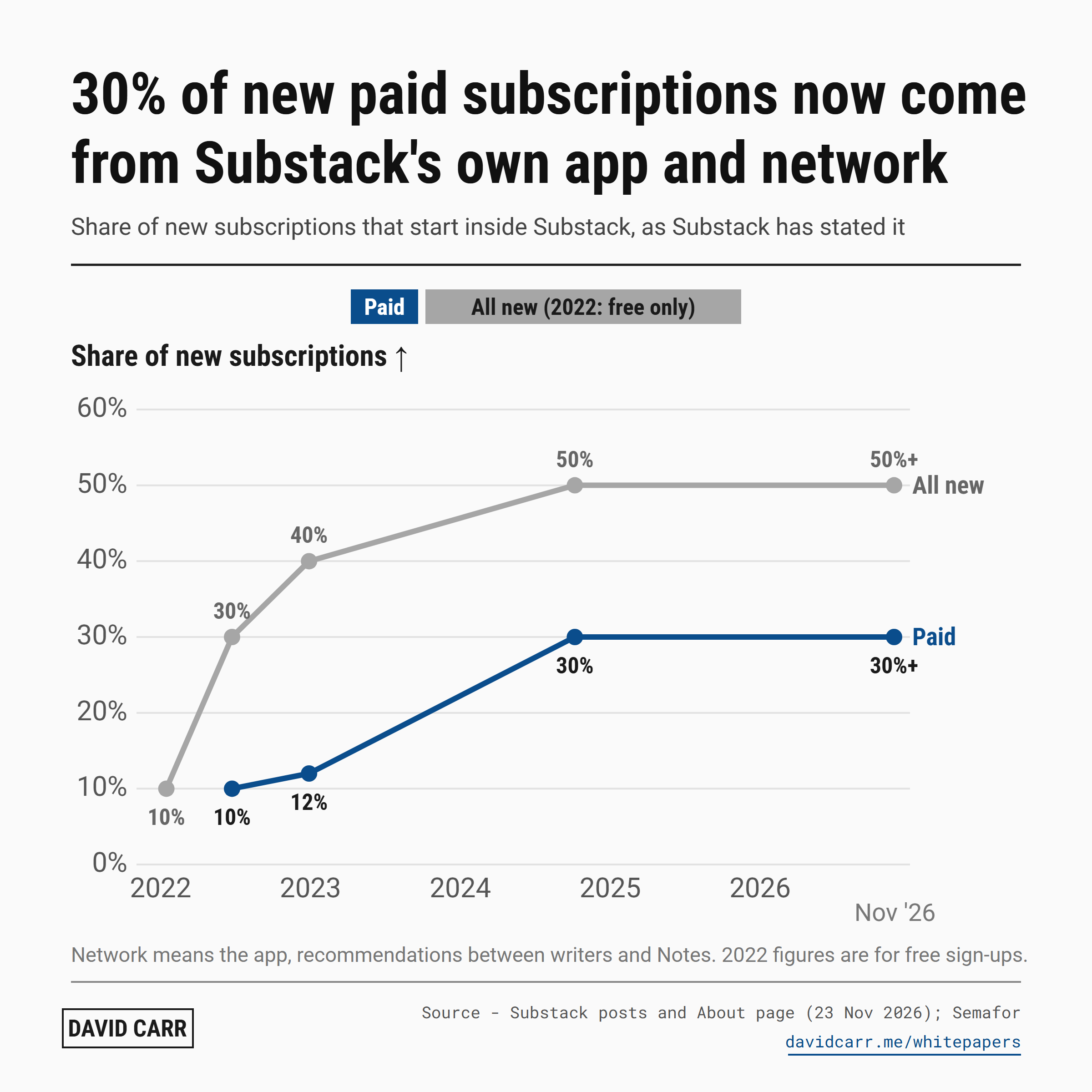
30% of new paid subscriptions now come from Substack's own app and network
Substack began as a way to send email. Its app now finds a share of the readers itself, through recommendations between writers and Notes.
Substack's own figures. Its 2022 free-side numbers were for free sign-ups; later ones cover all new subscribers.
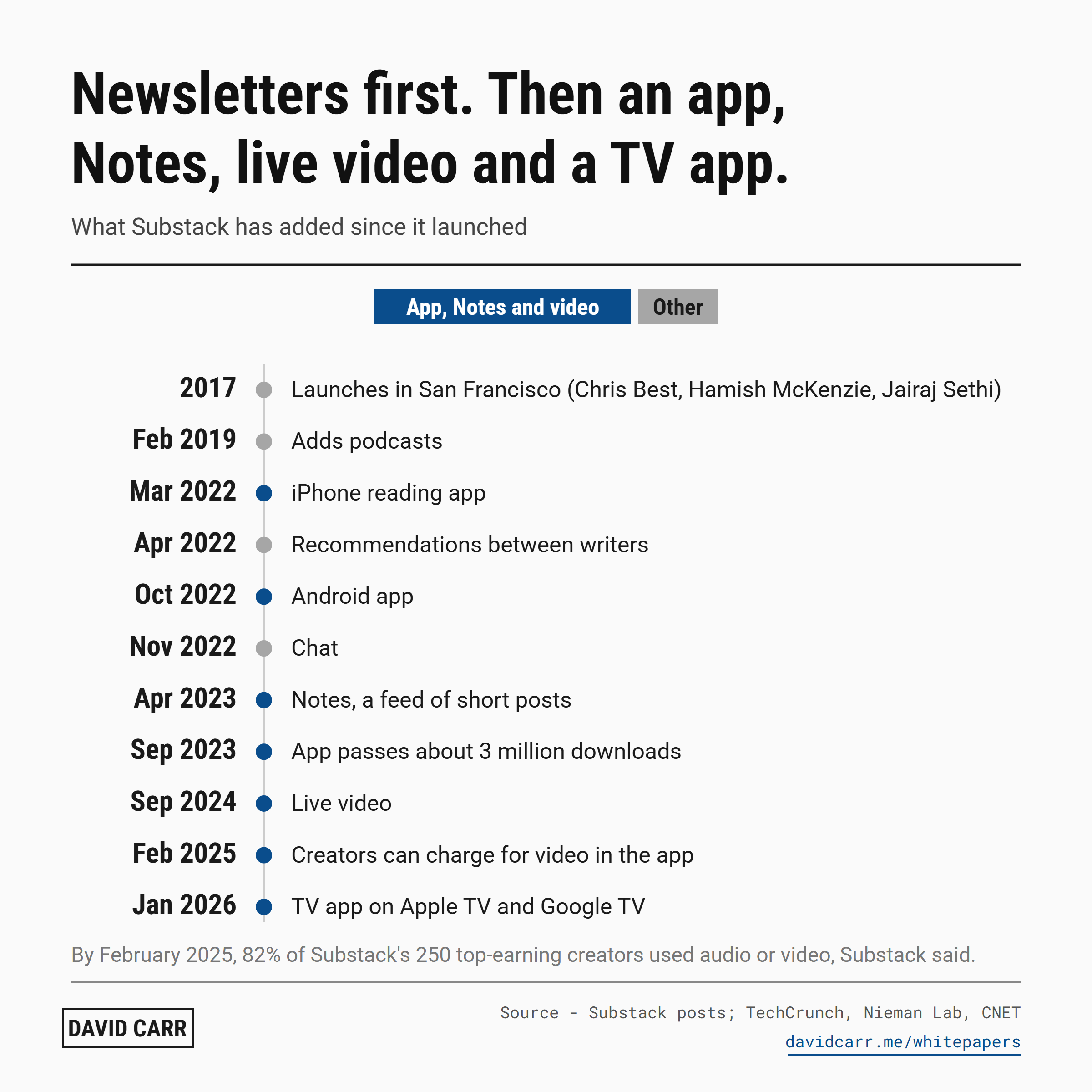
Newsletters first. Then an app, Notes, live video and a TV app.
By February 2025, 82% of Substack's 250 top-earning creators used audio or video, Substack said, up from over half a year earlier.
Dates from Substack's own posts and from TechCrunch, Nieman Lab and CNET.
Method, caveats and sources
The short answer. Substack passed 5 million paid subscriptions in March 2025, each million faster than the last. About 1 in 7 subscriptions is paid. It was valued at $1.1 billion in 2025 and reportedly earns about $45 million a year from its 10% cut. Its top 10 publications take in about $40 million a year, and its own app now brings in 30% of new paid subscriptions.
Substack is private. It publishes milestones, not accounts. Subscription counts come from its own posts or from Axios, NPR, Nieman Lab and TechCrunch quoting it. The only audited figures are for 2020 and 2021, posted for its 2023 crowdfunding round. The 2025 revenue figure is a press estimate and is marked that way.
Subscriptions, not people. Since 2021 Substack has counted paid subscriptions. A reader who pays three writers counts three times.
Medium. Medium's member counts are as reported by Axios (2021) and TechCrunch (2022, 2024). A Medium membership covers the whole site, so the comparison is rough.
Left out. Claims of 8.4 million paid subscriptions or 100,000 earning publications in 2026 trace only to blogs, not to Substack, so they are not used. Sources were checked on 23 November 2026.
Also: Stripe and Beehiiv.