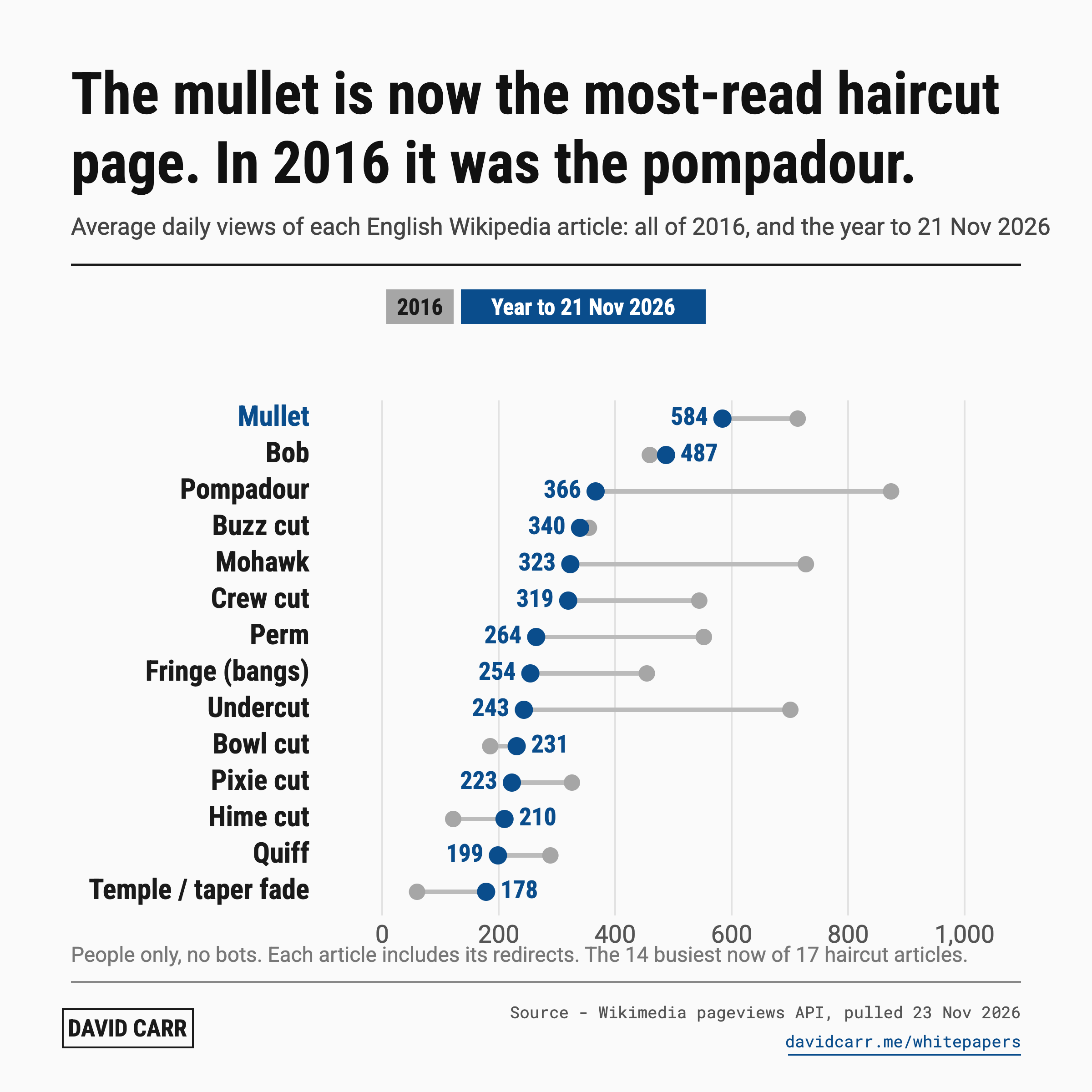
The mullet is now the most-read haircut page. In 2016 it was the pompadour.
- Year to 21 Nov 2026: mullet 584 views a day, bob 487, pompadour 366
- 2016: pompadour 874, mohawk 727, mullet 713
The mullet and the bob held their readers far better than most. The pompadour and the mohawk lost more than half.
Average daily views of each English Wikipedia article, people only, from the Wikimedia pageviews API. Each article includes its redirects.
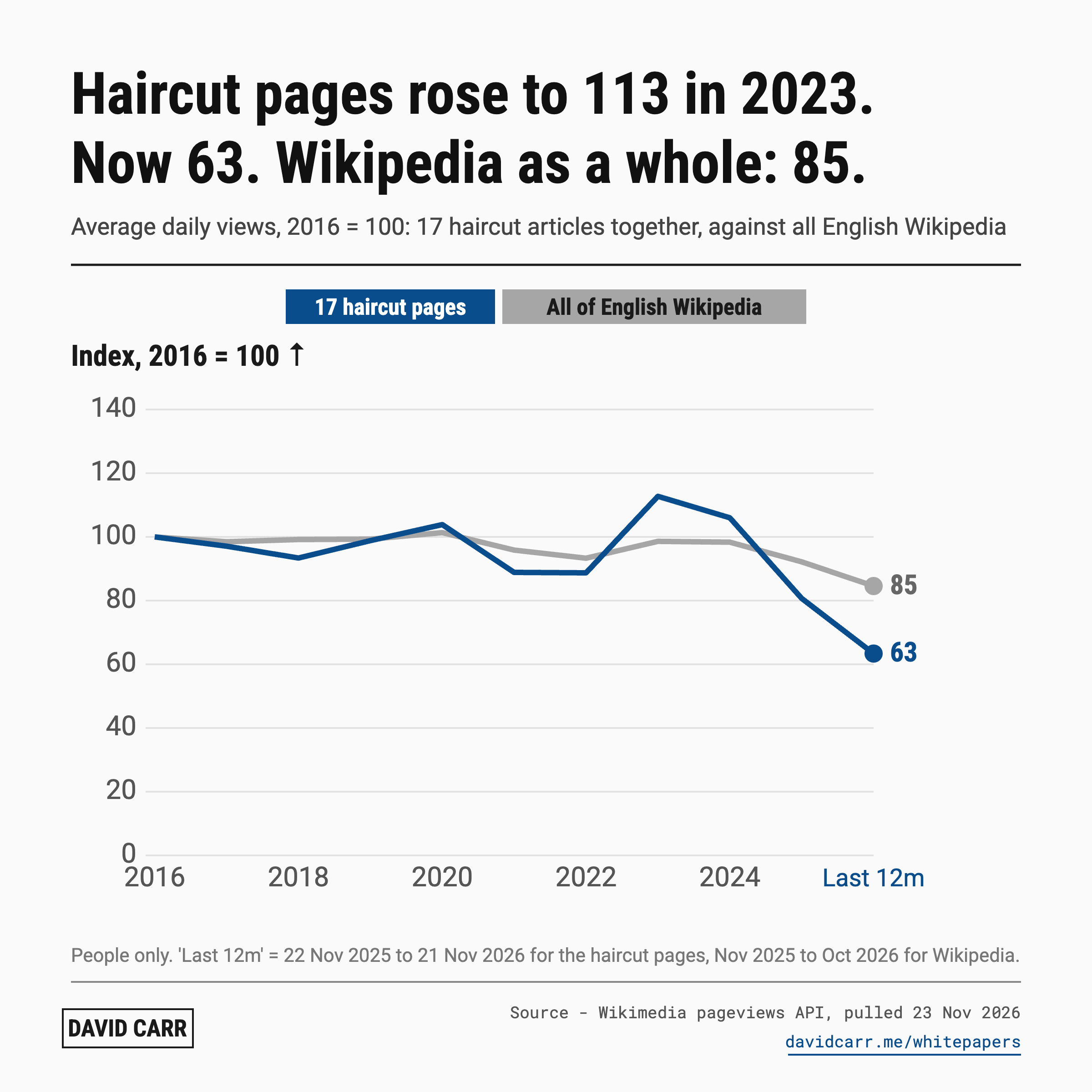
Haircut pages rose to 113 in 2023. Now 63. Wikipedia as a whole: 85.
- 17 haircut pages together, 2016 = 100
- Busiest year: 2023, 13% above 2016
- Year to 21 Nov 2026: 63
- All of English Wikipedia: 85
Haircut pages moved roughly with Wikipedia until 2022, rose above it in 2023 and 2024, then fell further.
Fewer page views can mean people find the same answer in search results, apps or chatbots, not less interest in haircuts.
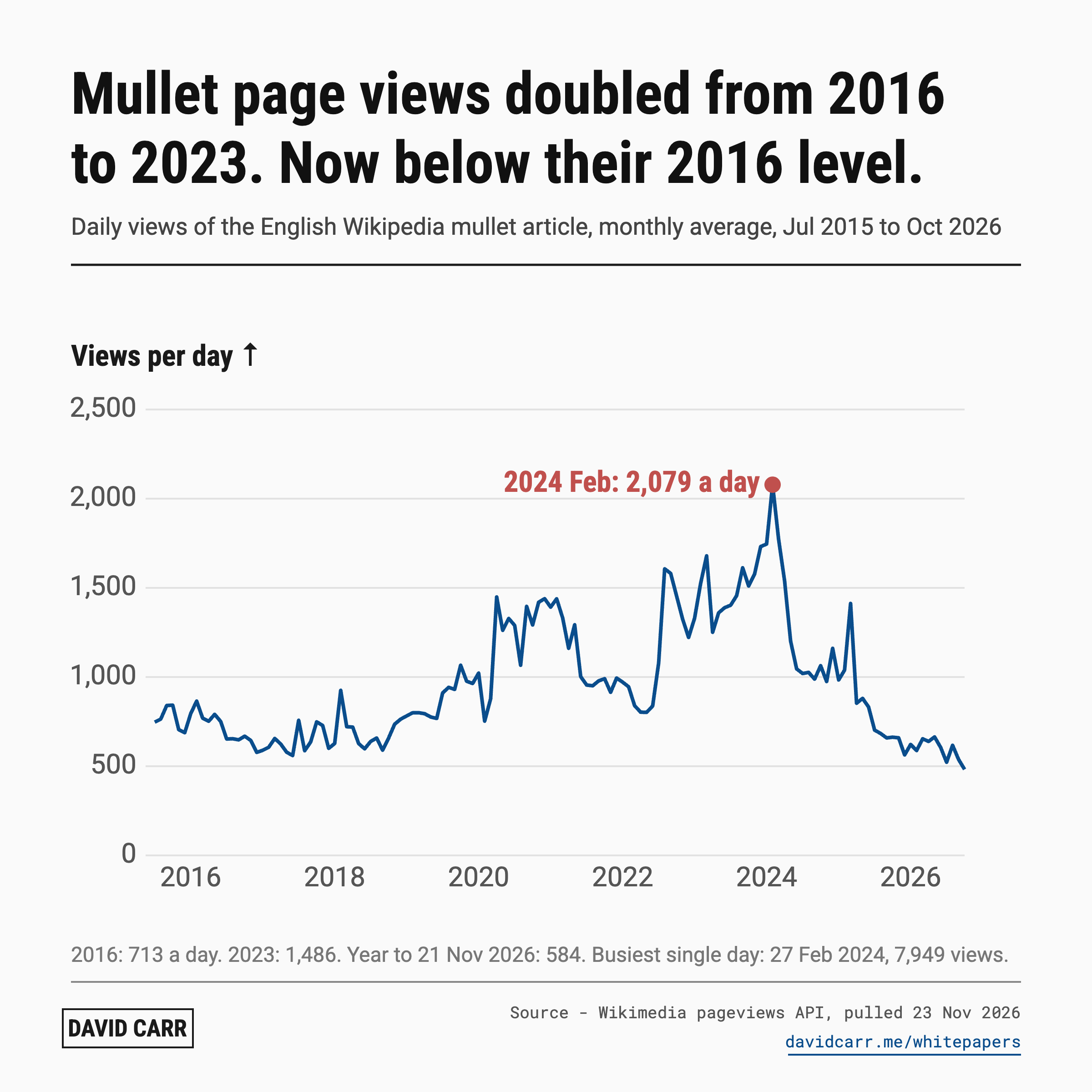
Mullet page views doubled from 2016 to 2023. Now below their 2016 level.
- 2016: 713 a day
- 2020: 1,217
- 2023: 1,486, the busiest year
- Busiest month: February 2024, 2,079 a day
- Year to 21 Nov 2026: 584
The climb started in 2019 and came in steps: 2020, then late 2022 into 2023. The busiest single day was 27 February 2024, with 7,949 views.
Monthly average of daily views of Mullet (haircut) and its redirects.
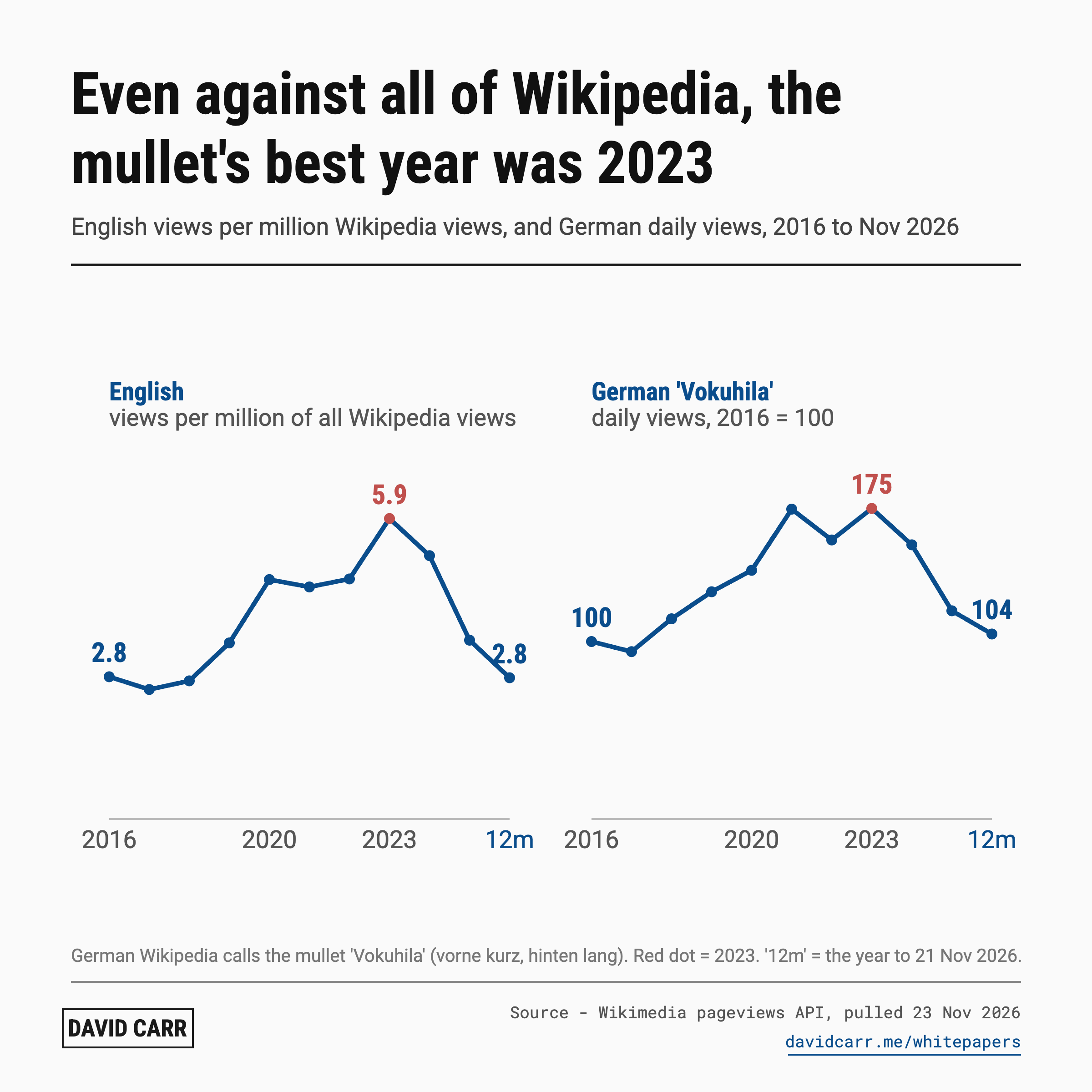
Even against all of Wikipedia, the mullet's best year was 2023
- English: 2.8 views per million Wikipedia views in 2016, 5.9 in 2023, 2.8 now
- German 'Vokuhila': 159 a day in 2016, 279 in 2023 (175 on a 2016 = 100 scale), 166 now
The comeback is not just Wikipedia getting busier. It shows up the same way in German.
Per-million figure = mullet views / all English Wikipedia views (people only). "Now" for the share = Jan to Oct 2026. Vokuhila on German Wikipedia.
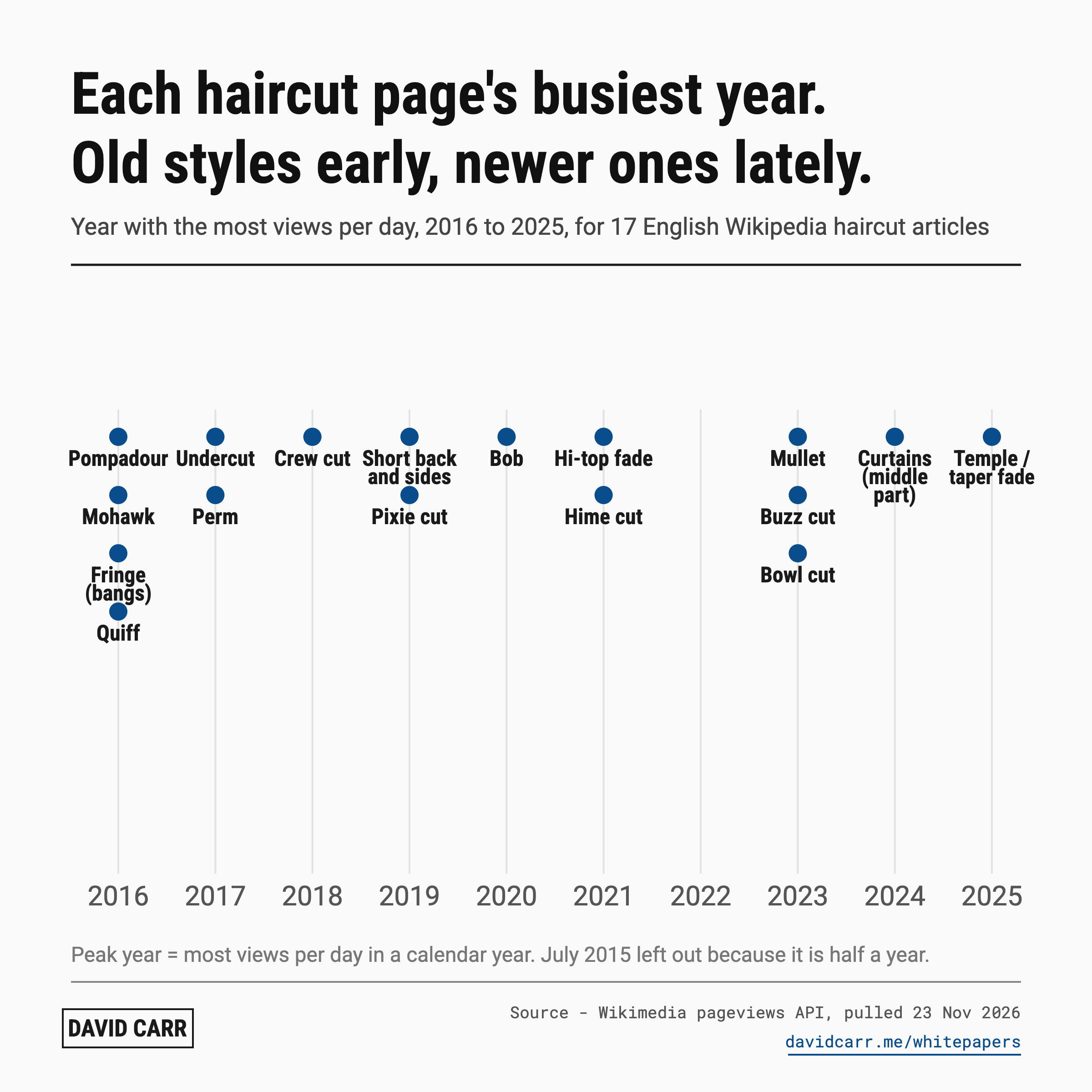
Each haircut page's busiest year. Old styles early, newer ones lately.
- 2016: pompadour, mohawk, fringe, quiff
- 2023: mullet, buzz cut, bowl cut
- 2024: curtains (middle part)
- 2025: temple / taper fade
Four of the 17 had their best year in 2016, the first full year of data. The newest peaks belong to the curtains and the taper fade.
Peak year = most views per day in a calendar year, 2016 to 2025.
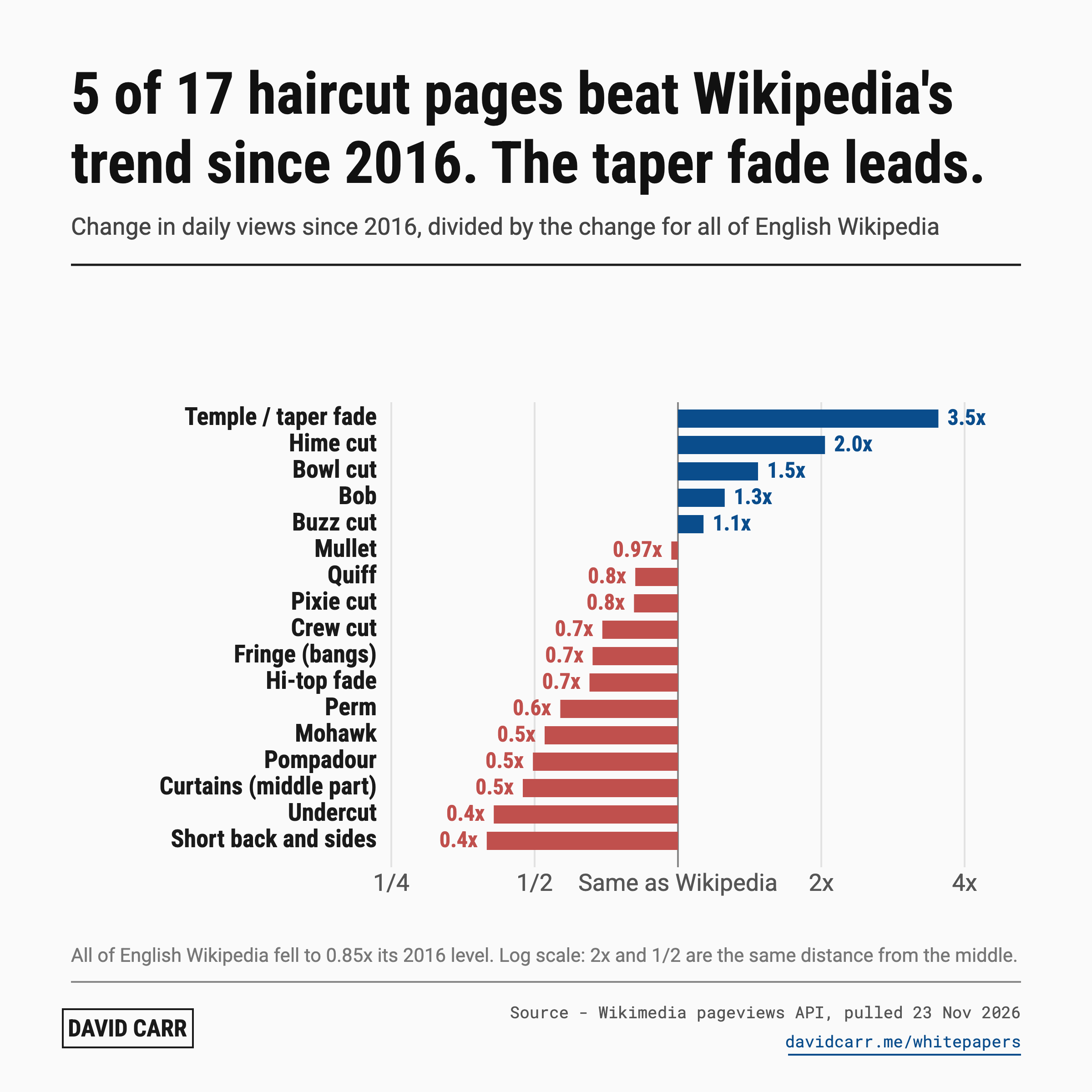
5 of 17 haircut pages beat Wikipedia's trend since 2016. The taper fade leads.
- Temple / taper fade: 3.5x Wikipedia's trend
- Hime cut: 2.0x
- Mullet: 0.97x, about level
- Undercut and short back and sides: 0.4x
All of English Wikipedia is at 0.85 of its 2016 level. Dividing by that shows which pages gained or lost more than the site did.
Year to 21 Nov 2026 against 2016, views per day, divided by the same change for all English Wikipedia (Nov 2025 to Oct 2026).
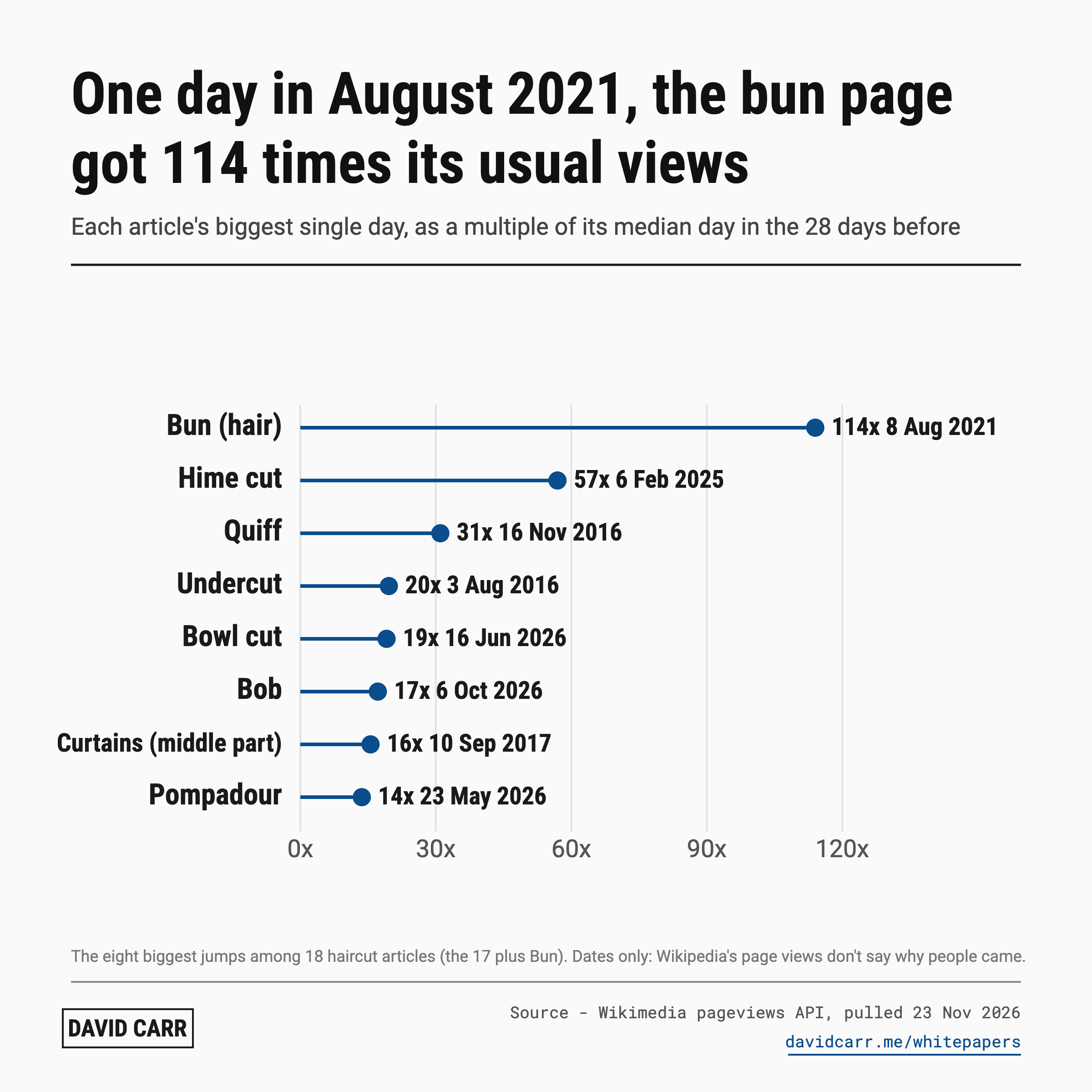
One day in August 2021, the bun page got 114 times its usual views
- Bun: 8 Aug 2021, 23,031 views
- Hime cut: 6 Feb 2025, 15,572
- Quiff: 16 Nov 2016, 6,820
- Undercut: 3 Aug 2016, 13,225
- Bob: 6 Oct 2026, 6,872
Every one of the 17 pages has a biggest day at least 3.6 times its usual level.
Spike = a day's views against the median of the 28 days before. Page views give dates, not reasons, so no reasons are given here.
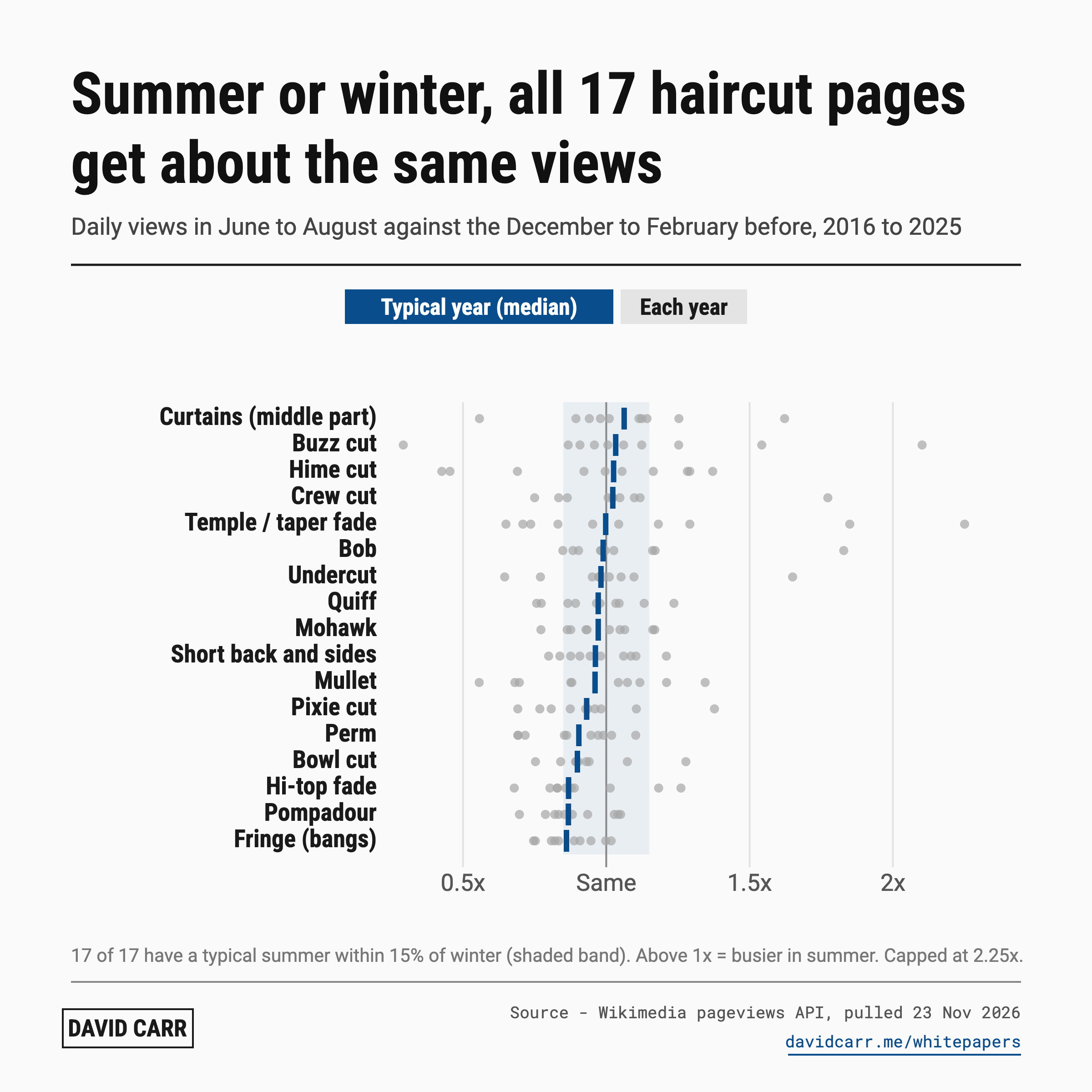
Summer or winter, all 17 haircut pages get about the same views
- Curtains: 6% busier in summer, the most
- Fringe, pompadour, hi-top fade: about 13% quieter in summer
- Any one year can swing a lot more
Unlike diets in January, there is no haircut season on Wikipedia. Single years move with spikes, not the weather.
June to August daily views against the December to February before, 2016 to 2025. The bar is the median year.
Method, caveats and sources
The short answer. The mullet is now the most-read haircut page on English Wikipedia; in 2016 it was the pompadour. Mullet views doubled from 2016 to 2023, peaked in February 2024 and are now below their 2016 level. The same rise and fall shows on German Wikipedia. The taper fade and the hime cut gained most against Wikipedia's own trend; the undercut and short back and sides lost most. Single-day spikes are big and brief, and summer and winter look much the same.
What Wikipedia shows, and what it doesn't. Page views show interest: people looking something up. They don't show what anyone is wearing or asking a barber for. English Wikipedia is read all over the world, so these are not Irish figures.
Data. Daily human views (no bots, as Wikimedia classifies them) of English Wikipedia articles from the Wikimedia pageviews API, 1 July 2015 to 21 November 2026, pulled 23 November 2026. Views of a redirect are counted under the redirect, so each haircut adds up its article and every redirect pointing at it, checked with the MediaWiki API the same day. "Now" means the 365 days to 21 November 2026. The all-Wikipedia line uses Wikimedia's monthly total for English Wikipedia, people only, to October 2026. German Wikipedia's Vokuhila article is used for the mullet.
Names. Several cuts have no article of their own on English Wikipedia. The taper fade redirects to Temple fade. The middle part and curtain bangs redirect to Curtained hair, shown as "Curtains (middle part)". Fringe is the article titled "Bangs (hair)". Short back and sides is the article "Regular haircut".
Left out. The skin fade and the plain "fade" redirects (to sections of other articles) get too few views to chart, as do the separate "Middle part", "Curtain bangs" and "Man bun" redirects on their own. The butterfly haircut article was only created in November 2023 (38 views a day now), and The Rachel became a full article only in May 2022, so neither is in the 2016 comparisons. The bun is in the spikes chart only, as most of that page is not about haircuts. A few nickname redirects were left out of the totals. Wikipedia's figures don't say why any spike happened, so the page gives dates only.
Also: Stripe, Vegan, veggie, gluten-free: what people look up and Who people are curious about.