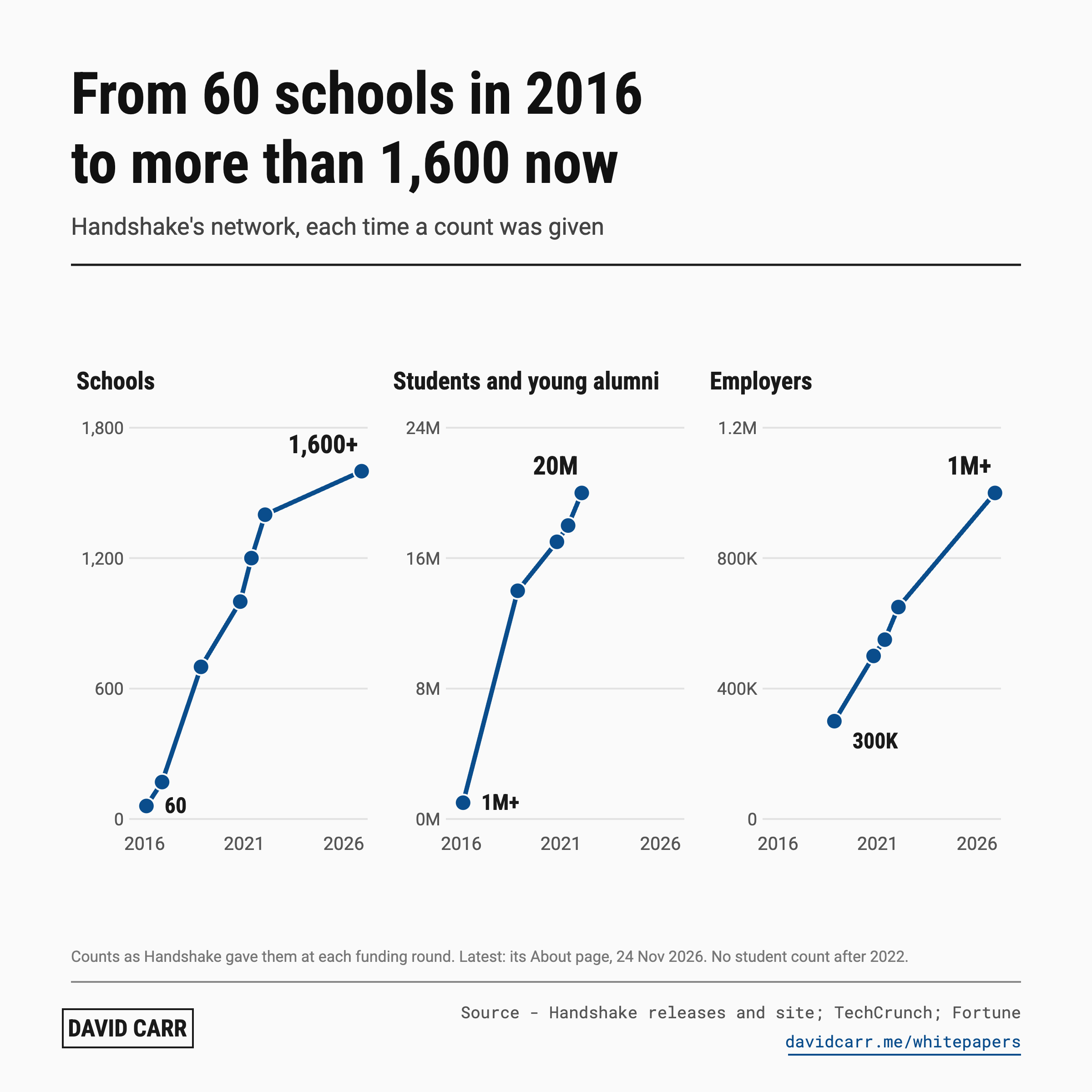
From 60 schools in 2016 to more than 1,600 now
- Schools: 60 in early 2016, 1,400 in 2022, 1,600+ now
- Students and young alumni: 1 million+ in 2016, 20 million in 2022
- Employers: 300,000 in 2018, 1 million now
Handshake grew by signing up college careers offices, then the students and employers came with them.
Counts from Fortune, TechCrunch, Handshake's Series F release and its About page (24 November 2026). It has not given a comparable student count since 2022.
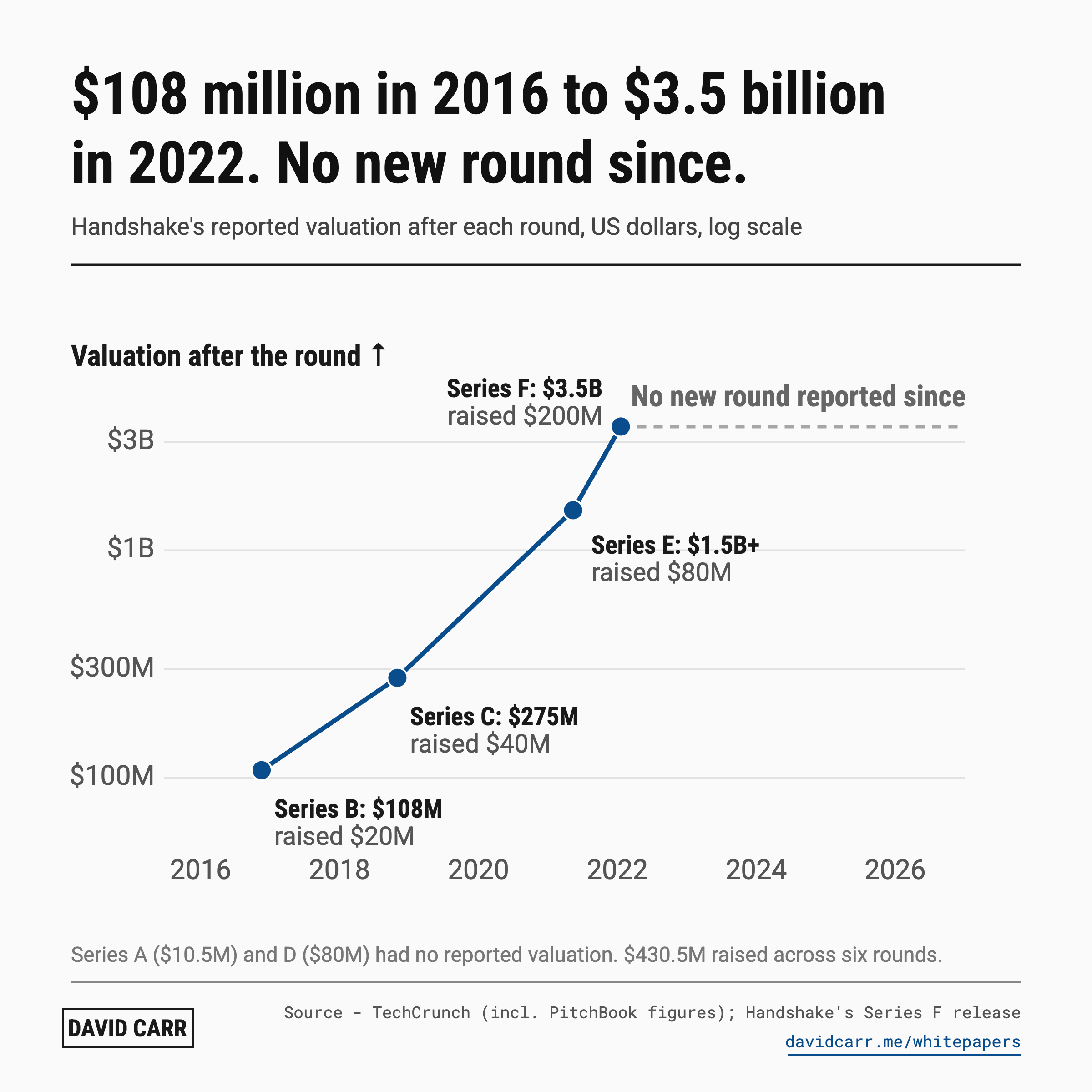
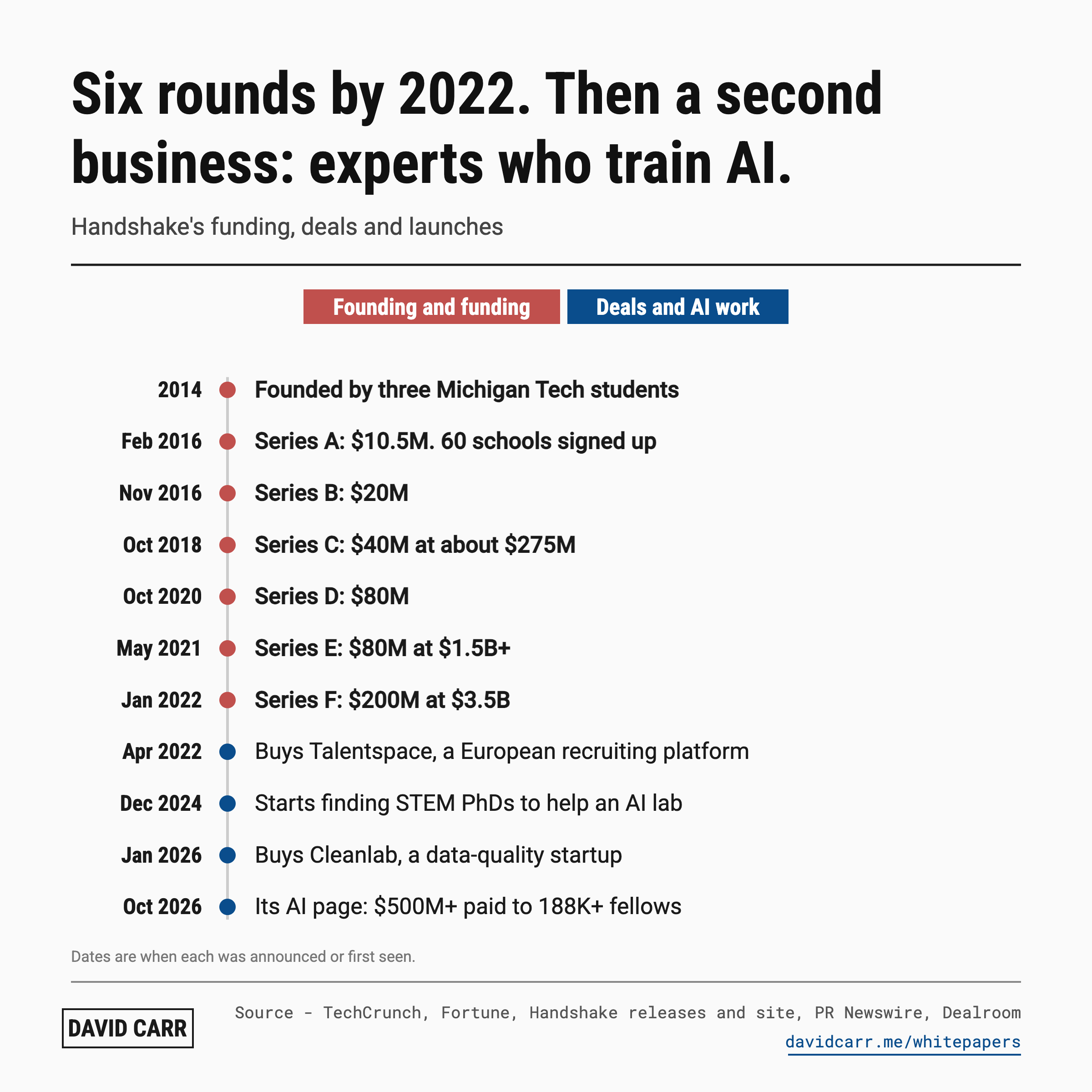
$108 million in 2016 to $3.5 billion in 2022. No new round since.
Six rounds, $430.5 million in all. The last was in January 2022.
The 2016 and 2018 valuations are PitchBook figures reported by TechCrunch. Some later reports give $3.3 billion for 2022; Handshake's own release says $3.5 billion.
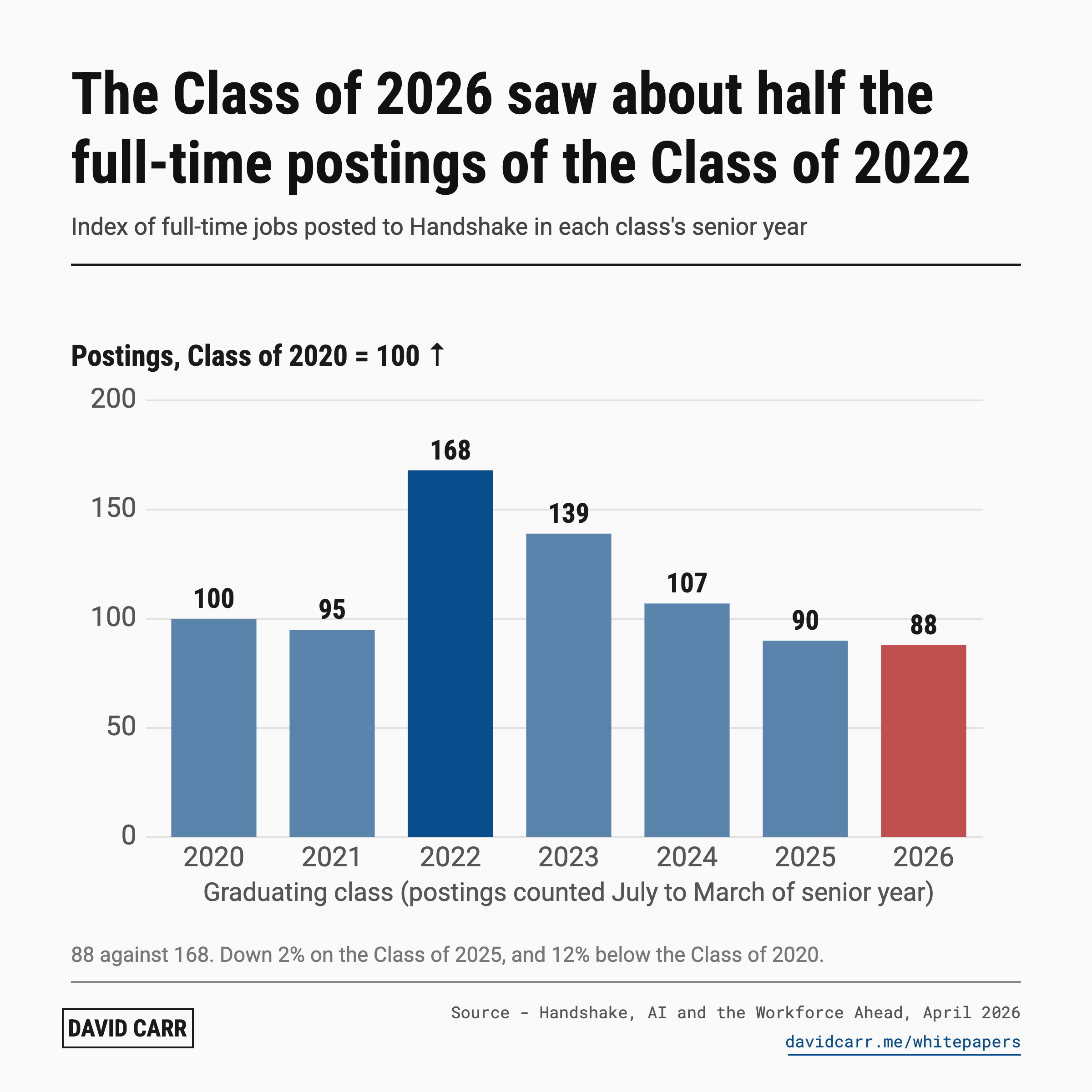
The Class of 2026 saw about half the full-time postings of the Class of 2022
- Class of 2020: 100
- Class of 2022: 168, the peak
- Class of 2025: 90
- Class of 2026: 88
The Class of 2022 graduated into a hiring boom. Postings have fallen every year since, and the Class of 2026 is now just below the Class of 2020.
Index of full-time jobs posted from July to March of each senior year, from Handshake's AI and the Workforce Ahead report, April 2026.
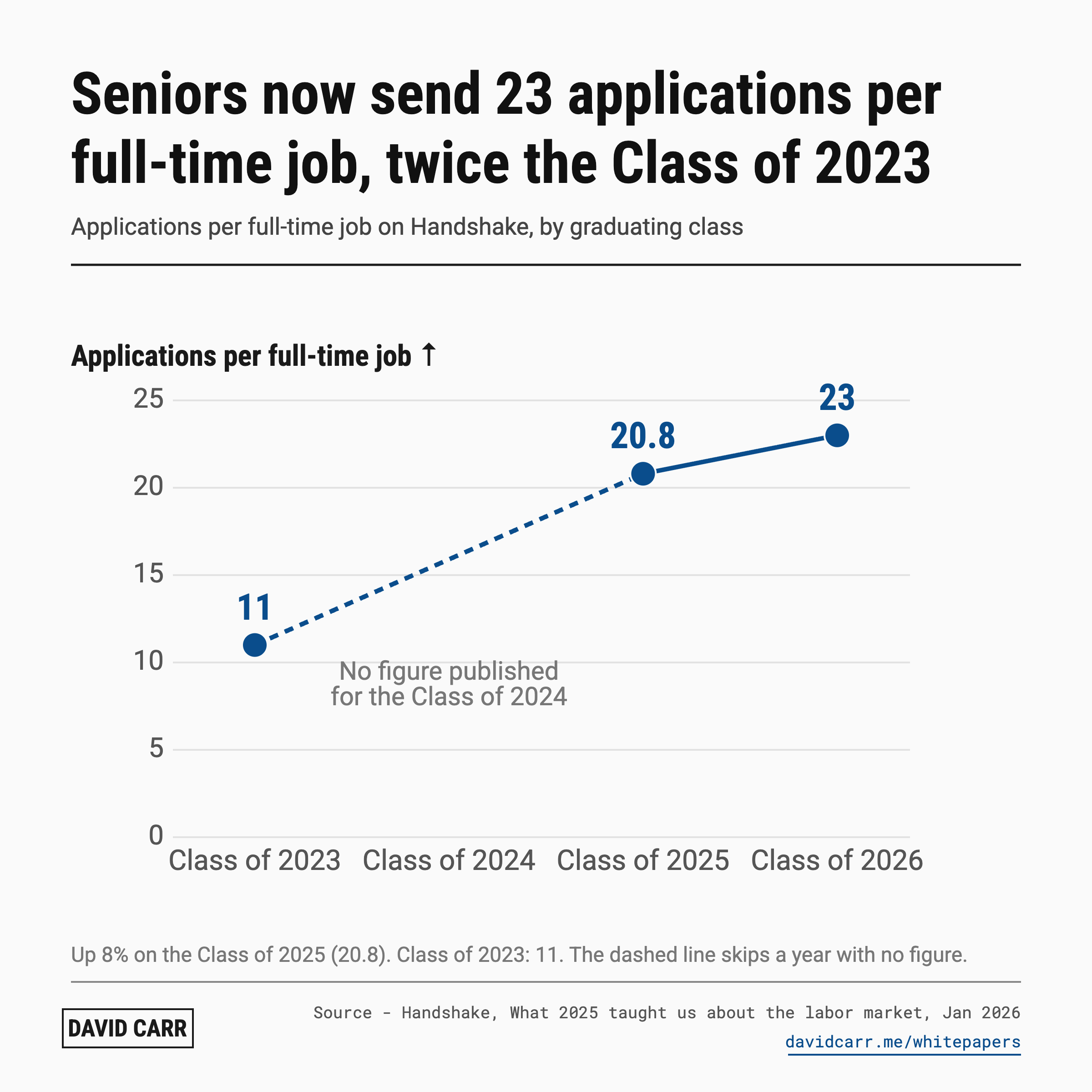
Seniors now send 23 applications per full-time job, twice the Class of 2023
- Class of 2023: 11
- Class of 2025: 20.8
- Class of 2026: 23, up 8%
Fewer postings and more applications per posting. Each opening now gets about twice the interest it did three years ago.
From What 2025 taught us about the labor market, Handshake, January 2026. Handshake did not give a figure for the Class of 2024.
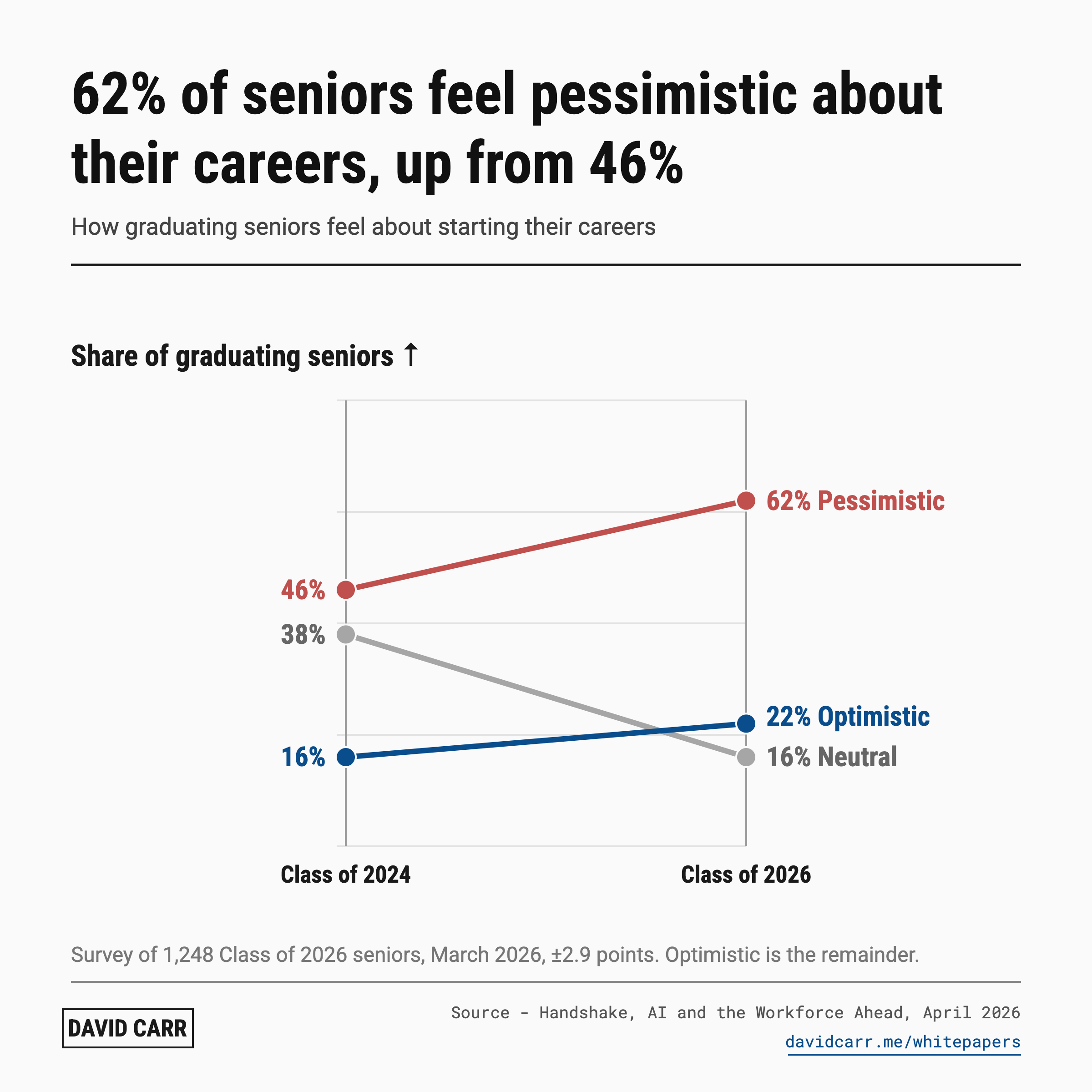
62% of seniors feel pessimistic about their careers, up from 46%
- Pessimistic: 46% for the Class of 2024, 62% for the Class of 2026
- Neutral: 38%, then 16%
- Optimistic: 16%, then 22%
The middle has emptied out. More seniors have a view, and most of the movement went to pessimism.
Survey of 1,248 seniors at 498 colleges, March 2026, weighted to national enrolment. Optimistic is the remainder. From the April 2026 report.
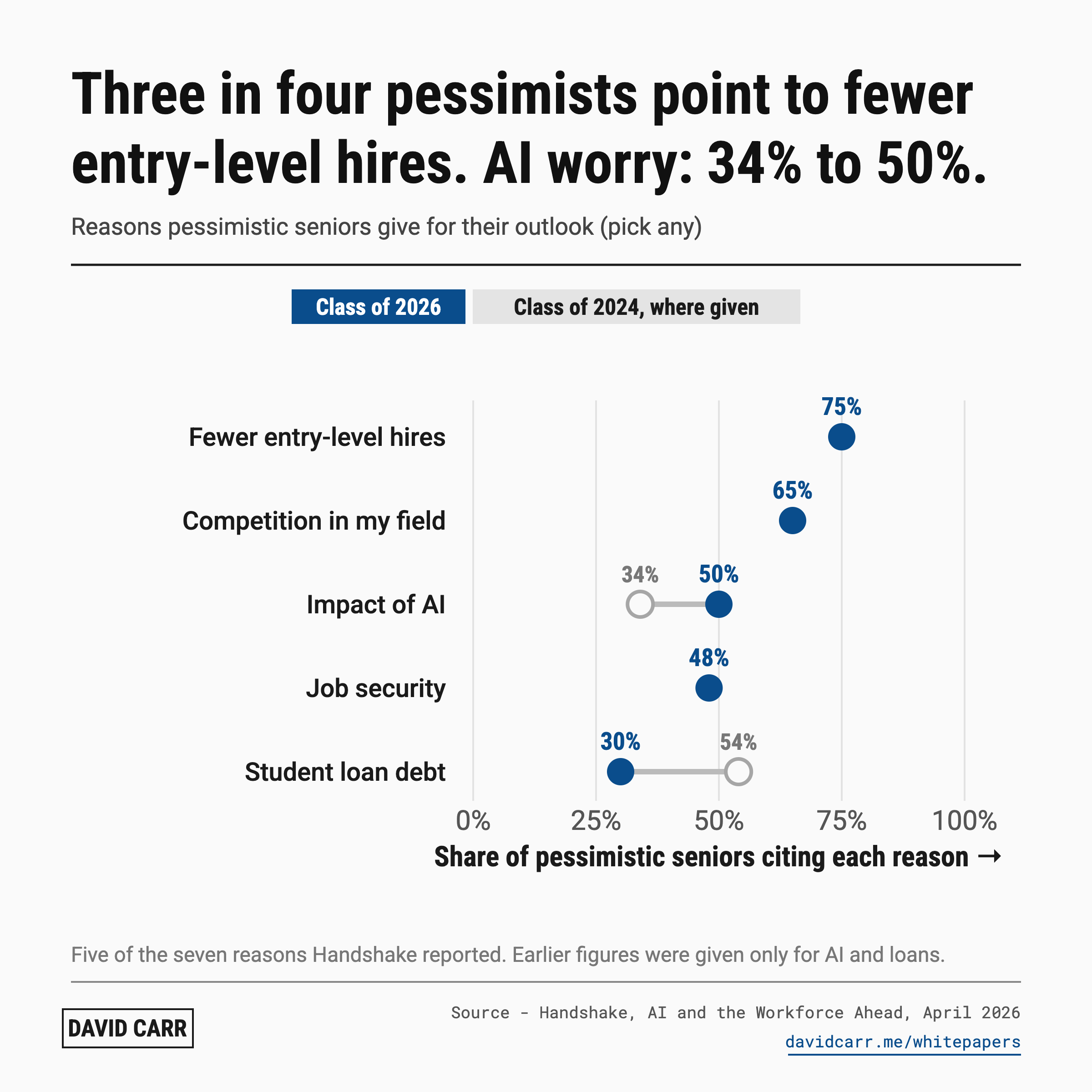
Three in four pessimists point to fewer entry-level hires. AI worry: 34% to 50%.
- Fewer entry-level hires: 75%
- Competition in my field: 65%
- Impact of AI: 50%, up from 34%
- Student loan debt: 30%, down from 54%
AI is the fastest-rising worry, but the top one is simpler: fewer starter jobs.
Seniors could pick more than one reason. Two other reasons in the survey are not shown.
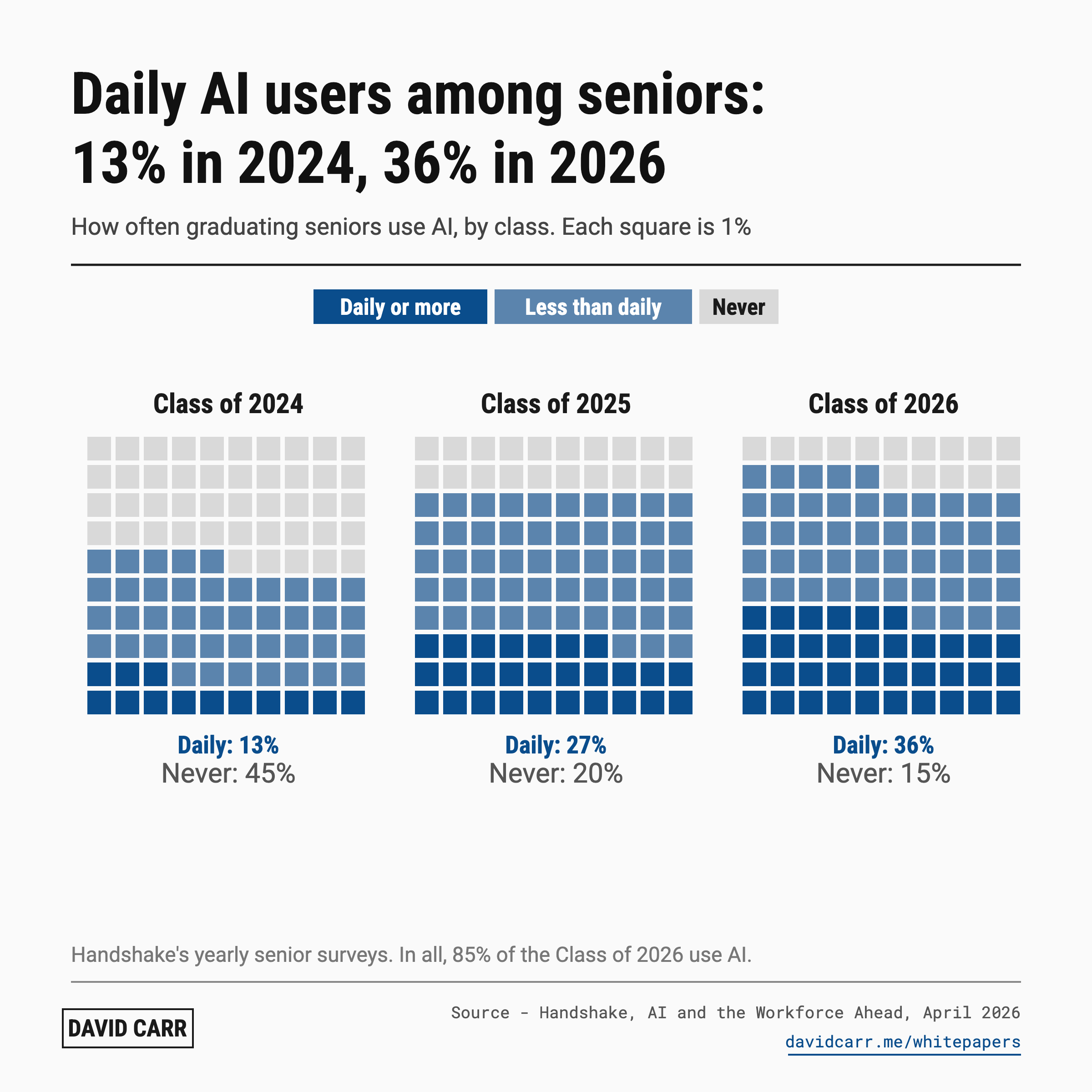
Daily AI users among seniors: 13% in 2024, 36% in 2026
- Class of 2024: 45% never used AI
- Class of 2025: 20%
- Class of 2026: 15%
- 85% of the Class of 2026 use AI
In two years AI went from something half of seniors had skipped to something most use. Those who use it are less pessimistic: 59% against 76% of non-users.
From Handshake's yearly senior surveys.
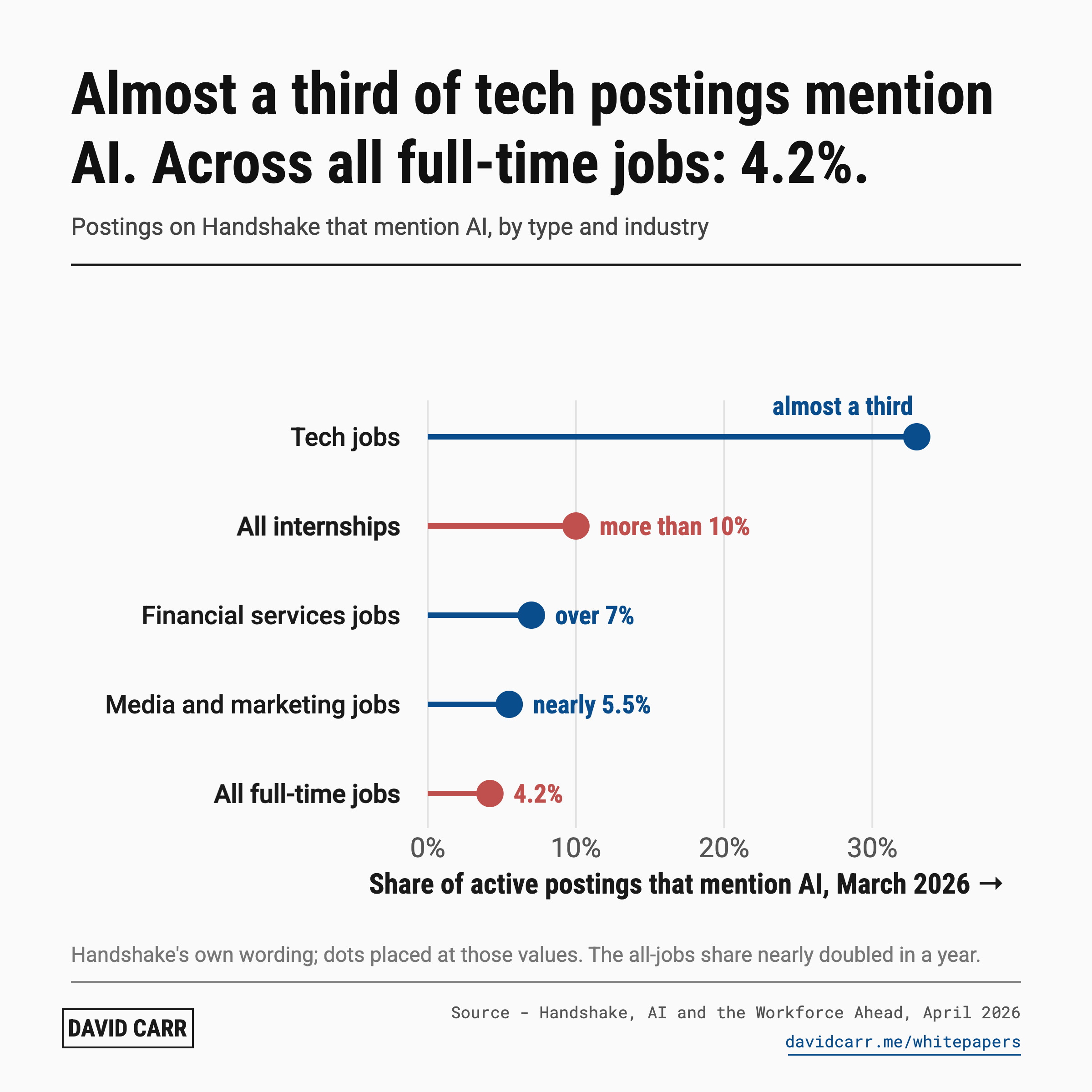
Almost a third of tech postings mention AI. Across all full-time jobs: 4.2%.
- Tech jobs: almost a third, over three times the share two years earlier
- Internships: more than 10%
- Financial services: over 7%
- All full-time jobs: 4.2%, nearly double a year earlier
Employers caught up with students in 2025. Only 28% of seniors say their course has built AI in, while 58% say they need stronger AI skills.
Shares of active postings as of March 2026, in Handshake's own wording. Dots sit at those values.
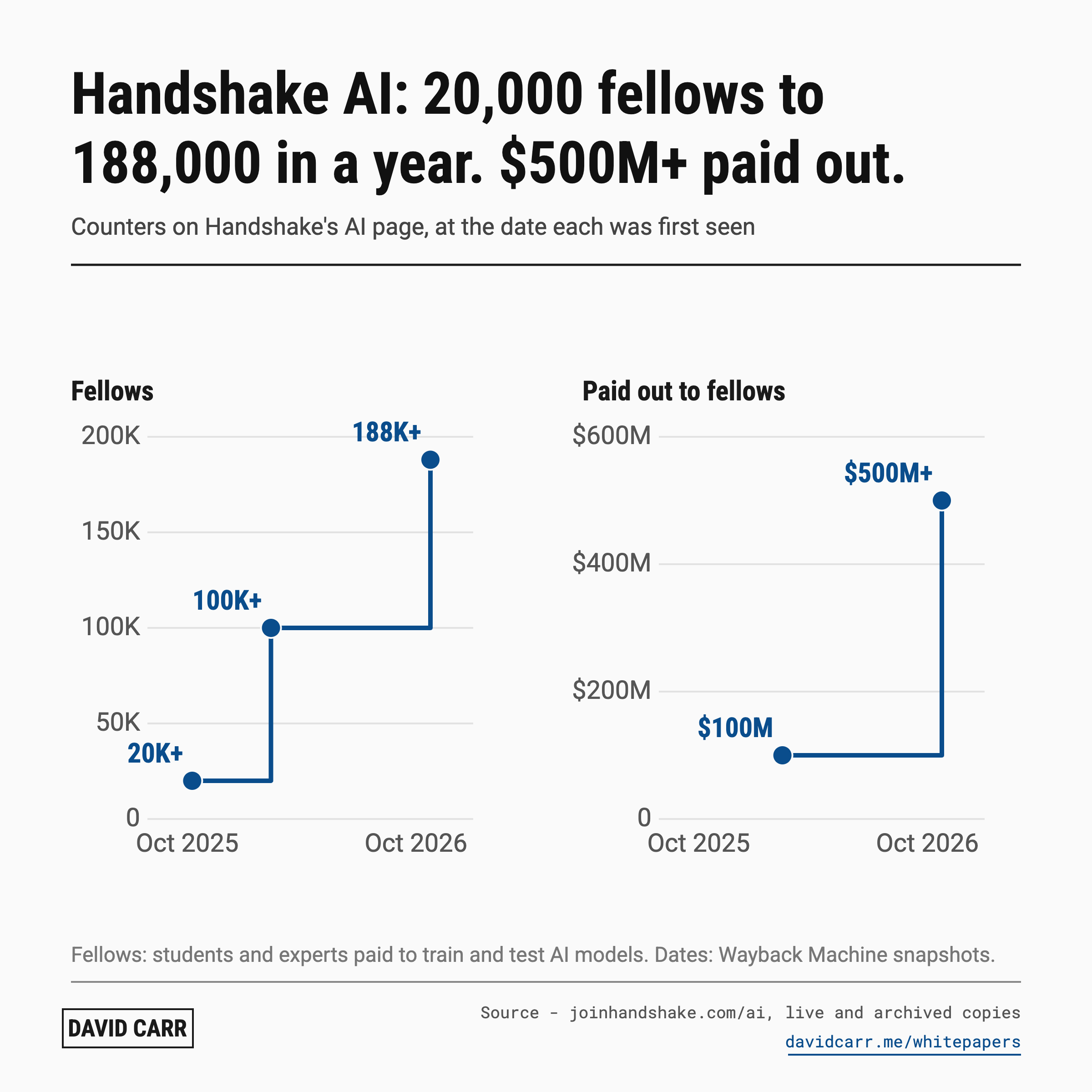
Handshake AI: 20,000 fellows to 188,000 in a year. $500M+ paid out.
- October 2025: 20,000+ fellows
- February 2026: 100,000+ fellows, $100M paid out
- October 2026: 188,000+ fellows, $500M+ paid out
Handshake now pays students, graduates and PhDs to train and test AI models for AI labs. It is a second business built on the same network.
Counters on Handshake's AI page, read live on 24 November 2026 and in Wayback Machine snapshots. Dates are when each counter was first seen.
Six rounds by 2022. Then a second business: experts who train AI.
The jobs network came first. The AI work grew out of it: CEO Garrett Lord says 89% of the people who worked on Handshake AI in a recent month came from the existing network.
The quote is from an interview summarised by Dealroom, July 2026.
Method, caveats and sources
The short answer. Handshake grew from 60 schools in 2016 to more than 1,600, and was valued at $3.5 billion in 2022. Its own data shows a tight market for graduates: the Class of 2026 saw about half the postings of the Class of 2022 and sent 23 applications per job. Seniors are more pessimistic, AI use is now near universal, and employers have started asking for it. Handshake has also built a second business paying experts to train AI.
Handshake is private. It publishes no revenue. Funding and valuations come from TechCrunch, Fortune and Handshake's Series F release. Press estimates of its AI revenue run from about $550 million to nearly $1 billion a year in early 2026 (The Information, via Dealroom), but another report gives a much lower figure, so they are not charted.
Handshake's own findings. Charts three to eight use Handshake Network Trends: a survey of 1,248 graduating seniors in March 2026 (margin of error 2.9 points), plus counts of postings, applications and resumes on its platform. Figures were read from the report's text and chart labels. Its users are US college students, so this is a picture of that group, not of all young workers.
Left out. A September 2026 snapshot of the AI page showing "750k+ fellows", which matches the page's community count and looks like a label slip. Handshake's AI-posting trends by industry appear only as charts in its report, so only the numbers in its text are used.
Dates. Pages read 24 November 2026. AI-page counters dated by Wayback Machine snapshots.
Also: Stripe, Pave and From college to career in Ireland.