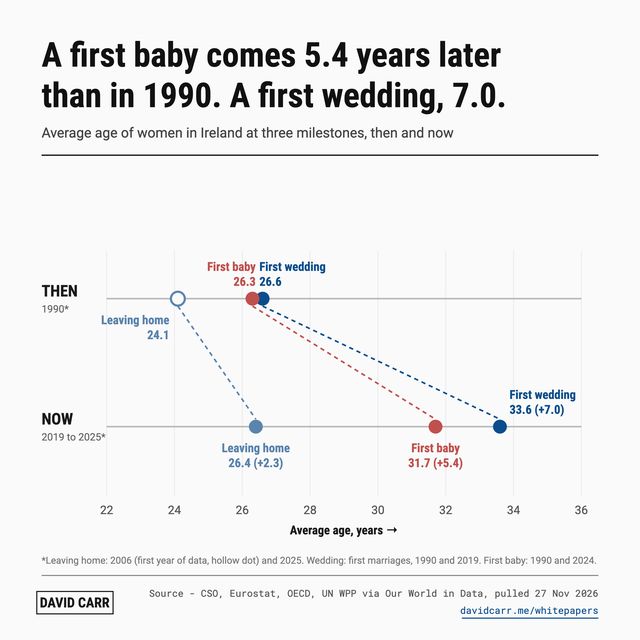
+7.0
Years later to a first wedding
+5.4
Years later to a first baby
1926
Earliest census used
Part 1 · 9 charts
Are we doing everything later?
Leaving home, first wedding and first baby, then and now, against Europe, the US, the UK and Japan.
- A first baby comes 5.4 years later than in 1990. A first wedding, 7.0
- Leaving home: 21.3 in Finland, 31.5 in Croatia, 26.9 in Ireland
- Lives got 7.6 years longer over the same years
Part 2 · 10 charts
From 'yes' to 'I do': how long it takes
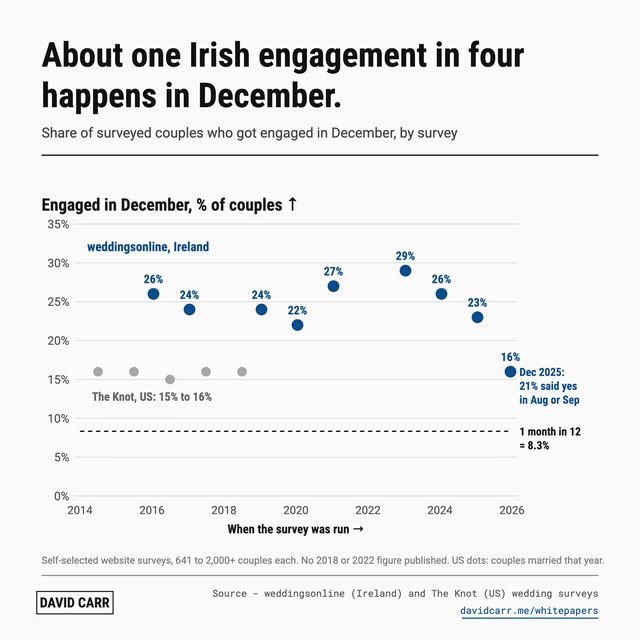
When people get engaged, how long they wait, and the dates they pick.
- About one Irish engagement in four happens in December
- Surveys put the average engagement at 18 to 20 months in Ireland
- The four most popular wedding dates are 28 to 31 December
Part 3 · 10 charts
When do people marry now?
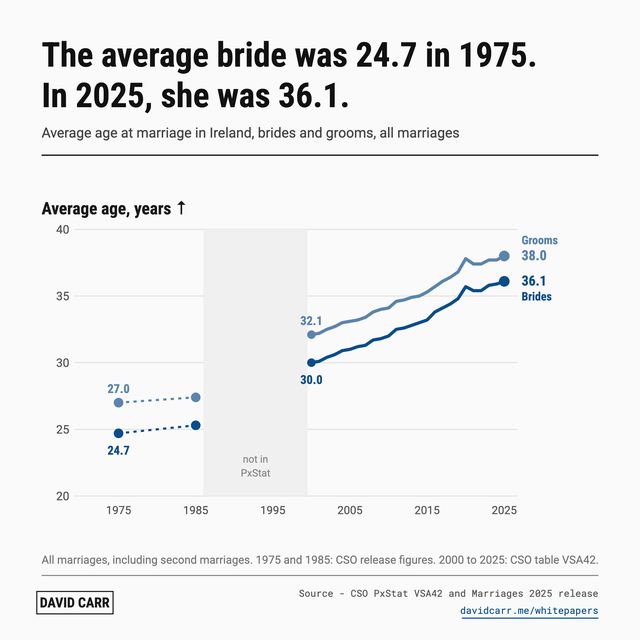
Brides' and grooms' ages since 1975, census records back to 1926, and when couples marry.
- The average bride was 24.7 in 1975. In 2025, she was 36.1
- In 1981, 80% of people aged 30 to 34 had married. In 2022, 36% had
- Since 2006, Friday has been the most popular day to marry
Part 4 · 10 charts
How old are mothers now?
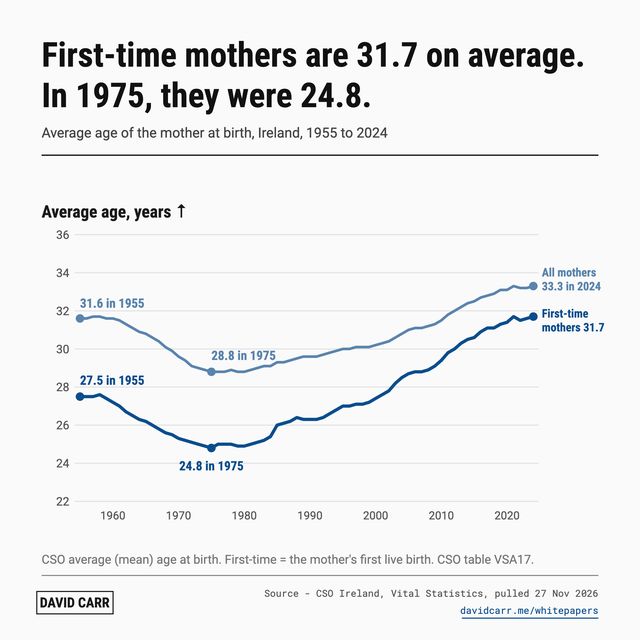
Mothers' ages at a first baby and at every baby since 1955, against the EU and the world.
- First-time mothers are 31.7 on average. In 1975, they were 24.8
- The most common age to give birth moved from 27 in 1980 to 34 in 2024
- In 2024, one mother in 62 had twins. In 1986, one in 95
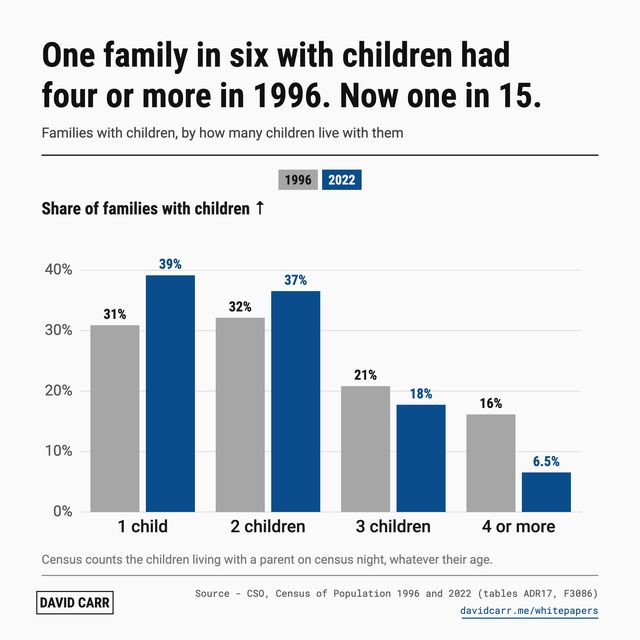
Part 5 · 10 charts
How many children Irish families have now
Census family sizes since 1996, county by county, and births by order.
- One family in six with children had four or more in 1996. Now one in 15
- In 1960, 45% of babies were a fourth child or later. In 2024, 8% were
- The fertility rate fell from 3.98 in 1971 to 1.47 in 2024
How these were made. Every number comes from data that was downloaded and saved: the CSO, Eurostat, the OECD, the UN and the Human Fertility Database, with wedding-industry surveys clearly labelled as surveys. Each chart names its source and pull date. Related: Baby names and Where Ireland is growing.