Ties in 1967. Sales of $8.1 billion in 2026.
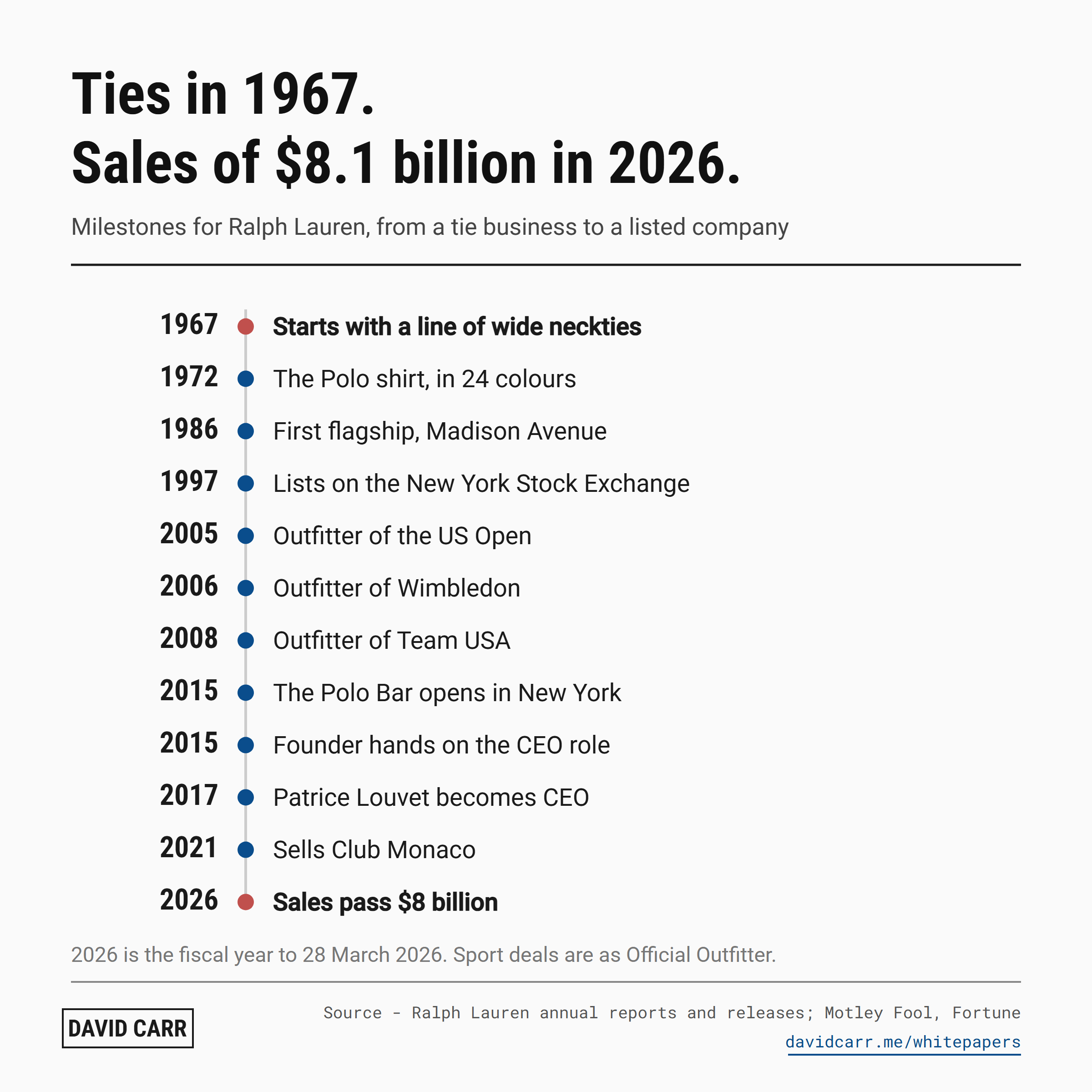
- 1967: a line of wide neckties
- 1972: the Polo shirt
- 1997: listed in New York at $26 a share
- 2015: the founder hands on the CEO role and stays as executive chairman
- 2021: sells Club Monaco
Almost 60 years on, Ralph Lauren still runs the design side. The Lauren family holds about 85% of the votes.
Milestones from Ralph Lauren's annual reports, its 50th anniversary timeline and press reports. Fiscal 2026 ended on 28 March 2026.
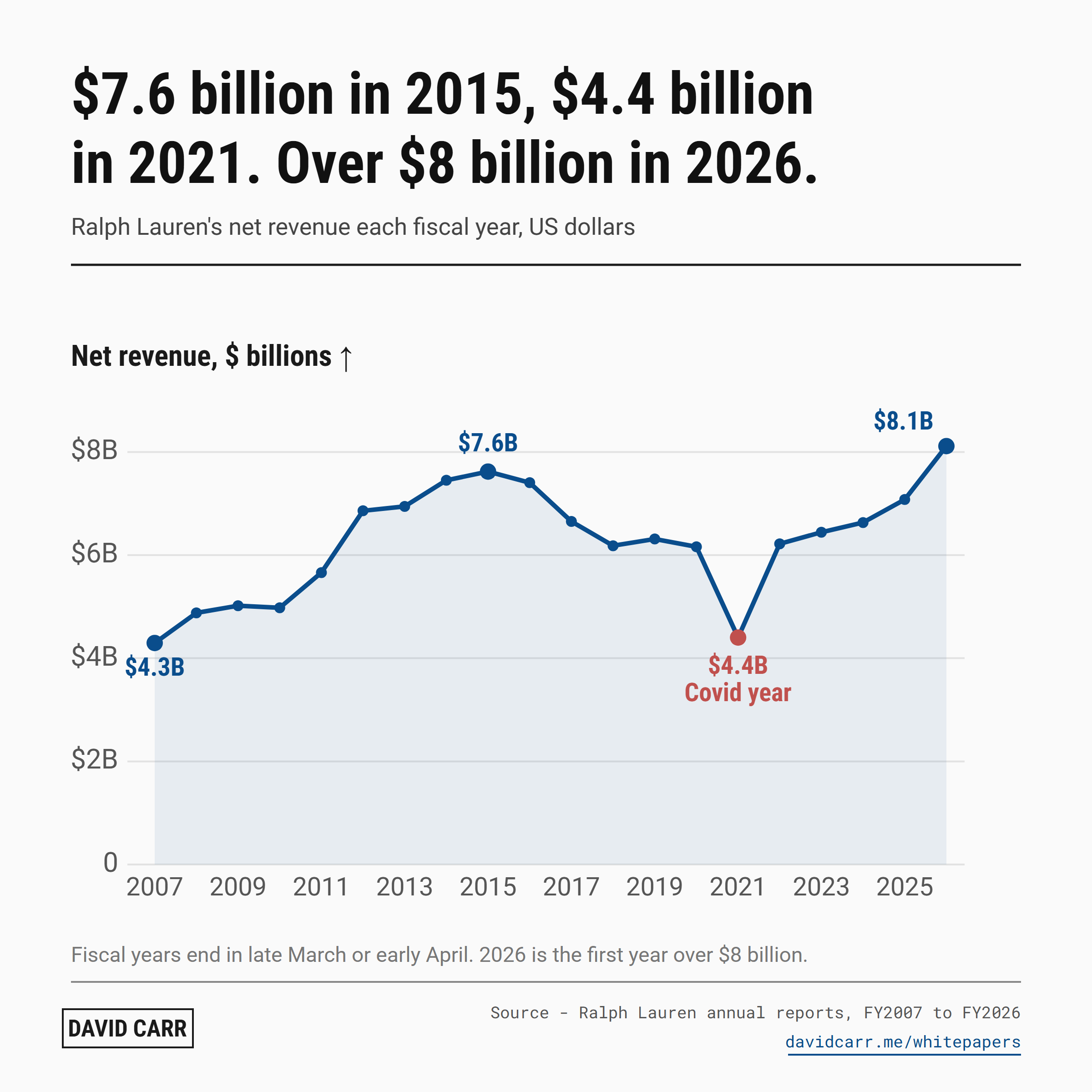
$7.6 billion in 2015, $4.4 billion in 2021. Over $8 billion in 2026.
- Fiscal 2007: $4.3 billion
- Fiscal 2015: $7.6 billion
- Fiscal 2021: $4.4 billion, the Covid year
- Fiscal 2026: $8.1 billion, up 15%
Sales shrank for three years after 2015, then fell hard when stores shut. Five years of growth since have taken it past its old peak.
From the annual reports and the fiscal 2026 results. Fiscal years end in late March or early April.
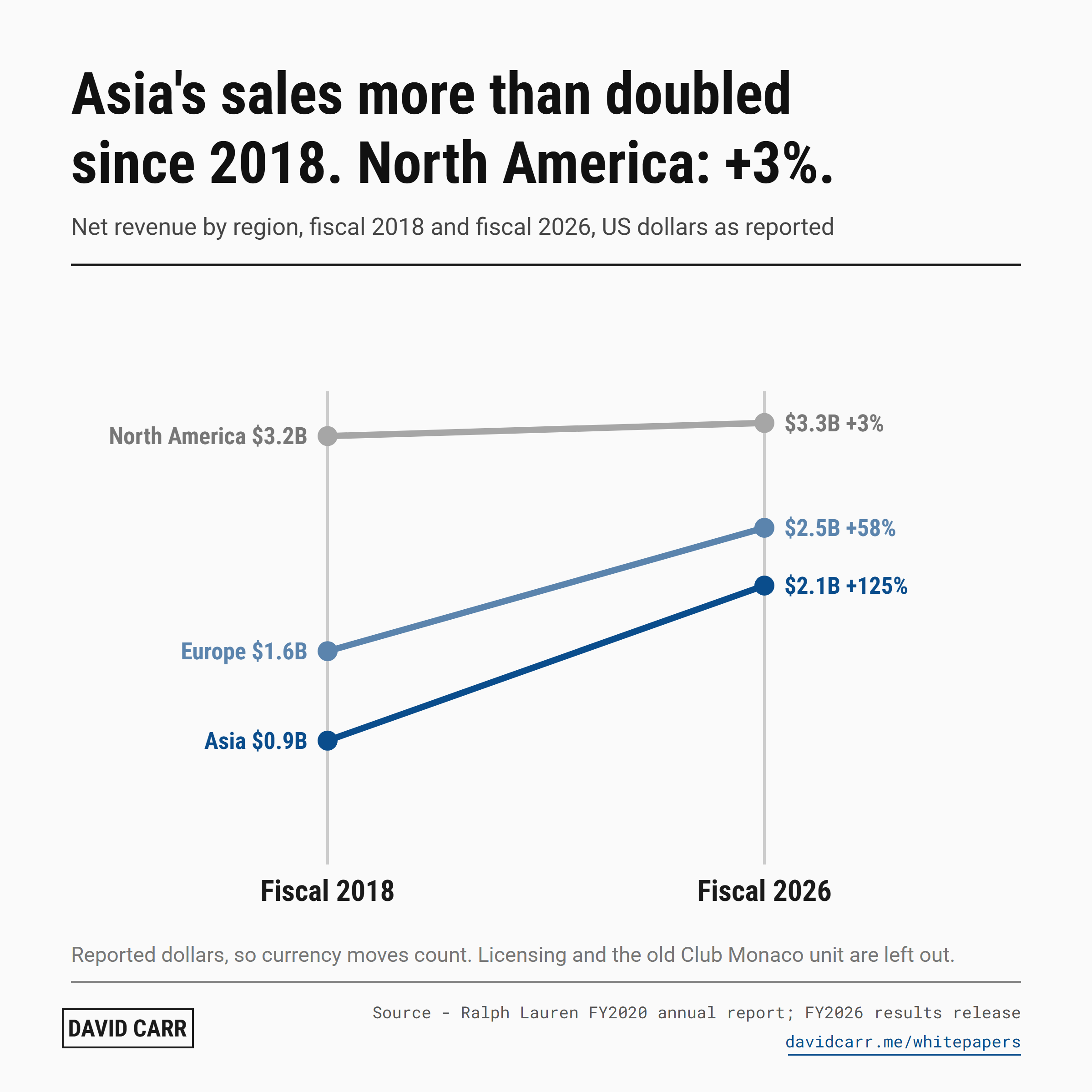
Asia's sales more than doubled since 2018. North America: +3%.
- Asia: $0.9 billion to $2.1 billion, +125%
- Europe: $1.6 billion to $2.5 billion, +58%
- North America: $3.2 billion to $3.3 billion, +3%
North America is still the biggest region, but most of the growth now comes from elsewhere. Asia was up 28% in the latest quarter, to September 2026.
Segment revenue in reported dollars, from the fiscal 2020 annual report and the fiscal 2026 results. Latest quarter: Q2 fiscal 2027.
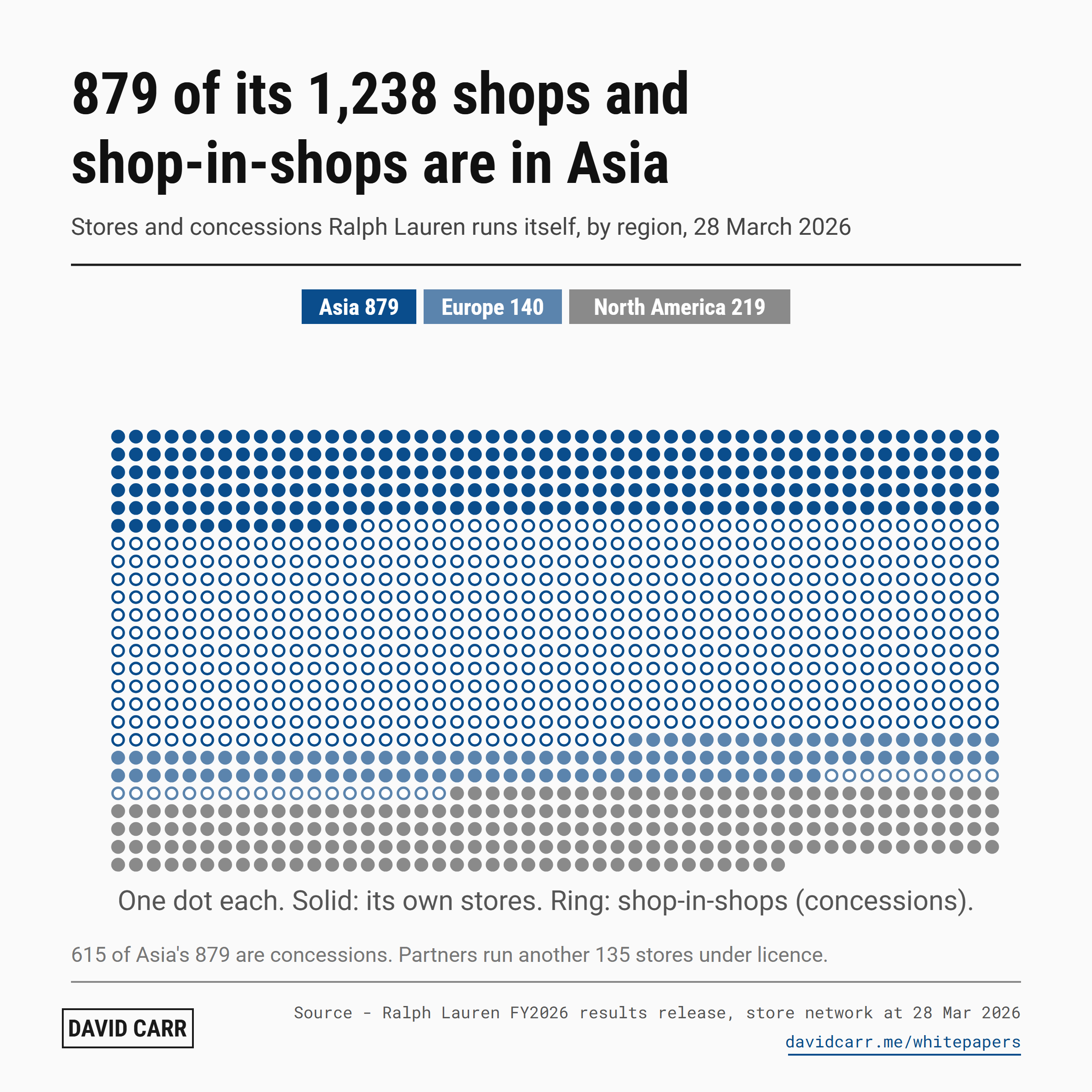
879 of its 1,238 shops and shop-in-shops are in Asia
- Asia: 264 stores and 615 concessions
- North America: 219 stores
- Europe: 111 stores and 29 concessions
- Licensed partners: 135 more stores
In Asia Ralph Lauren sells mostly through shop-in-shops it runs itself. In North America it has no concessions at all.
Store network at 28 March 2026, from the fiscal 2026 results. 287 are full-price Ralph Lauren stores and 307 are outlets.
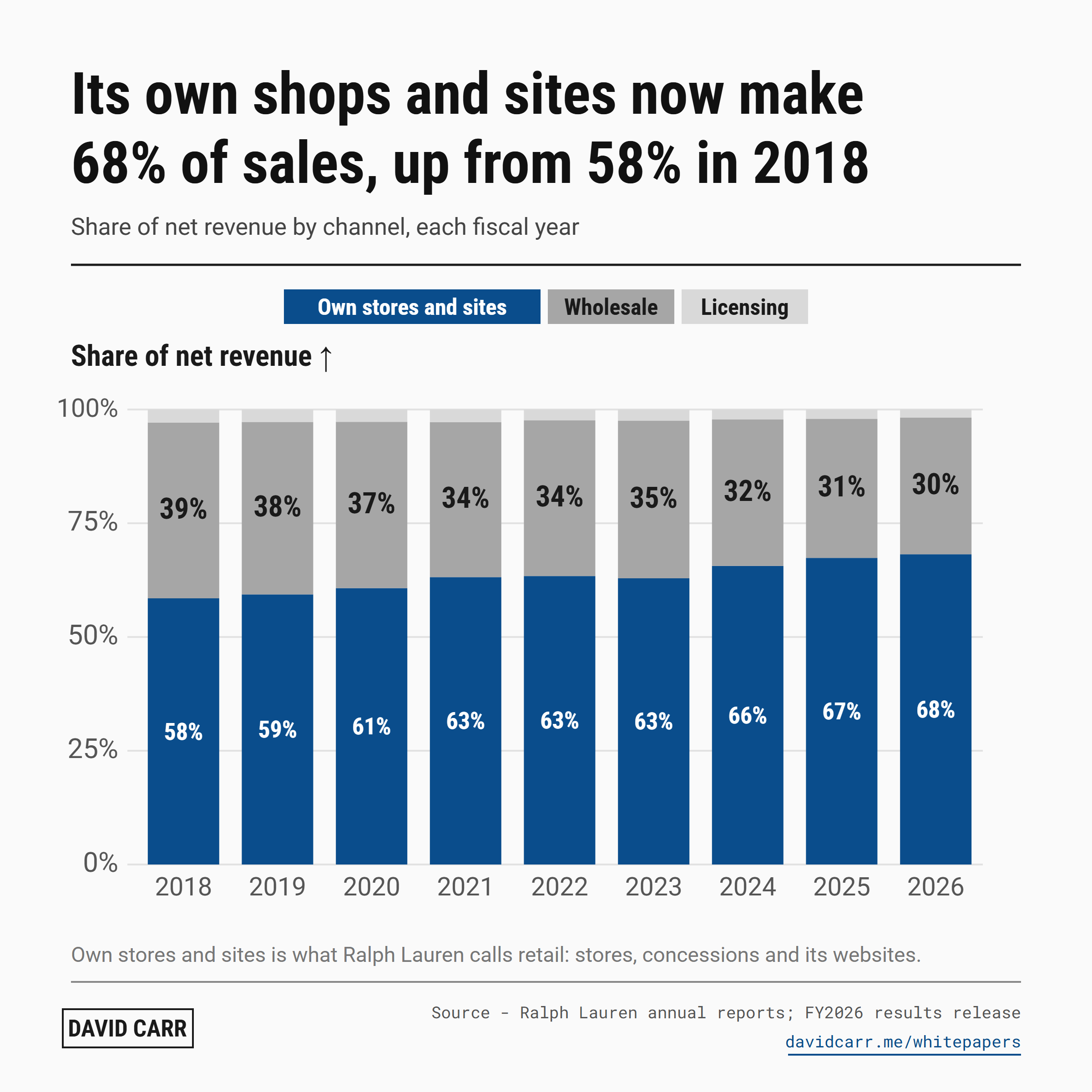
Its own shops and sites now make 68% of sales, up from 58% in 2018
- Fiscal 2018: 58% own stores and sites, 39% wholesale
- Fiscal 2022: 63% and 34%
- Fiscal 2026: 68% and 30%
Selling direct lets it set the price and keep the margin. Wholesale still brought in $2.4 billion in fiscal 2026.
Ralph Lauren calls this retail: its stores, concessions and websites. Before fiscal 2023 the figures include Club Monaco, sold in June 2021.
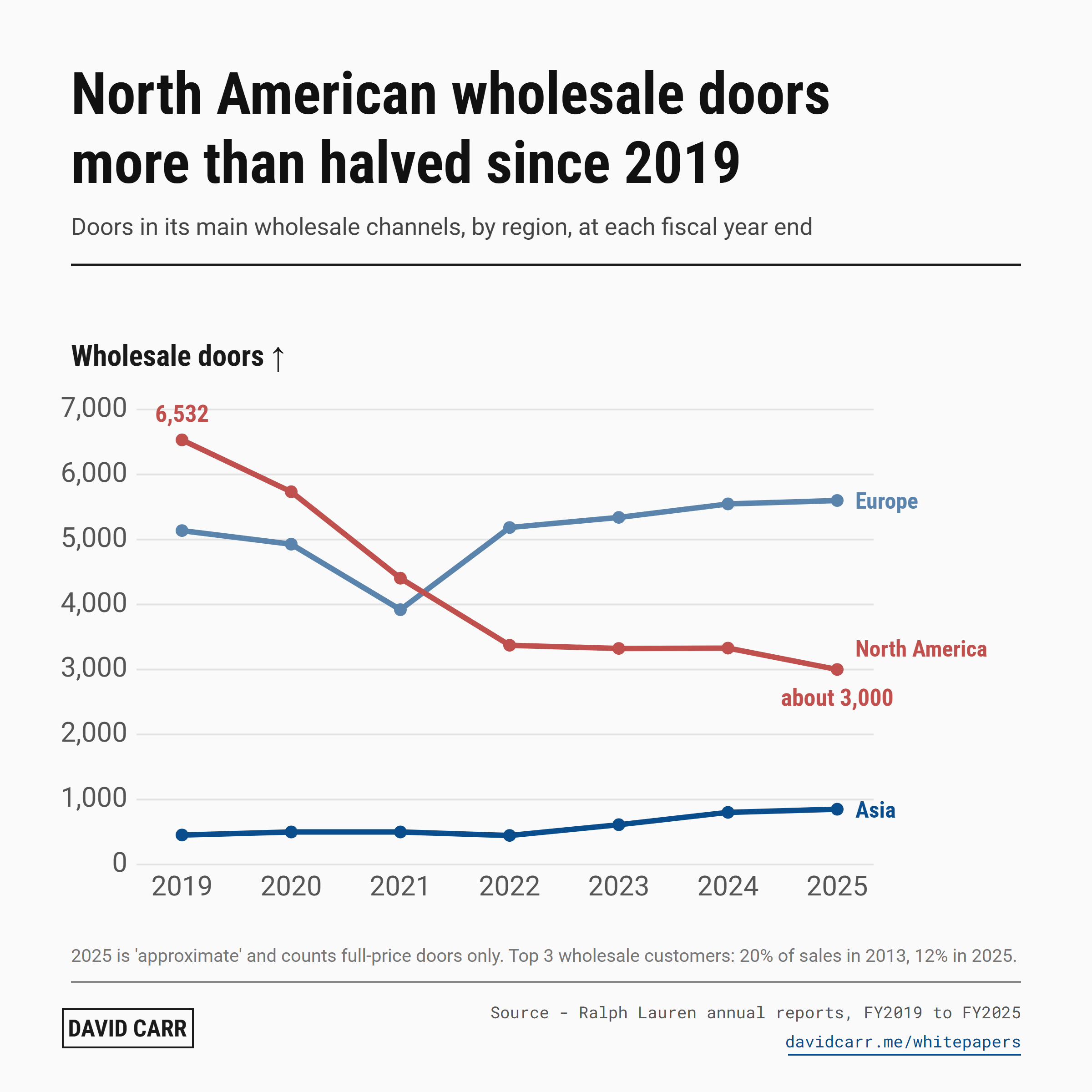
North American wholesale doors more than halved since 2019
- March 2019: 6,532
- March 2022: 3,373
- March 2025: about 3,000
- Europe, the other way: 5,136 to about 5,600
It cut back on lower-tier wholesale at home while adding doors in Europe and Asia. Its three biggest wholesale customers went from 20% of sales in fiscal 2013 to 12% in fiscal 2025.
Doors in its main wholesale channels, from each year's annual report. The 2025 figure is approximate and counts full-price doors only. No 2026 count was published by 24 November 2026.
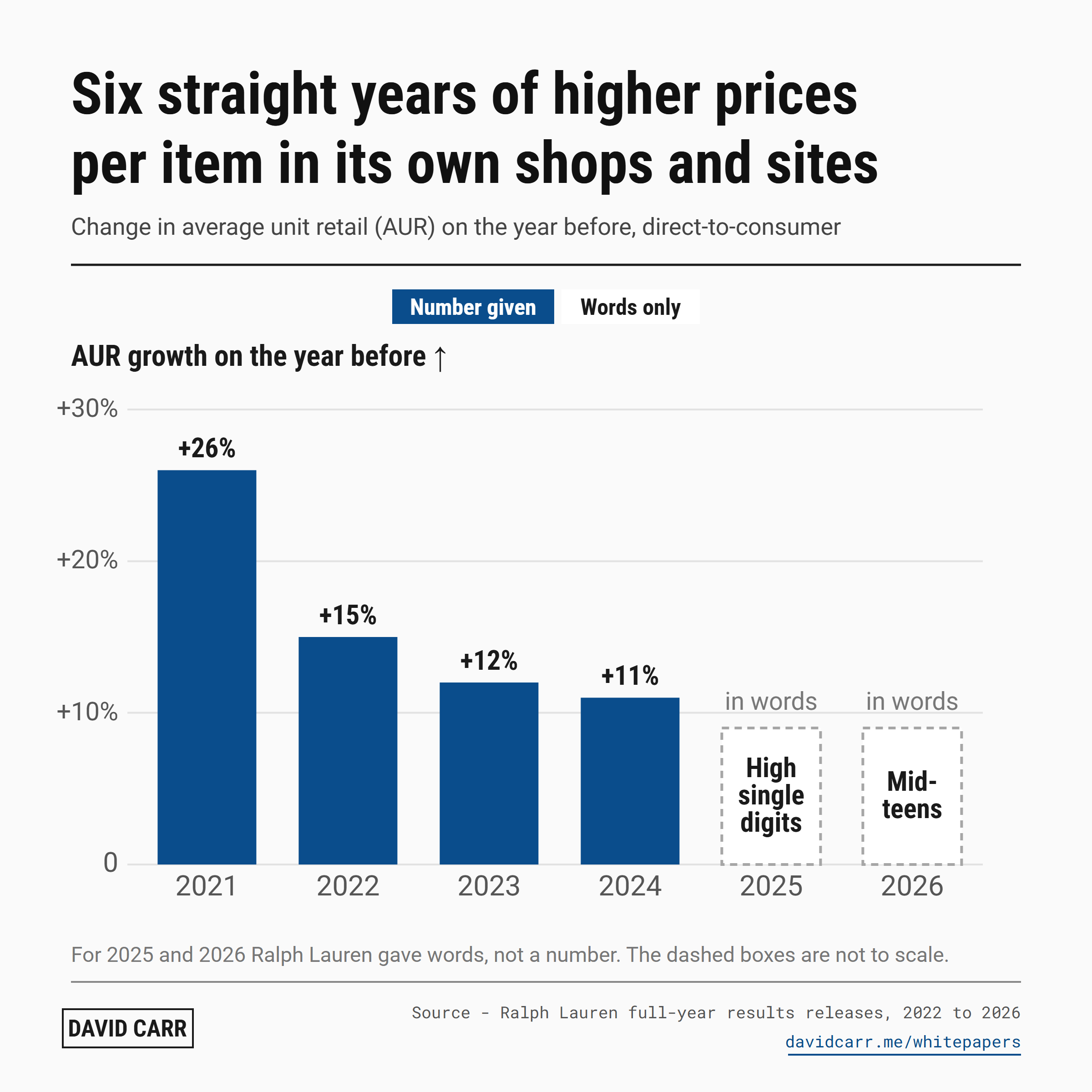
Six straight years of higher prices per item in its own shops and sites
- Fiscal 2021: +26%
- Fiscal 2022: +15%
- Fiscal 2023: +12%
- Fiscal 2024: +11%
- Fiscal 2025: 'high single digits'
- Fiscal 2026: 'mid-teens'
Average unit retail is the average price an item sells for. Ralph Lauren puts the rise down to better product, fewer discounts and a richer mix of regions and channels.
From the full-year releases: 2022, 2023, 2024, 2025, 2026. For the last two years it gave words, not a number.
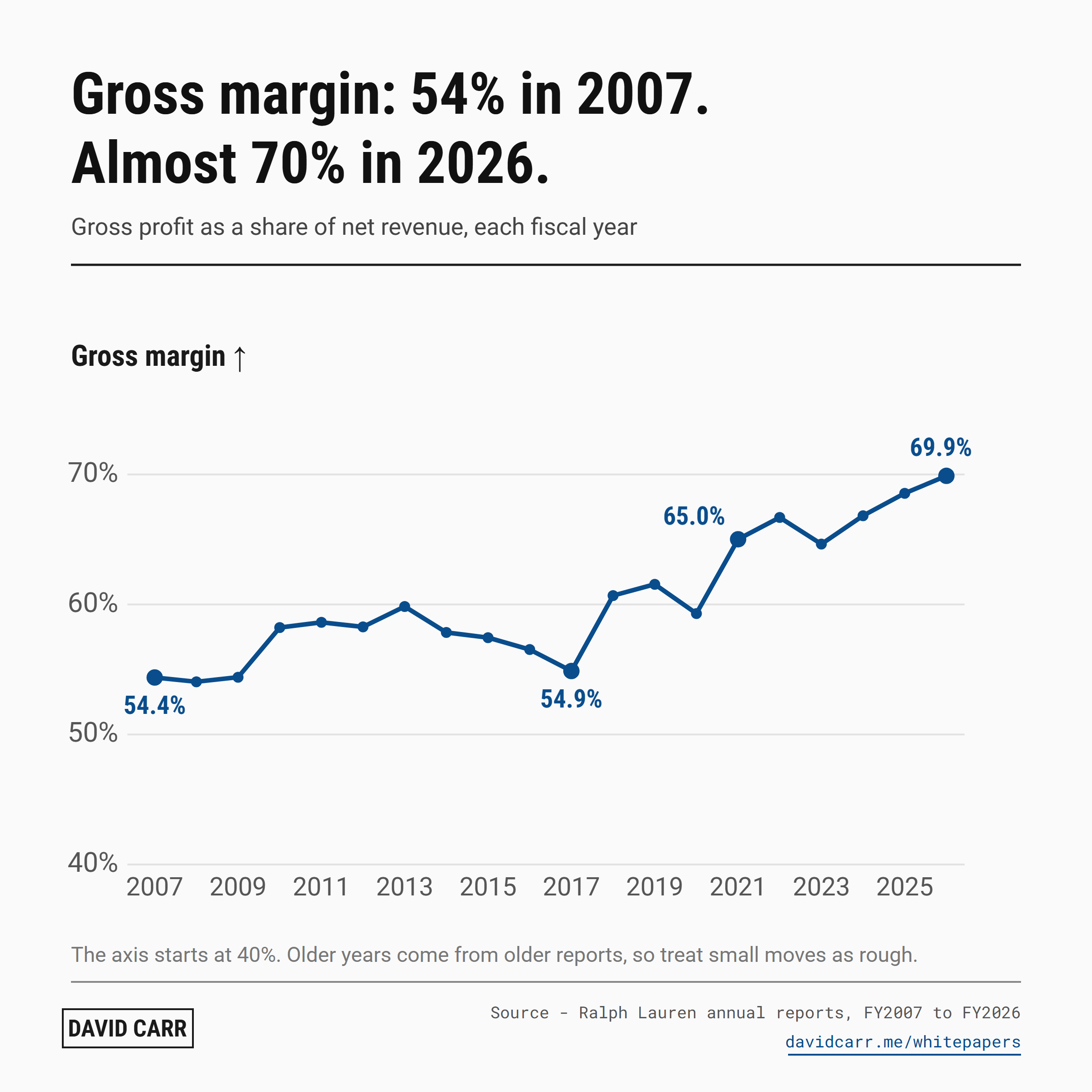
Gross margin: 54% in 2007. Almost 70% in 2026.
- Fiscal 2007: 54.4%
- Fiscal 2017: 54.9%
- Fiscal 2021: 65.0%
- Fiscal 2026: 69.9%
Higher prices per item and more sales through its own channels show up here. Out of every $100 of sales, about $70 is left after the cost of the goods.
Gross profit over net revenue, from the annual reports. Fiscal 2026 is the 69.9% the company stated.
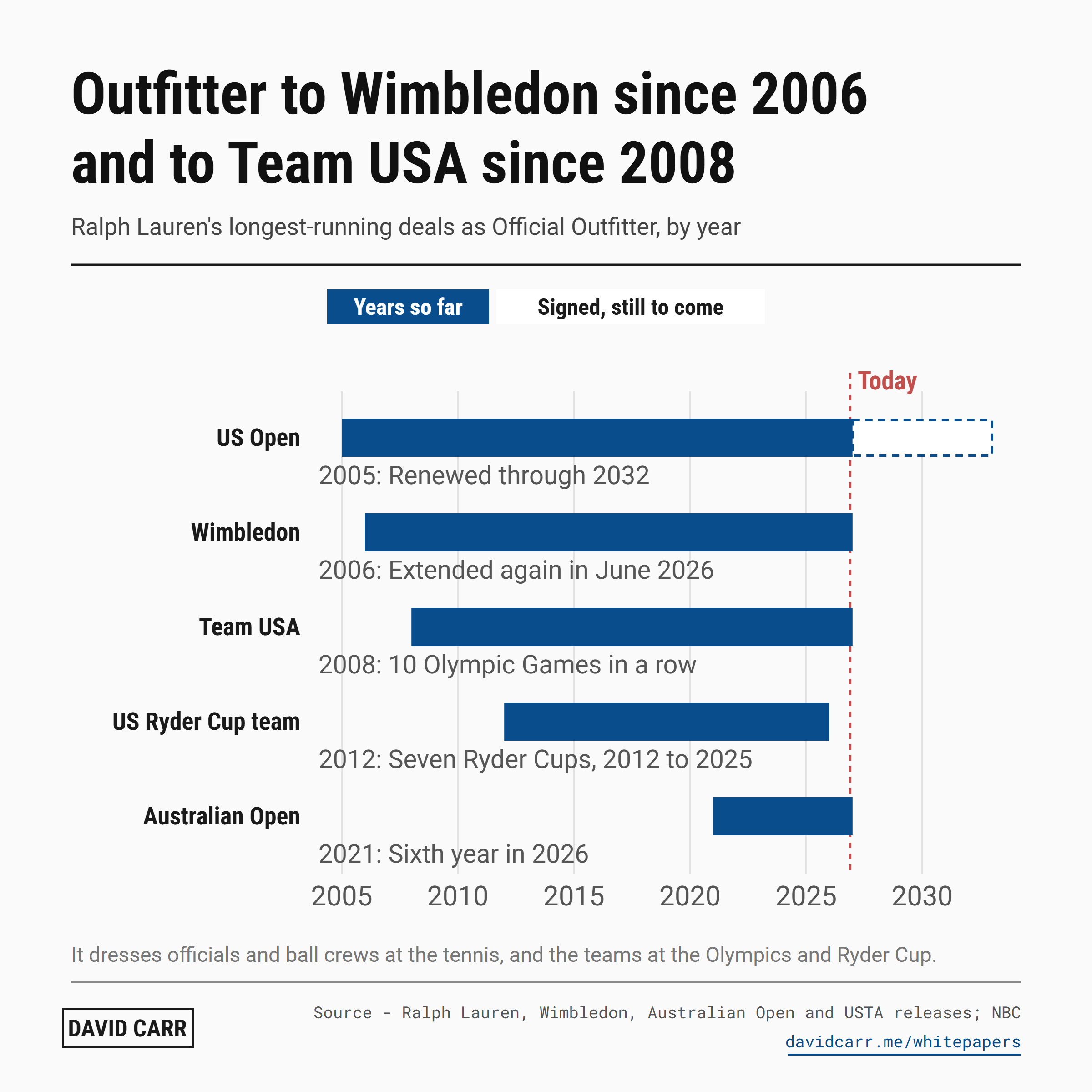
Outfitter to Wimbledon since 2006 and to Team USA since 2008
The uniforms are seen on court and at opening ceremonies, and the tennis and Olympic deals come with collections people can buy.
Start years from the company's and the tournaments' own releases. The Team USA count is from NBC. One golf outlet gives 2014, not 2012, for the Ryder Cup.
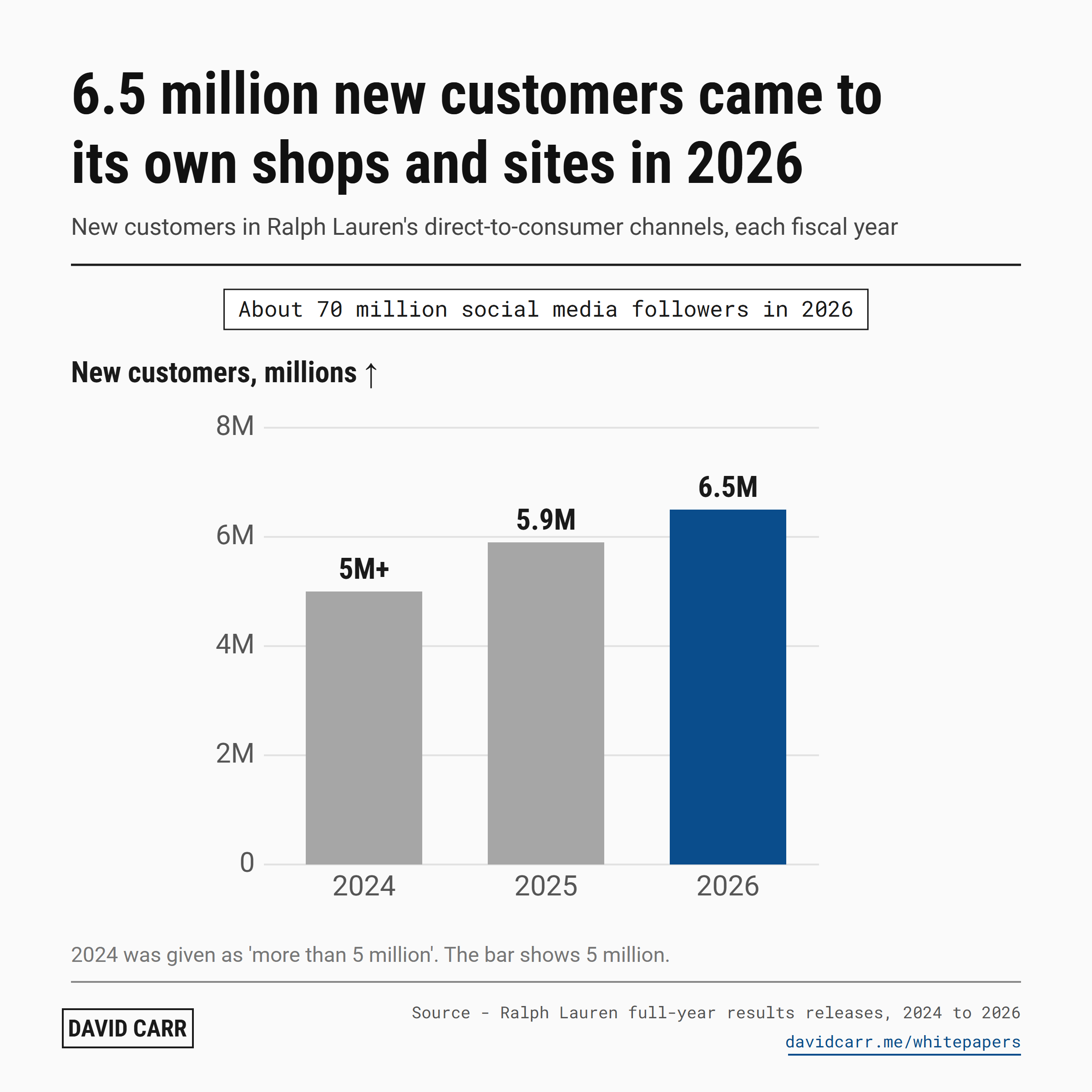
6.5 million new customers came to its own shops and sites in 2026
- Fiscal 2024: more than 5 million
- Fiscal 2025: 5.9 million
- Fiscal 2026: 6.5 million
- Social media followers: about 70 million
Fashion shows, Lunar New Year events and the Olympics are the brand moments it credits. It also runs its own online editorial, RL Magazine.
New customers in its direct-to-consumer channels, as stated in the 2024, 2025 and 2026 results.
Method, caveats and sources
The short answer. Ralph Lauren passed $8 billion of sales for the first time in fiscal 2026. Asia more than doubled since 2018 while North America barely moved. It now makes 68% of sales in its own shops and sites, has cut its North American wholesale doors by more than half, charges more per item every year, and keeps almost 70 cents of every sales dollar after the cost of goods.
Fiscal years. Ralph Lauren's year ends on the Saturday nearest 31 March. "2026" on the charts means the year to 28 March 2026. All figures are US dollars as reported, so currency moves count.
Sources. Ralph Lauren's annual reports (read as the PDFs hosted on annualreports.com) and its results releases on its corporate newsroom. Sport deals come from the company's and the tournaments' own releases, plus NBC for the Olympic count. History dates come from the company and from press reports (Motley Fool, Fortune, Hospitality Design).
Caveats. Old and new annual reports don't always define things the same way, so the long gross margin line is rough at the edges. The wholesale door count changed wording in 2025 and is approximate. For average unit retail in 2025 and 2026 the company gave words, not numbers, and the chart shows the words.
Also: Stripe and Shopify.