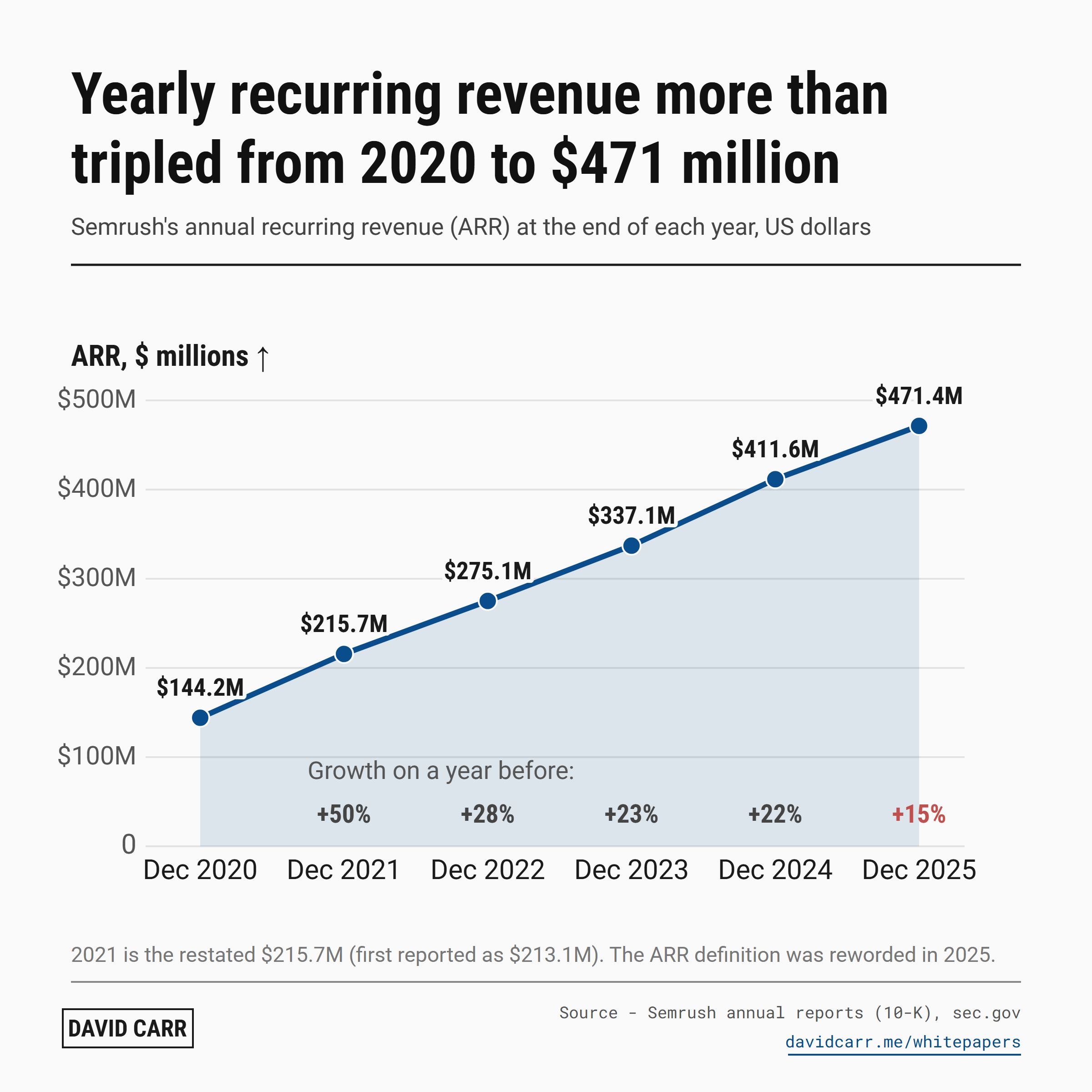
Each year's growth was smaller than the one before: 50%, 28%, 23%, 22%, then 15%.
Annual recurring revenue (ARR) as stated in each annual report. The 2021 figure was later restated from $213.1M to $215.7M, and the wording of the definition changed in 2025.
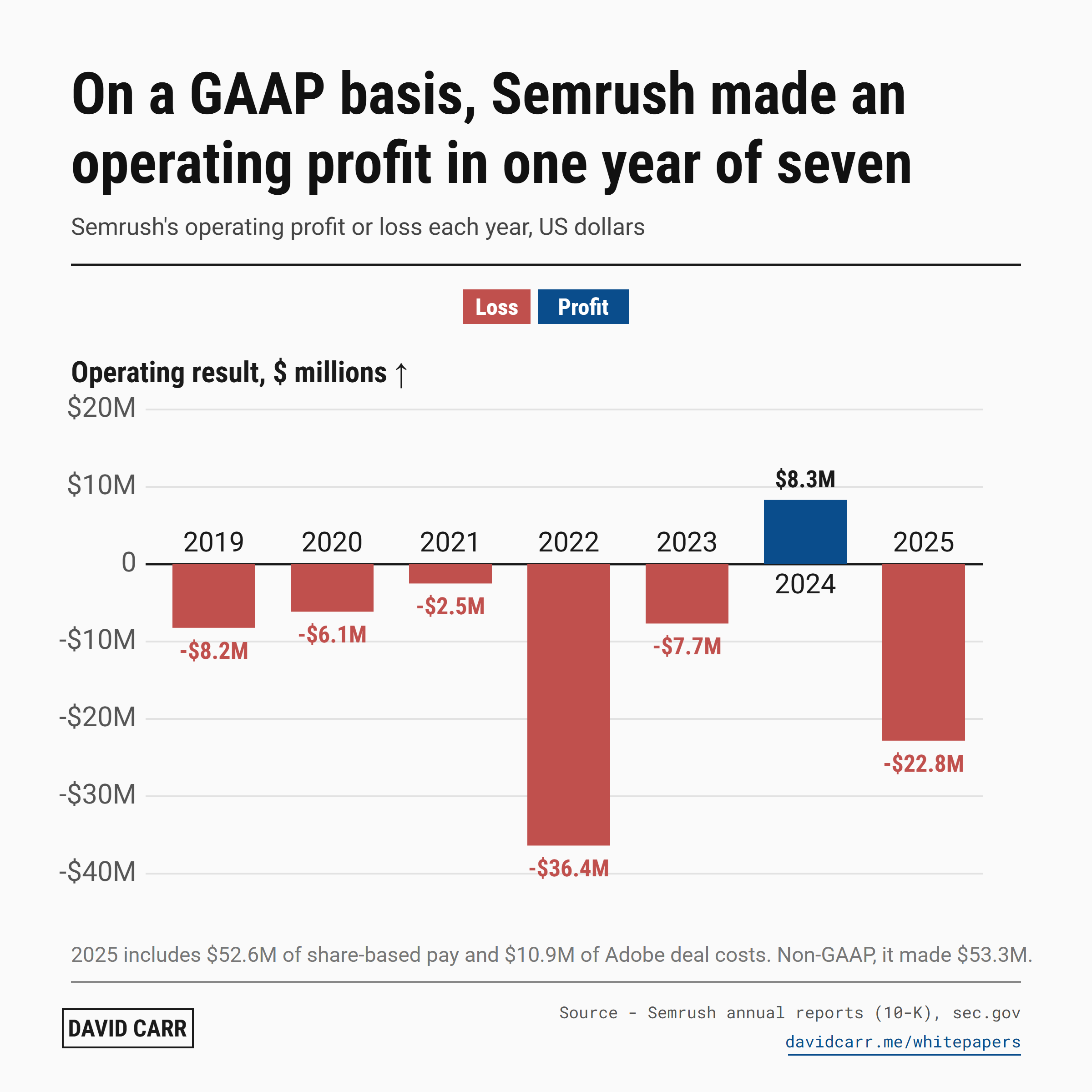
Adjusted for share-based pay, deal costs and other items, it made $45.8M in 2024 and $53.3M in 2025.
GAAP operating income from the annual reports. Non-GAAP figures and the 2025 cost items from the fourth-quarter 2025 release.
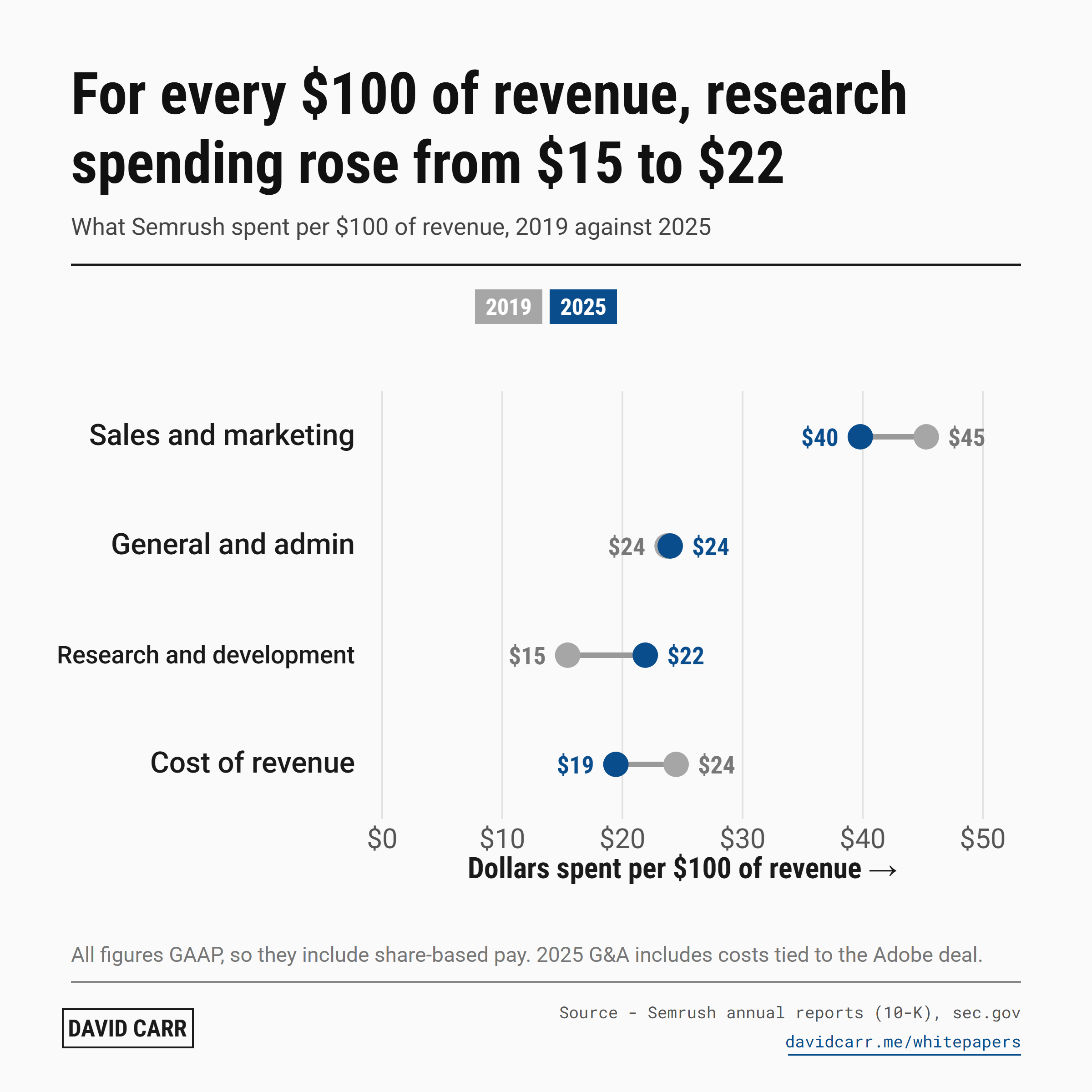
Semrush spent a bigger share on building products and a smaller share on selling and delivering them.
Each line divided by revenue, 2019 from the 2021 annual report and 2025 from the 2025 annual report. GAAP, so share-based pay is included.
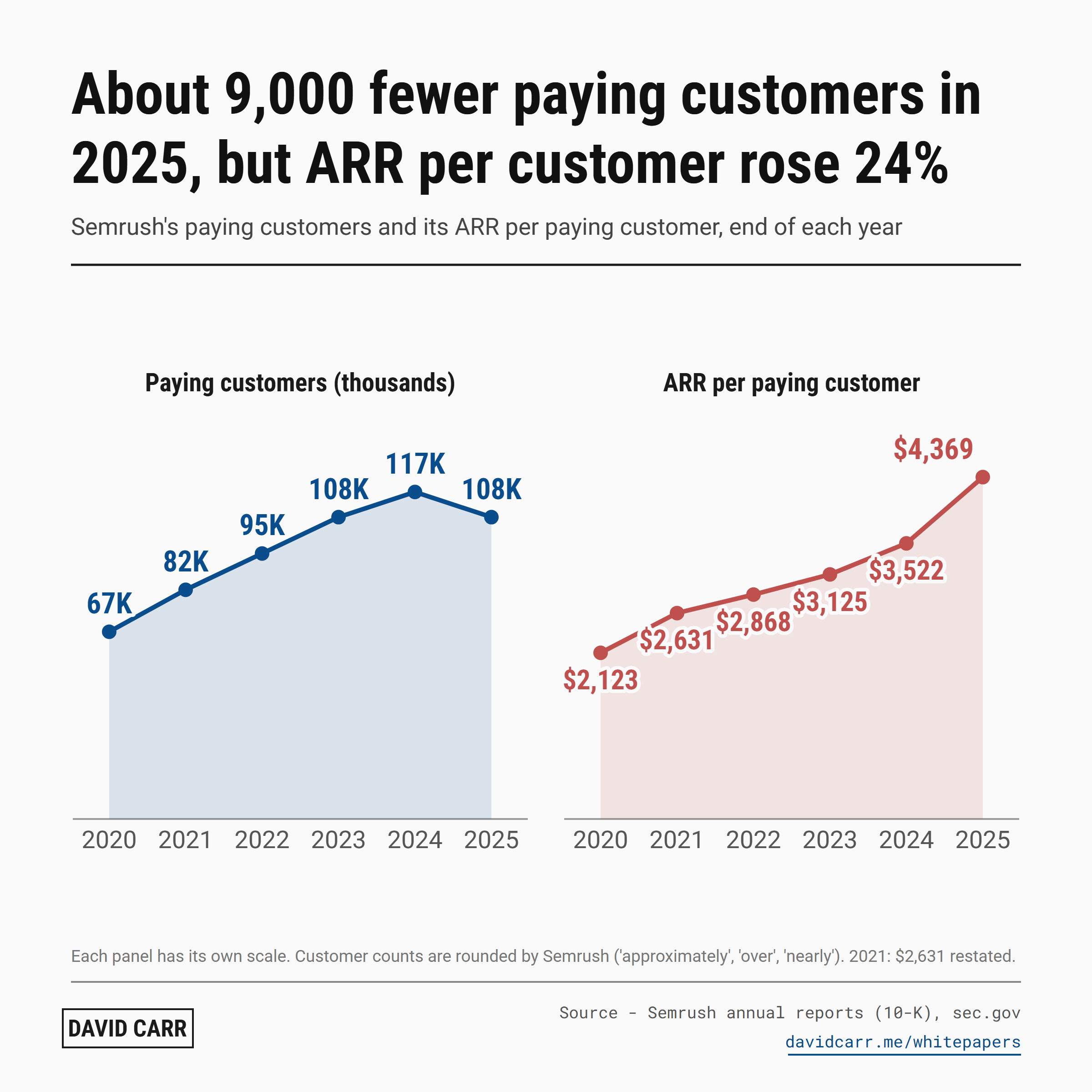
Semrush put the fall down to 'continued softness at the lower end of the market', among freelancers and smaller users. Customers paying more than $50,000 a year grew by over 74%.
From the 2025 annual report and earlier ones. The $50,000 figure is from the Q4 2025 release.
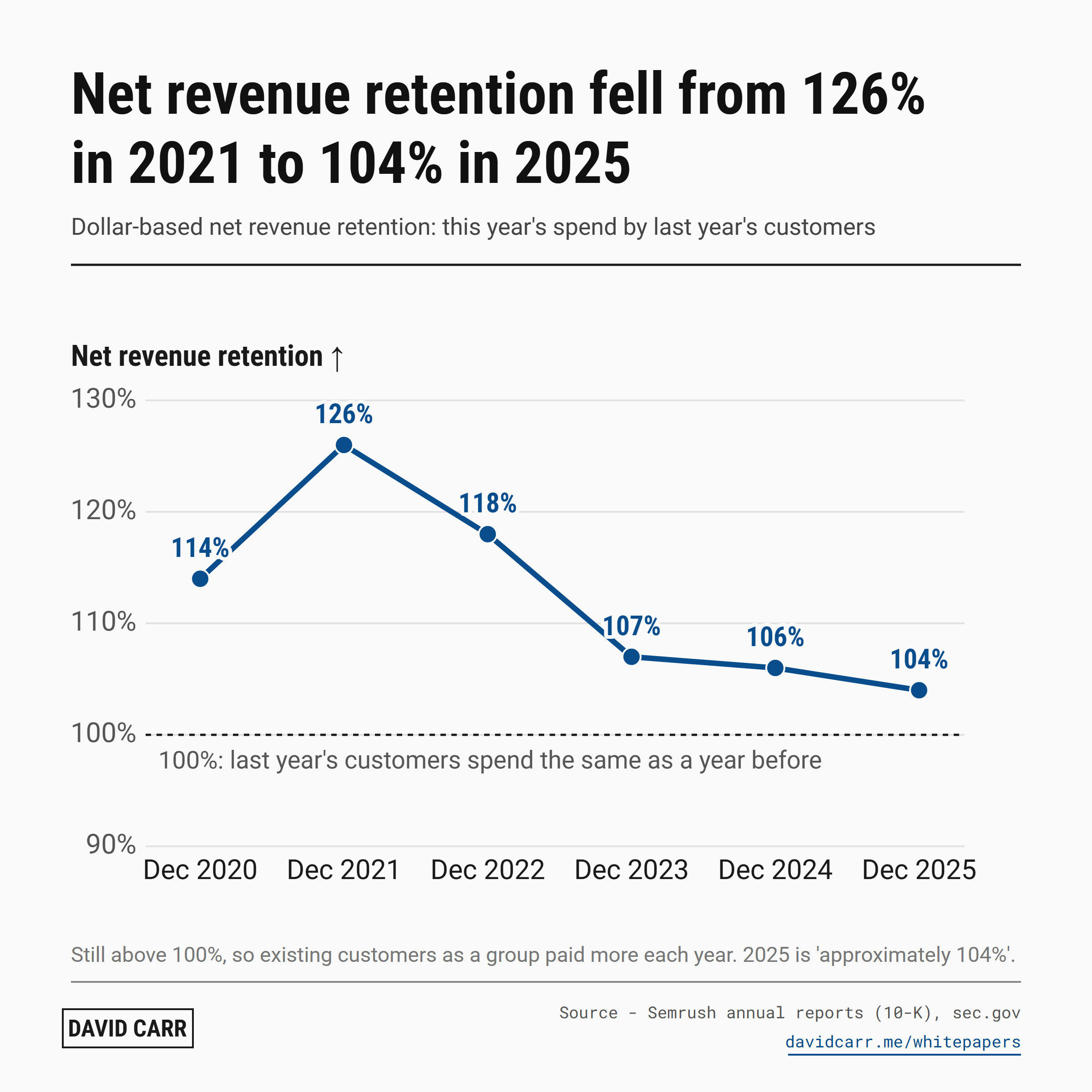
It stayed above 100% every year, so customers from a year before paid more as a group, by less each year since 2021.
Dollar-based net revenue retention at 31 December, from each annual report.
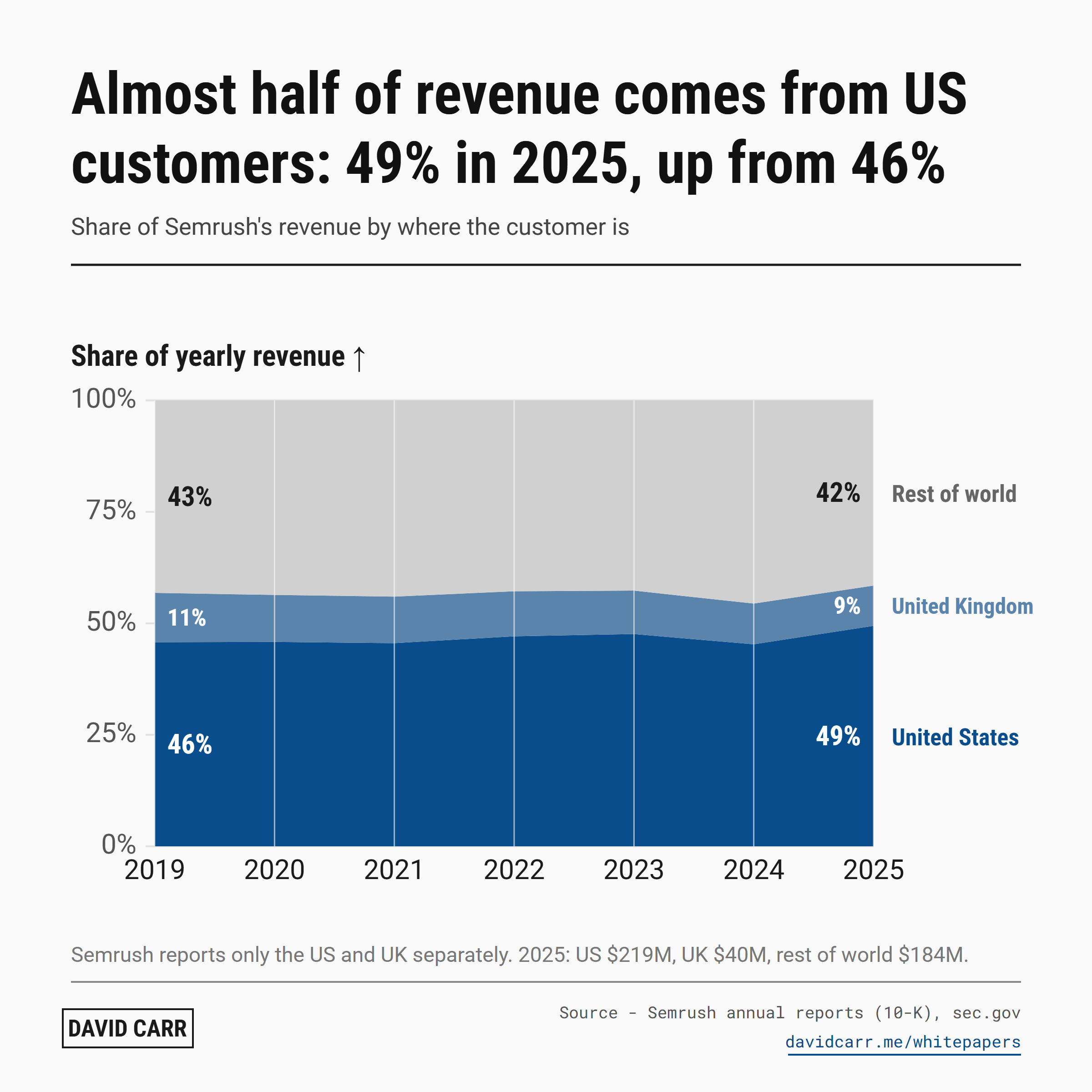
US revenue grew 28% in 2025, faster than the company as a whole.
Revenue by customer location, from the 2022 and 2025 annual reports. Only the US and UK are given separately.
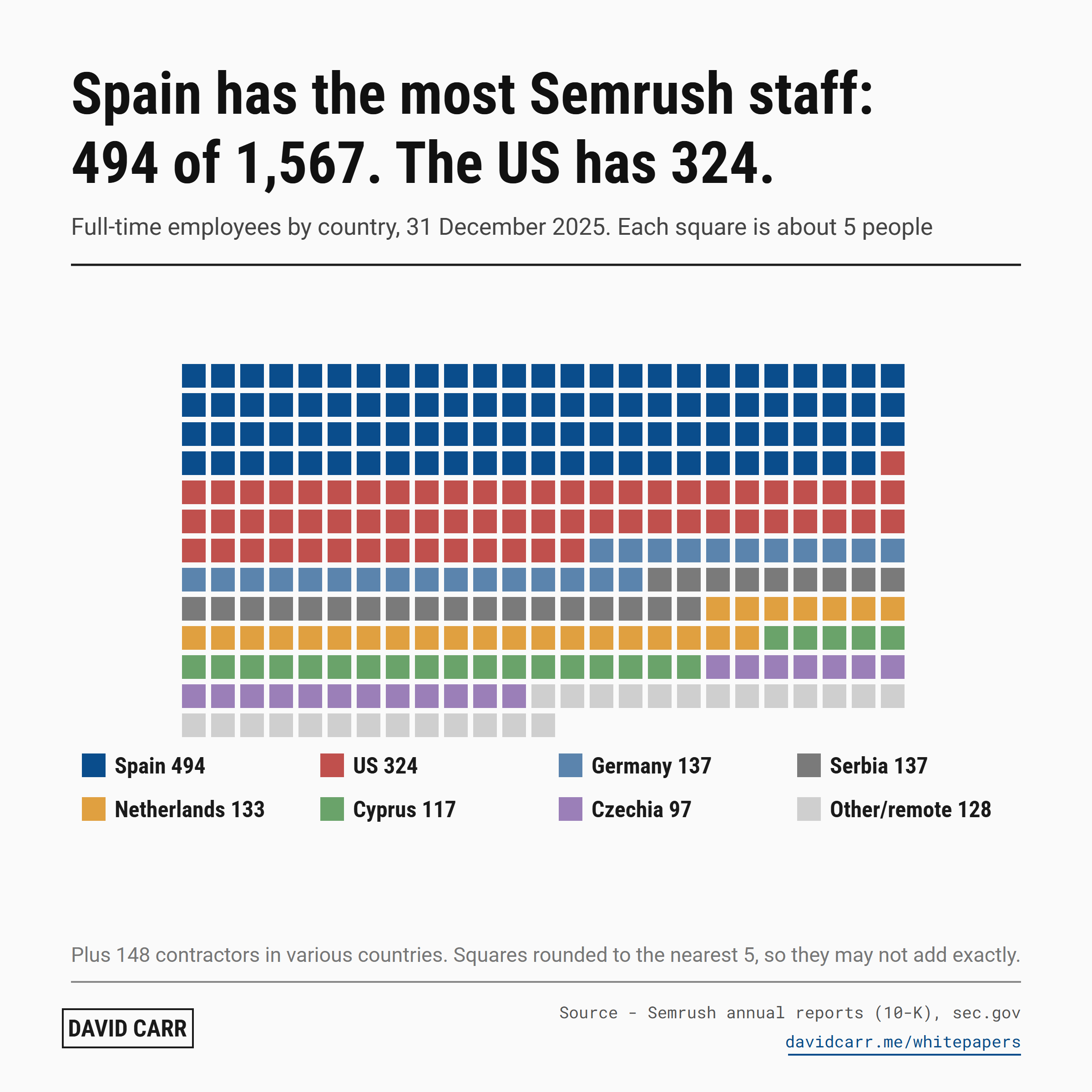
Semrush is based in Boston, but about four in five of its staff work outside the US.
Full-time employees at 31 December 2025, from the 2025 annual report. Total headcount was 1,390 at the end of 2023 and 1,561 at the end of 2024.
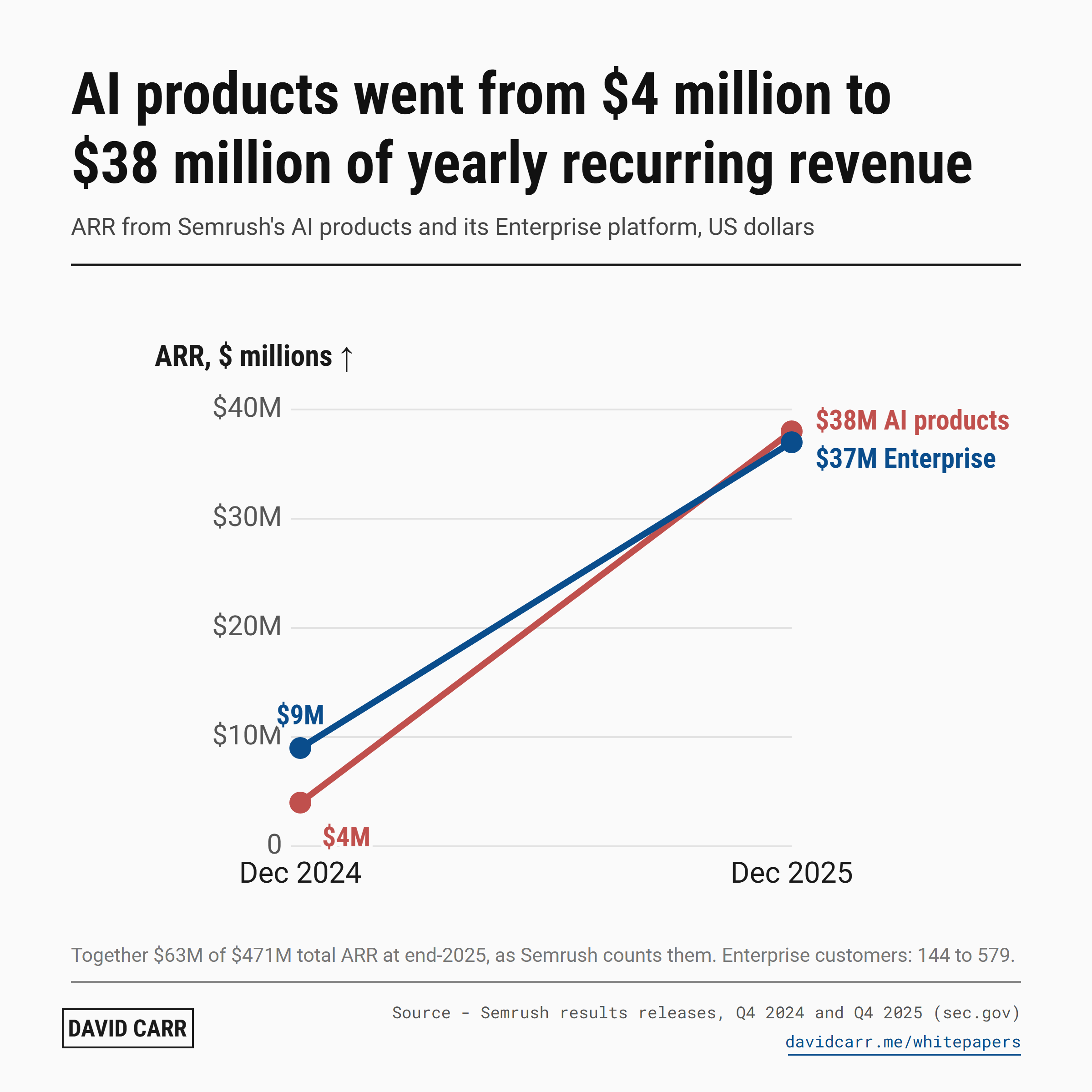
These include tools that track how a brand shows up in answers from ChatGPT, Gemini and other AI search. Together they were $63M of $471M ARR.
December 2024 and December 2025, from the Q4 2024 and Q4 2025 releases.
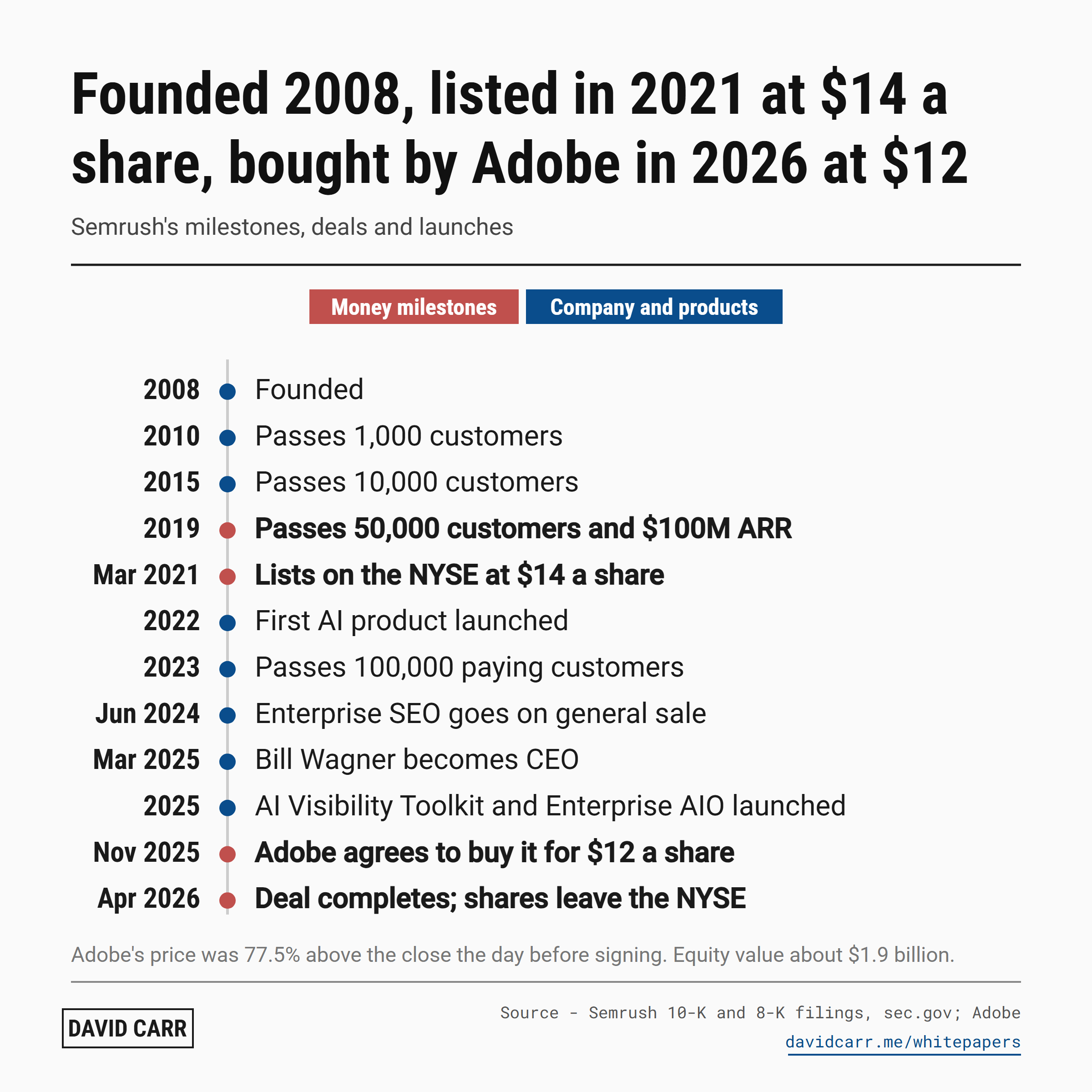
Adobe valued the equity at about $1.9 billion. Its price was 77.5% above Semrush's close the day before the deal was signed.
Milestones from the 2025 annual report. Deal terms from Adobe and the merger proxy; completion from Adobe.
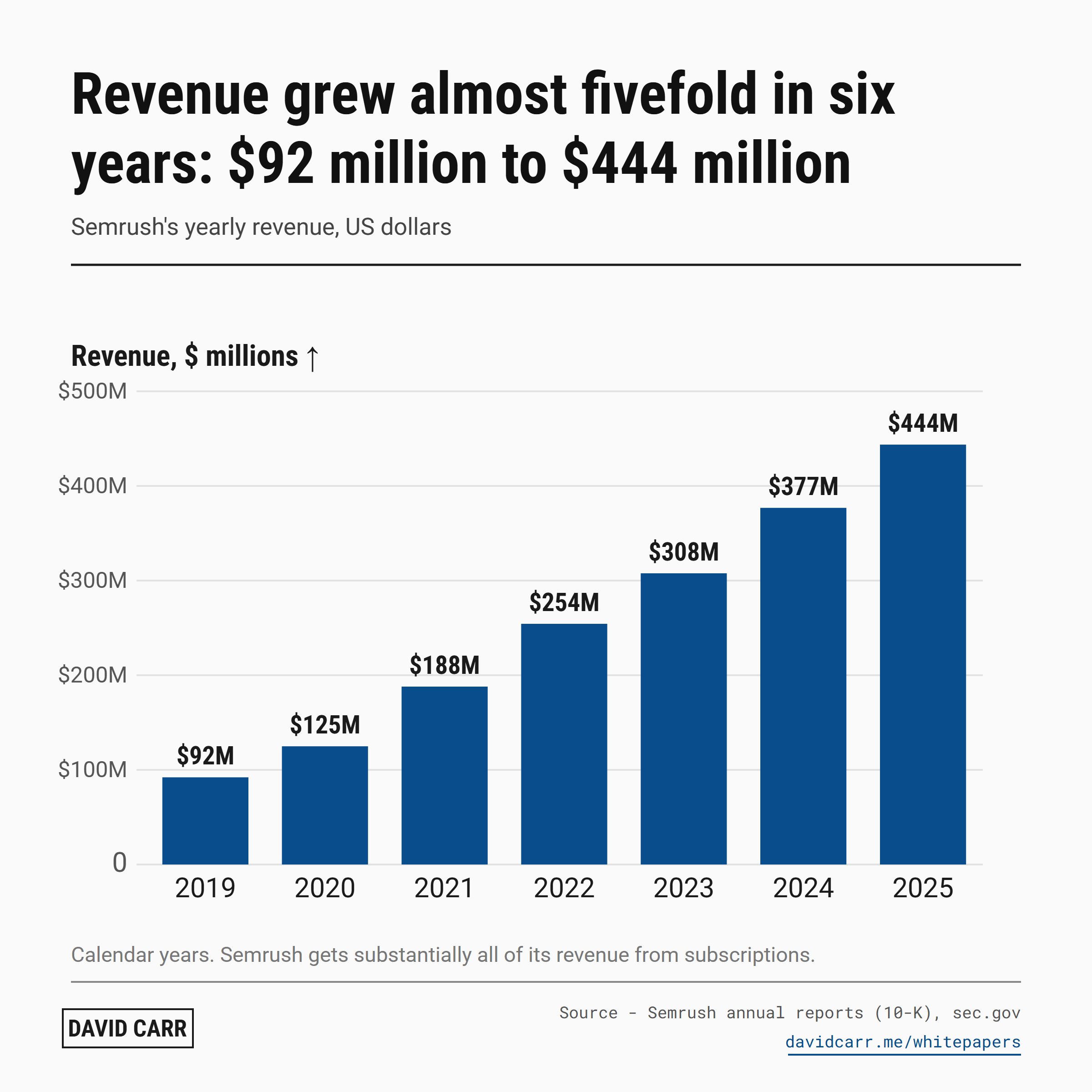
The short answer. Semrush's revenue grew from $92M in 2019 to $444M in 2025, almost all of it from subscriptions. On a GAAP basis it made an operating profit only in 2024. Fewer, bigger customers drove 2025, and its AI products grew from $4M to $38M of ARR in a year. Adobe bought it for about $1.9 billion, completing the deal on 28 April 2026.
Where the numbers come from. Every company figure is from Semrush's own filings with the US Securities and Exchange Commission: annual reports (10-K) for 2021 to 2025, results releases filed as 8-Ks, and the merger proxy. The 2025 annual report, filed 2 March 2026, is the last. Semrush gave no guidance for 2026 and filed no quarterly report for 2026 before the deal closed.
Caveats. Customer counts are rounded by Semrush. ARR and ARR per customer for 2021 were restated in later reports; the later figures are used. The ARR definition was reworded in 2025. Non-GAAP figures leave out share-based pay and other items, and the definition changed in 2023, so only GAAP is charted across years. The $63M for AI products and Enterprise together is Semrush's own figure and is less than $38M plus $37M, so the two overlap.
Left out. Employee counts by country before 2023 are not charted, because the countries listed change from year to year. Semrush stopped reporting as a separate company after the deal, so there are no figures for 2026.
Also: Stripe, Similarweb and AI bots and robots.txt.