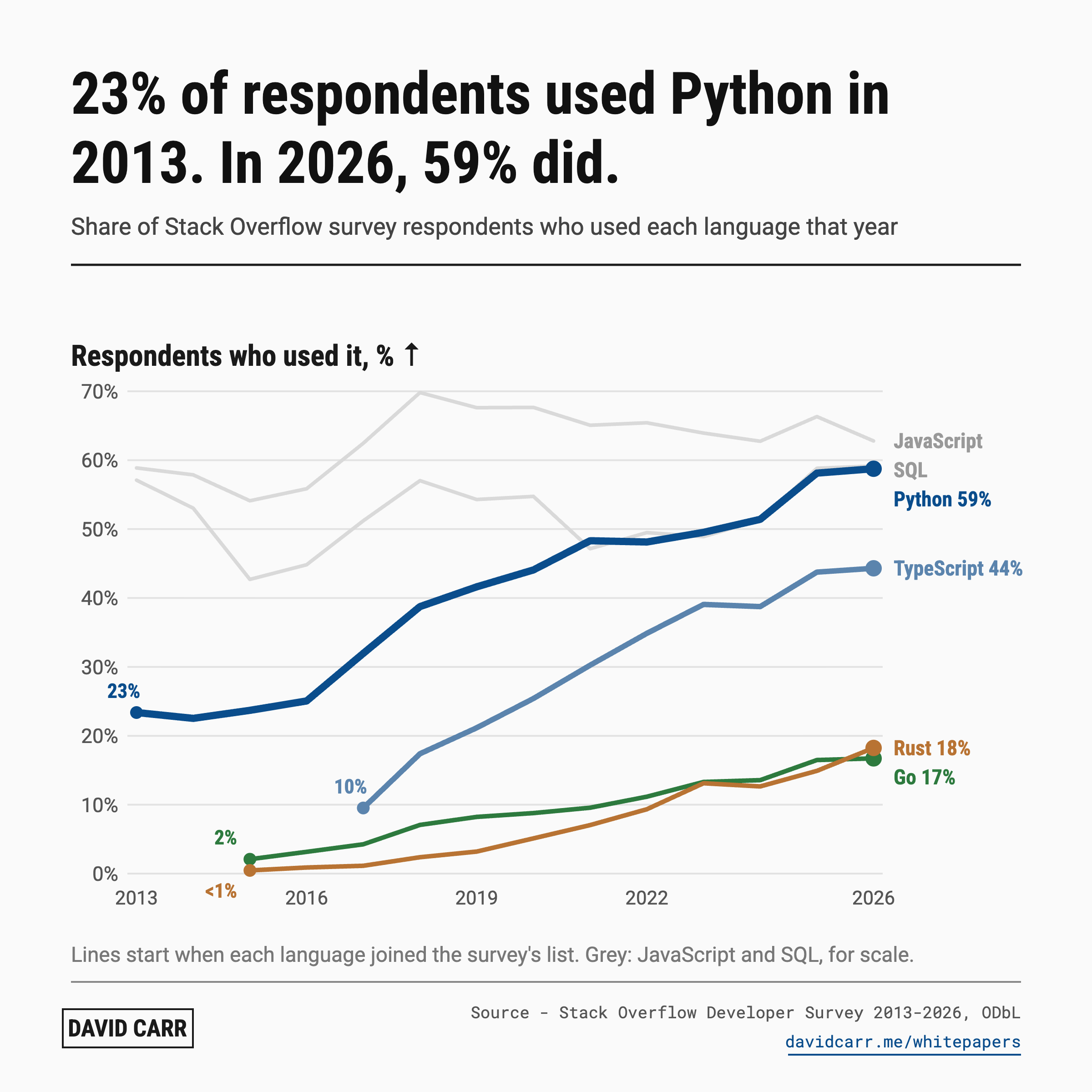
23% of respondents used Python in 2013. In 2026, 59% did.
- Python: 23% in 2013, 59% in 2026
- TypeScript: 10% in 2017, its first year on the list; 44% in 2026
- Rust: under 1% in 2015; 18% in 2026
- Go: 2% in 2015; 17% in 2026
Python has nearly caught JavaScript (63%) and SQL (59%), the two languages that led the first survey.
Share of respondents who answered the language question and ticked each language as one they had used that year.
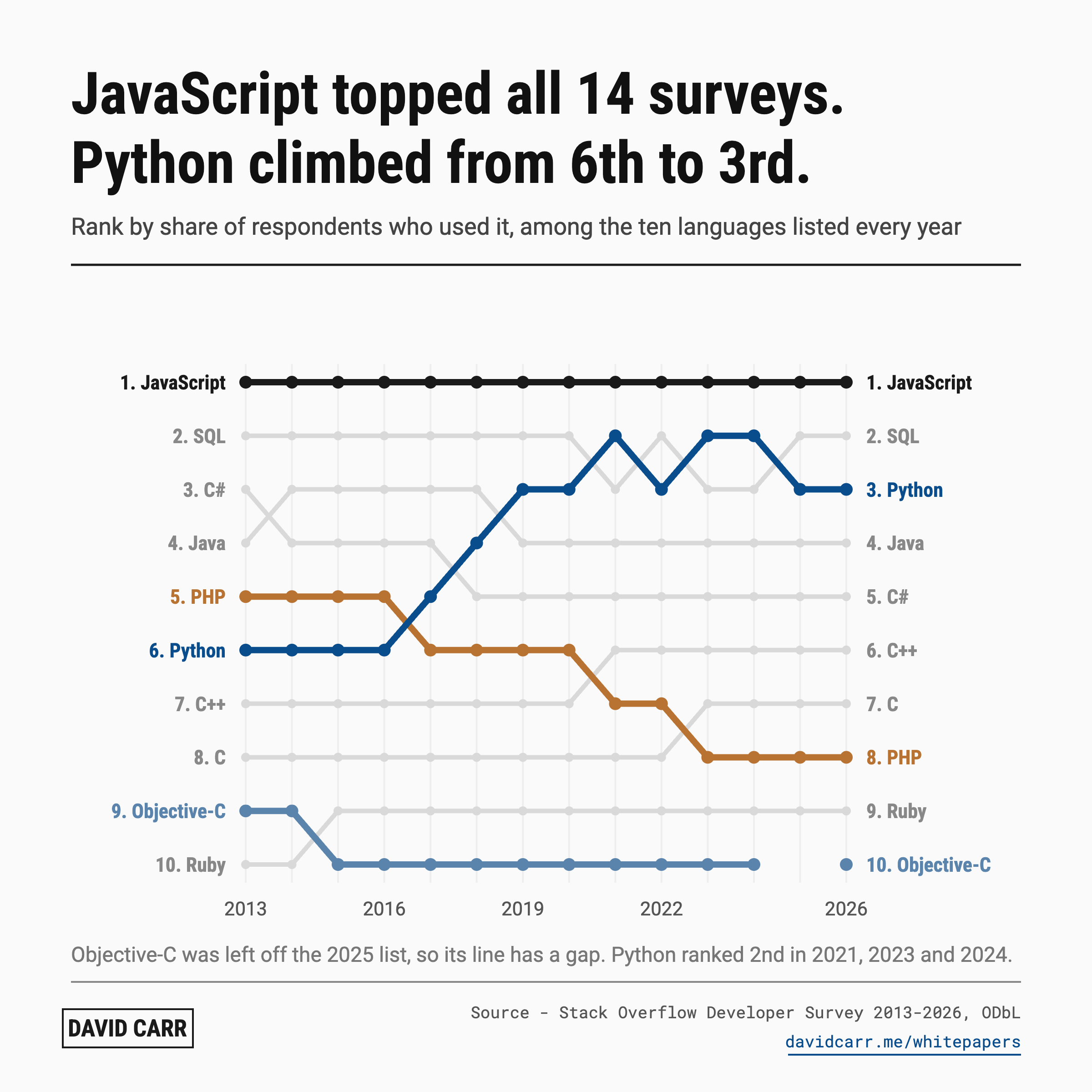
JavaScript topped all 14 surveys. Python climbed from 6th to 3rd.
- JavaScript: 1st in every survey from 2013 to 2026
- Python: 6th from 2013 to 2016, 2nd in 2021, 2023 and 2024, 3rd in 2026
- PHP: 5th in 2013, 8th in 2026
- C, C++, C# and Java each moved no more than two places
At the top, very little changed in 14 years. Python is the one big climber among the languages on the very first list.
Ranks among the ten languages listed every year from 2013. Objective-C was left off the 2025 list.
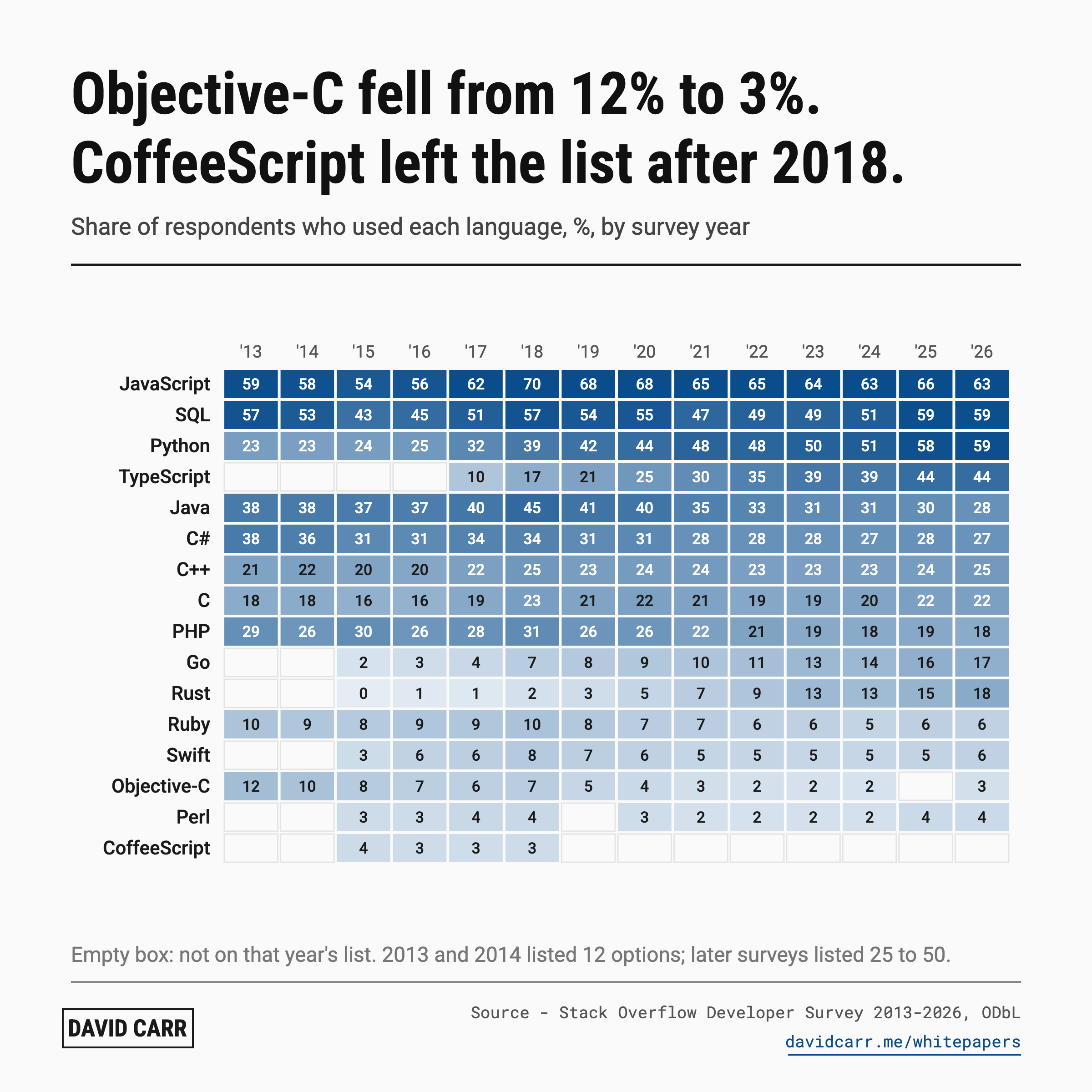
Objective-C fell from 12% to 3%. CoffeeScript left the list after 2018.
- Objective-C: 12% in 2013, 3% in 2026
- PHP: 29% in 2013, 18% in 2026; Ruby: 10% to 6%
- CoffeeScript: 3% or 4% from 2015 to 2018, then off the list
- Perl was left off the 2019 list, then came back at 3%
Few languages vanish. Most of the ones that fade settle at a small, steady share and stay there.
A blank box means the language was not offered as an answer that year, not that nobody used it.
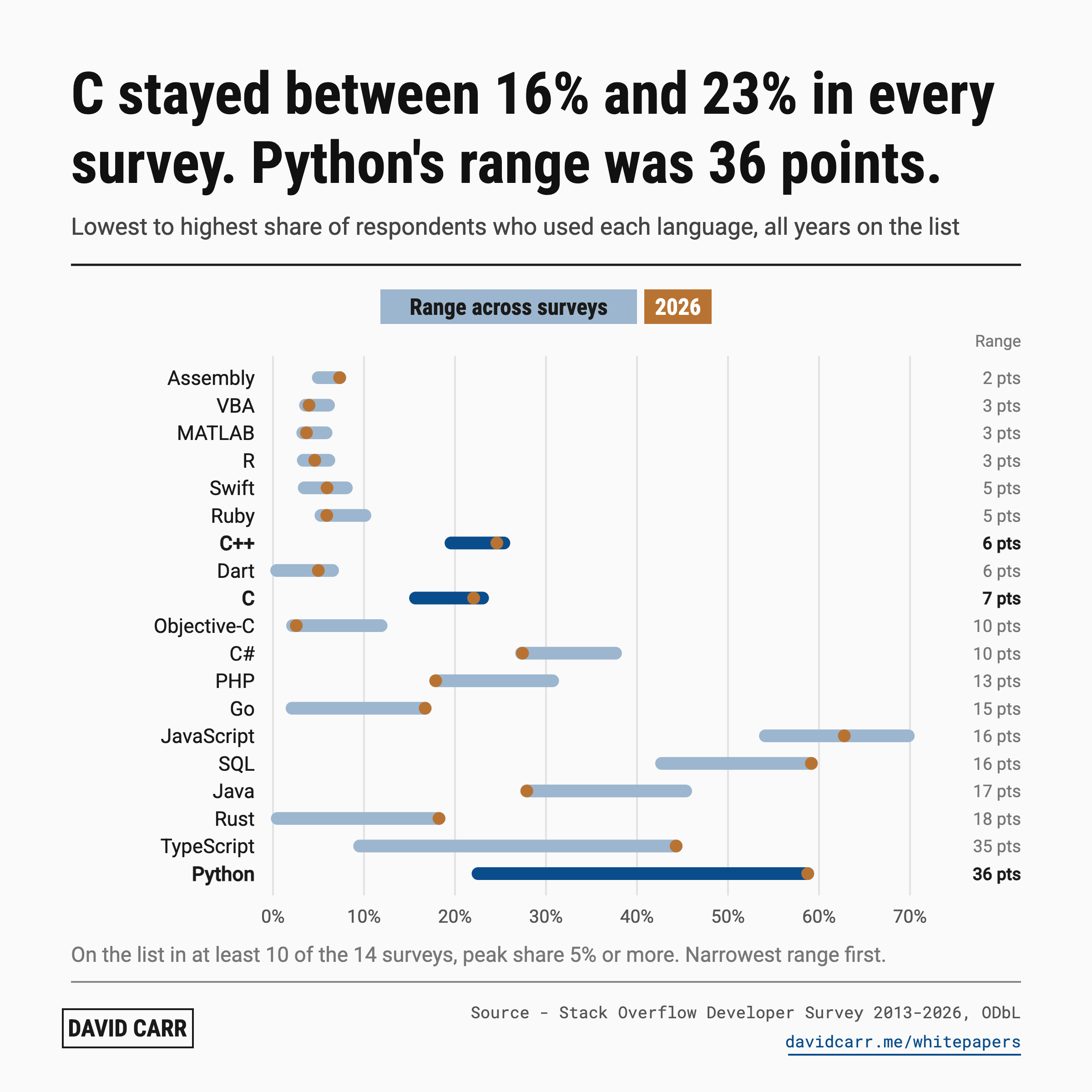
C stayed between 16% and 23% in every survey. Python's range was 36 points.
- C: 16% to 23%, a 7-point range over 14 surveys
- C++: 20% to 25%
- JavaScript: 54% to 70%; SQL: 43% to 59%
- Python: 23% to 59%; TypeScript: 10% to 44%
C and C++ are the steadiest of the big languages. The widest ranges belong to the risers, not the fallers.
Each language's lowest and highest share across all the years it was on the list.
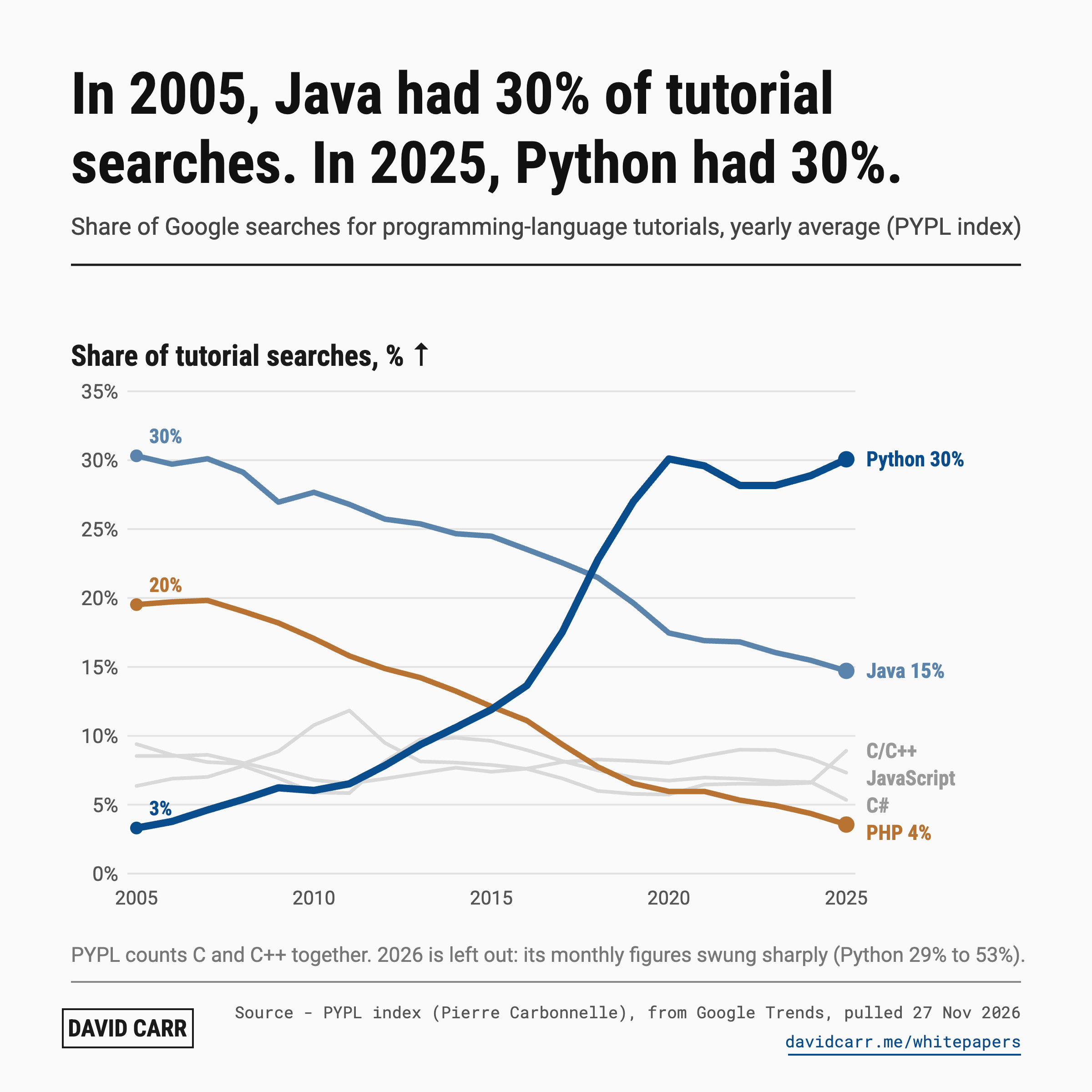
In 2005, Java had 30% of tutorial searches. In 2025, Python had 30%.
- Java: 30% of tutorial searches in 2005, 15% in 2025
- Python: 3% in 2005, 30% in 2025
- PHP: 20% in 2005, 4% in 2025
- Python passed PHP in 2016 and Java in 2018
Searches for tutorials are a rough guide to what people are learning. On that measure, Python has led since 2018.
PYPL measures the share of Google searches for ' tutorial'. Yearly averages of the monthly figures. 2026 is left out because its monthly figures swung sharply, from 29% to 53% for Python.
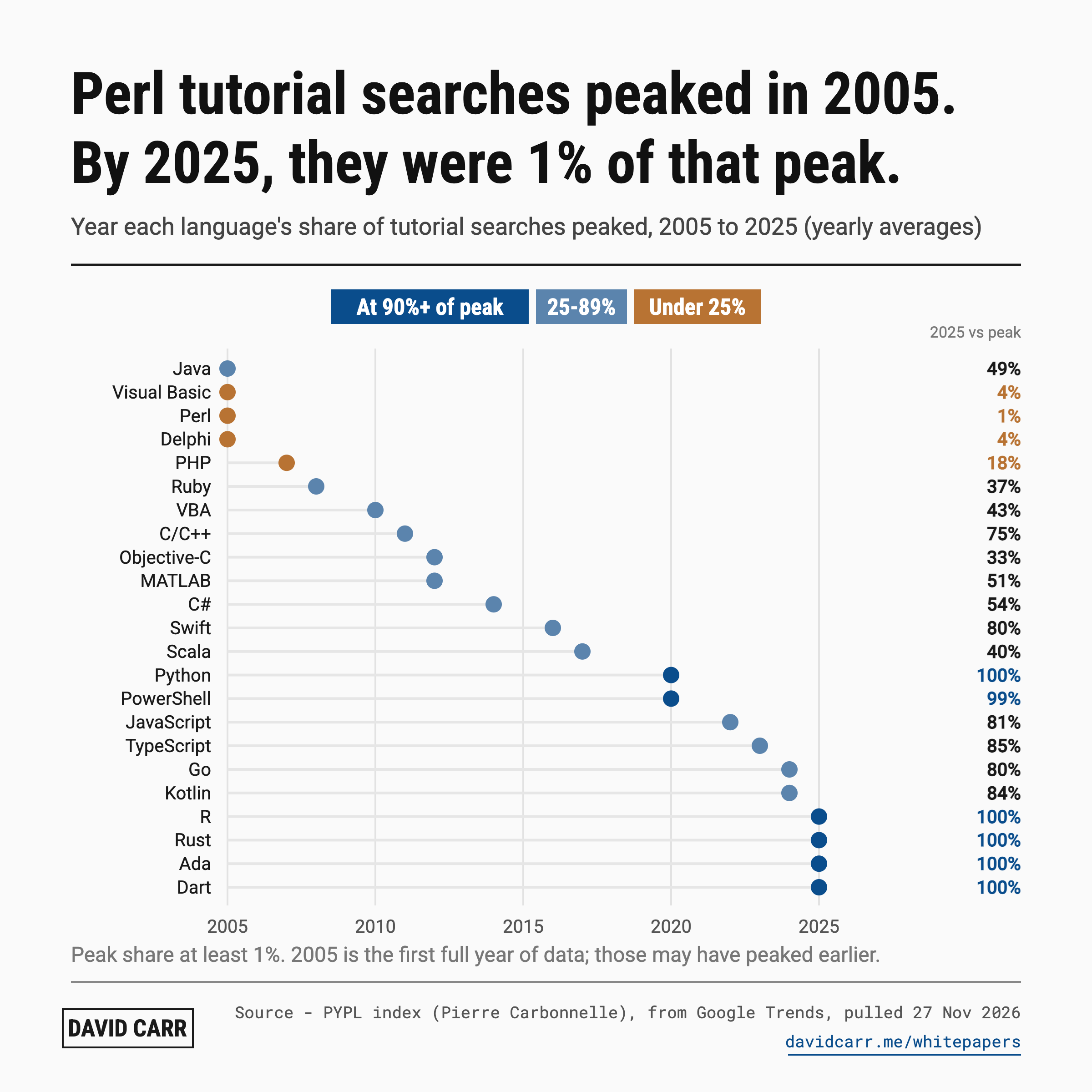
Perl tutorial searches peaked in 2005. By 2025, they were 1% of that peak.
- Peaked by 2005: Java, Visual Basic, Perl and Delphi
- PHP peaked in 2007 and was at 18% of that peak in 2025
- Objective-C peaked in 2012; C# in 2014
- Still at or near their peak in 2025: Python, R, Rust, Dart and Ada
Java kept about half of its peak share after 20 years. Perl, Visual Basic and Delphi kept 4% or less.
Languages whose yearly share reached at least 1%. 2005 is the first full year of data, so some may have peaked earlier.
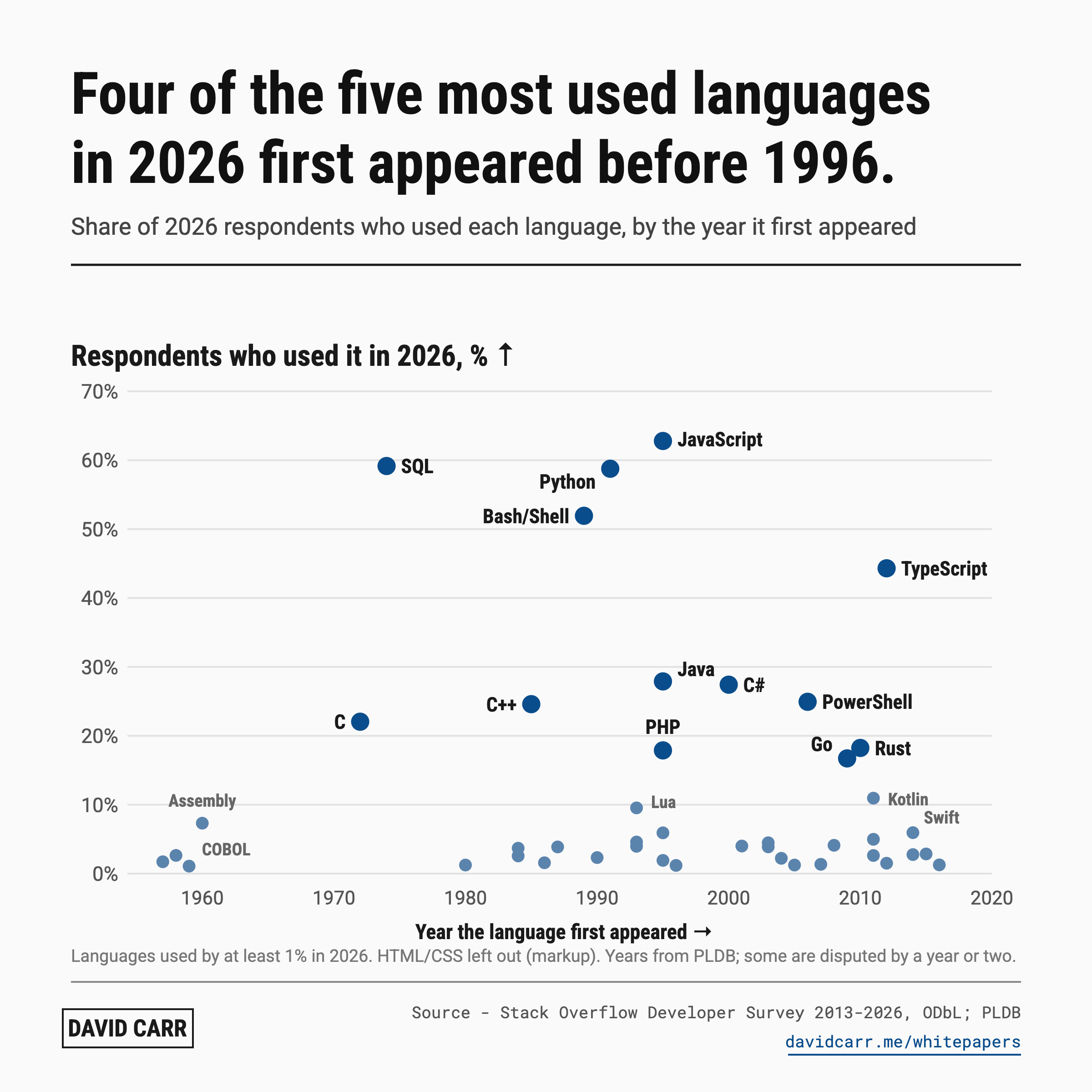
Four of the five most used languages in 2026 first appeared before 1996.
- JavaScript: 1995, used by 63%
- SQL: 1974, 59%; Python: 1991, 59%
- Bash: 1989, 52%
- TypeScript: 2012, 44%, the youngest in the top five
SQL is over 50 years old and still used by most respondents. C, from 1972, is used by 22%.
Year each language first appeared, from PLDB. Some are disputed by a year or two; Rust, for one, is listed as 2010. HTML/CSS is left out as markup.
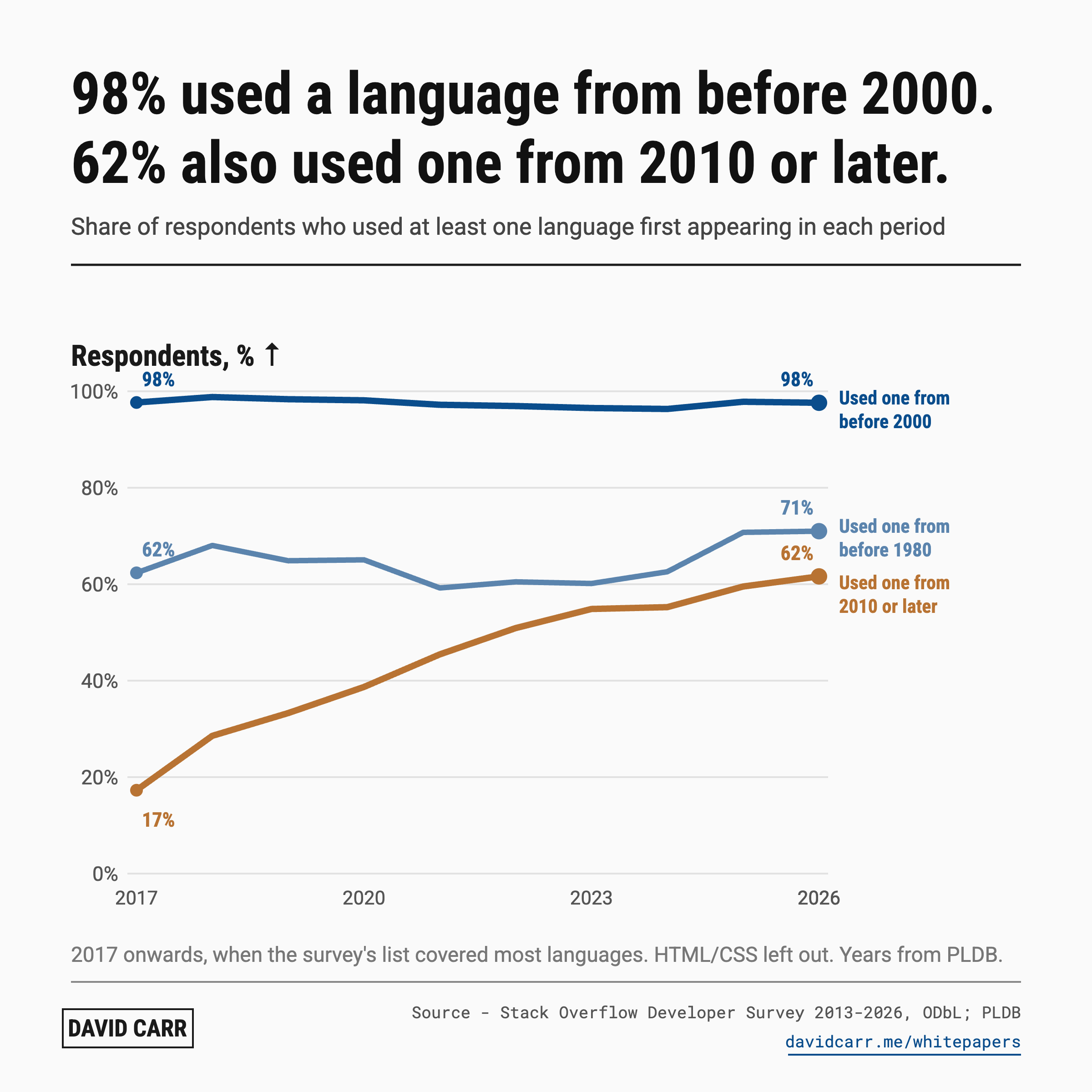
98% used a language from before 2000. 62% also used one from 2010 or later.
- Used a language from before 2000: 98% in both 2017 and 2026
- Used one from before 1980 (mostly C and SQL): 62% in 2017, 71% in 2026
- Used one from 2010 or later: 17% in 2017, 62% in 2026
- Average age of the languages ticked: 26 years in 2017, 32 in 2026
New languages are added on top of the old ones. They have not pushed them out.
From 2017, when the survey's list covered most languages in use. HTML/CSS left out.
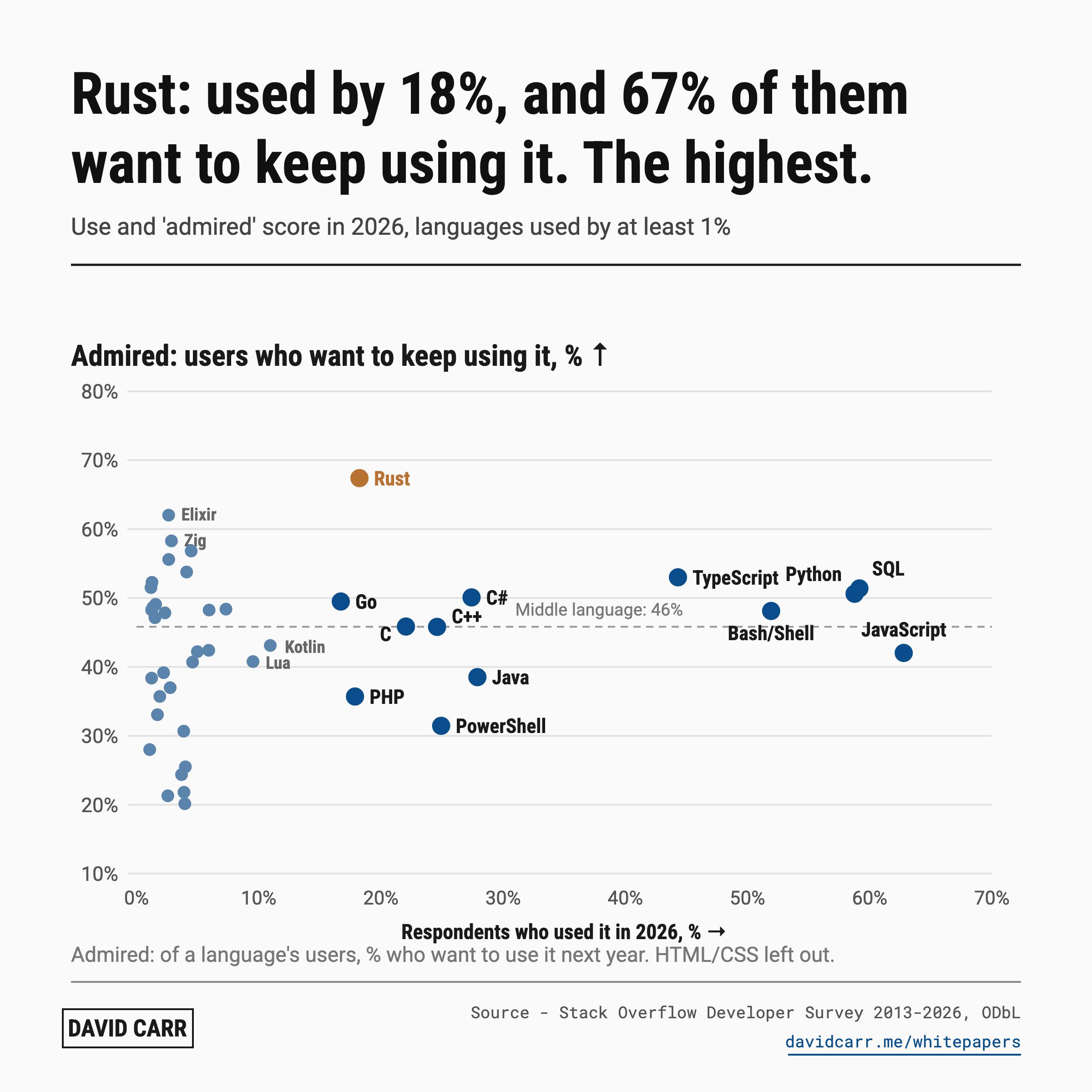
Rust: used by 18%, and 67% of them want to keep using it. The highest.
- Rust: used by 18%, admired by 67%
- Elixir: 62%; Zig: 58%
- TypeScript: 53%; SQL and Python: 51%
- JavaScript: 42%; the middle language: 46%
The most used languages sit close to the middle. The highest scores go to languages fewer people use.
Admired = of respondents who used a language this year, the share who also want to use it next year. Stack Overflow called this 'loved' until 2022 and 'admired' since.
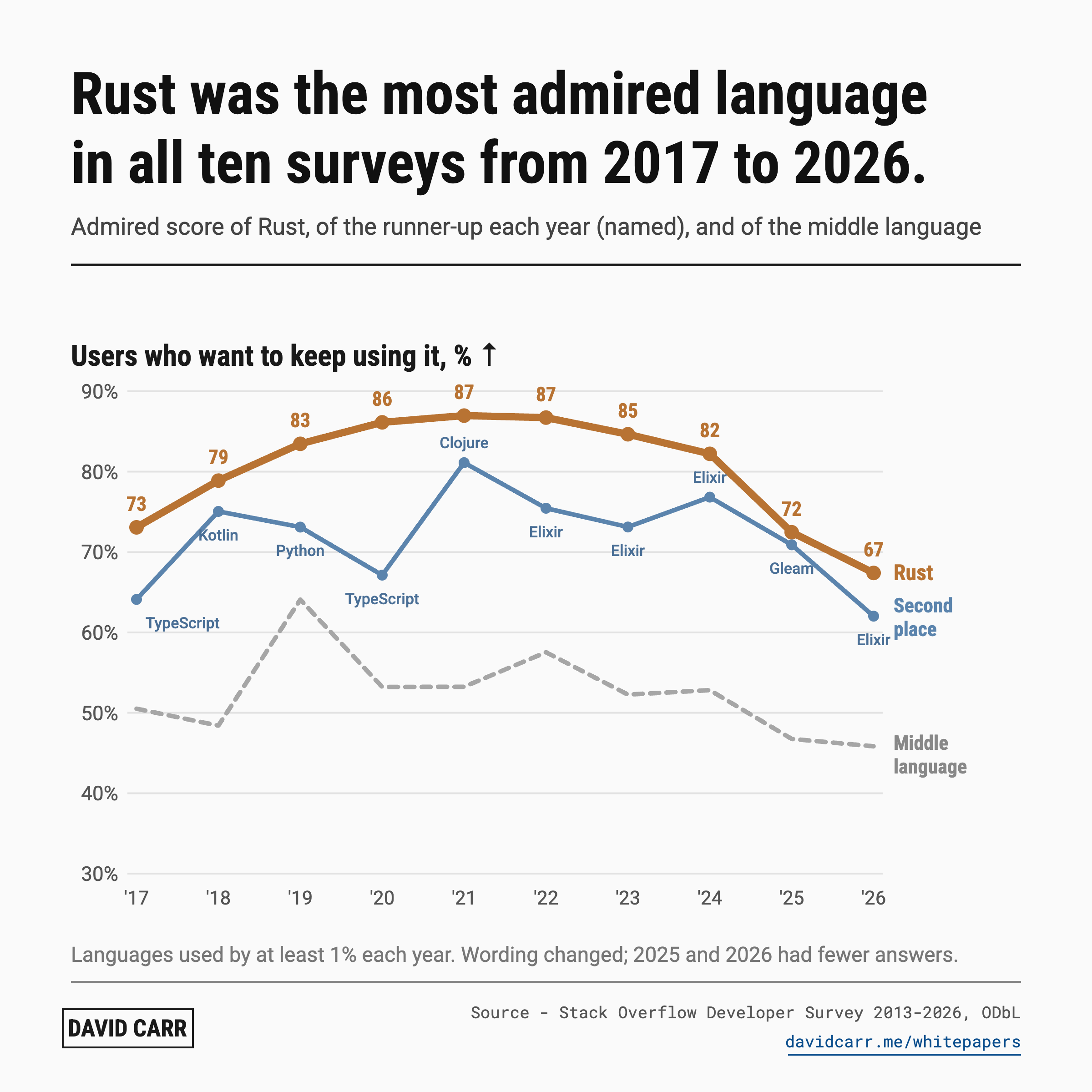
Rust was the most admired language in all ten surveys from 2017 to 2026.
- Rust: 73% in 2017, 87% in 2021 and 2022, 67% in 2026
- Runner-up most often: Elixir, four times
- Closest year: 2025, Rust 72%, Gleam 71%
Scores fell for 38 of 43 languages between 2024 and 2026, so much of Rust's drop is shared. It kept the top spot each year.
Languages used by at least 1% of respondents that year. In 2025 and 2026 fewer people answered the question, and the median score fell from 53% to 46%.
Method, caveats and sources
The short answer. Most programming languages last a long time. JavaScript was the most used language in all 14 Stack Overflow Developer Surveys from 2013 to 2026. Python grew the most, from 23% of respondents in 2013 to 59% in 2026, and TypeScript went from 10% in 2017 to 44%. Objective-C fell from 12% to 3%, and CoffeeScript left the list after 2018, but most languages that fade settle at a small share rather than vanish. C stayed between 16% and 23% in every survey. On the longer PYPL index of tutorial searches, Java had 30% in 2005 and Python 30% in 2025. Four of the five most used languages in 2026 first appeared before 1996, and 98% of respondents used at least one language from before 2000. Rust was the most admired language in every survey from 2017 to 2026.
Data. Stack Overflow Developer Survey results for 2013 to 2026, from Stack Overflow’s public archive on GitHub, pulled on 27 November 2026. Each year’s file was streamed and only the language questions kept. The survey data is licensed under the Open Database License (ODbL); credit: Stack Overflow. The PYPL index (PopularitY of Programming Language, by Pierre Carbonnelle) monthly data from June 2004 to November 2026 comes from its GitHub repository, pulled the same day. The year each language first appeared comes from PLDB, the Programming Language DataBase. Every figure on this page is my own count on that data.
Definitions. Share used = of respondents who answered the language question, the share who ticked a language as one they used that year. Admired = of those who used a language, the share who also ticked it as one they want to use next year; only languages used by at least 1% that year are ranked. HTML and CSS were asked separately in 2018 and are counted together. Bash/Shell included PowerShell in 2019 and 2020. 2013 and 2014 offered 12 options; 2015 and 2016 mixed languages with frameworks and tools; from 2017 the list covers most languages in use.
Caveats. The survey is answered by people who choose to, mostly Stack Overflow visitors, so it does not cover all programmers. The number answering the language question ranged from 6,537 (2014) to 87,569 (2019), and fell to 31,671 in 2025 and 13,924 in 2026; small jumps in those last two years may reflect who answered. The wording of the ‘want to use’ question changed over the years, so admired scores are best compared within a year. PYPL is built from Google Trends and its 2026 monthly figures swung sharply, so its charts stop at 2025. Creation years for some languages are disputed by a year or two.
Also: Stack Overflow and GitHub innovation.